

Technologies
Code Vein II Review: A Better Sequel Still Struggling to Stand Out Among Soulslikes
The anime Soulslike is back.

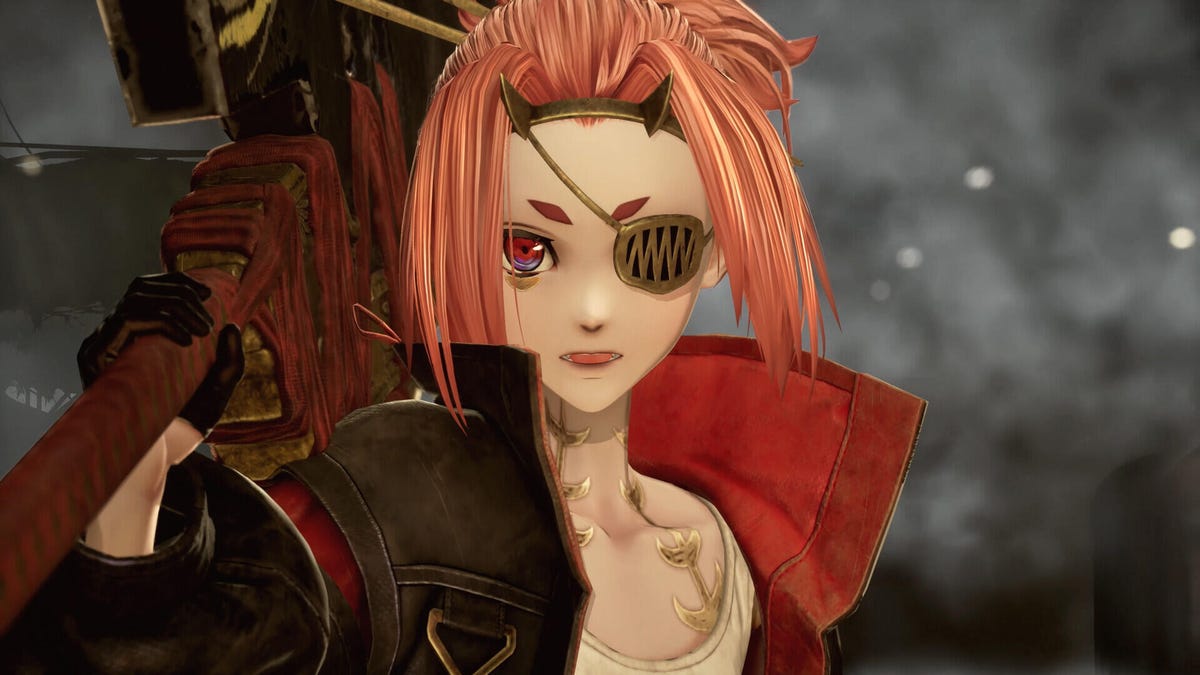
The Soulslike genre — difficult action games built on the formula established by FromSoftware’s Dark Souls series — is a common sight these days, but back in 2019, when the first Code Vein came out, they were few and far between. Code Vein had the notable descriptor of being the «anime Soulslike» thanks to its unique art style. The sequel, Code Vein II, expands on the story and gameplay of the original, but like its predecessor, it simply hasn’t stepped up to be one of the better Souslike games.
Code Vein II is a sequel in name only and doesn’t connect directly to its predecessor, save for the return of vampire-like undead Revenants who make up most of the cast — except for the player. As an unnamed Revenant Hunter, players are ultimately tasked with doing some time traveling to save the world, befriending heroes in the past and then striking them down in the present for the greater good.
While that does make the story more interesting, this sequel still doesn’t have enough substance to both satisfy fans of the Soulslike genre and bring non-fans into the mix.
Don’t miss any of our unbiased tech content and lab-based reviews. Add CNET as a preferred Google source.
Did I hit a vein?
Code Vein II makes use of the traditional action-RPG formula found in most Soulslikes. You equip weapons such as one-handed swords, giant swords, dual swords, hammers and halberds, and proceed to kill enemies using combos of light and strong attacks. At your disposal are Forma items that can be added to your weapons that act like abilities or spells, which use Ichor, the mana pool for your character. There are also flavorful finishers called Jails that can be used to do some huge damage to enemies when they’re staggered, or drain Ichor when deployed any other time.
Combat has the same feel as other Souslikes, relying on tight timing to dodge enemy blows and get in counterattacks, but it’s sometimes difficult to tell what kind of attack is coming your way, which is a glaring flaw. Going back to the originator of the genre, Dark Souls made sure enemy animations had telegraphed which style of attack was incoming, giving players ample time to get out of the way.
Where most of these issues become noticeable is with the bosses. As is the case with a Soulslike game, Code Vein II has some big bosses with powerful attacks requiring players to approach the fights with some strategy, as simply pressing attack over and over again will not suffice. Yet it almost never fails that in a battle, there will be some attack causing damage without any visual indicator. Also, not every boss is unique, as you’ll see weaker versions of them later in the game roaming around the map.
More frustrating is that, seemingly due to the post-apocalyptic sci-fi setting, some enemies have attacks that you just can’t see coming. There is one field boss that is built like a four-legged tank and can shoot from double turrets, but the bullets can barely be seen before they hit the player. This means you’re stuck blocking the attacks. Other bosses have similar issues where it’s tough to tell the reach of an enemy’s attack, making it easy to mistime a dodge and get hit anyway.
Code Vein II’s most unique addition is the Partner System, which is a different take on the summoning-a-computer-ally options found in other Soulslike games. Players meet other characters throughout the story who will join them as partners, typically after winning their friendship through tasks and trials. These allies will have a segment of the player’s lifebar dedicated to them, and they’ll act on their own in battle using their own abilities and attacks. This partner not only helps deal damage and tank hits from the enemy, but they can also revive you when your health is depleted, although they will disappear for a certain amount of time — a neat last-ditch survival mechanic that gives players just enough time to land a last blow.
If you don’t want to deal with a partner or are having trouble with a boss and want to try a different strategy, you can try Assimilation, or absorbing your partner. By doing this, your character gets the whole lifebar to themselves as well as buffed stats, but you’re on your own. I found myself struggling against a particular boss when I had my partner with me, but when I went on my own, the fight seemed easier. It can help to have another target for certain bosses, but there are likely players who will prefer to absorb the boosts and handle enemies themselves.
Speaking of stats, each partner offers their own Blood Code, which are equippable artifacts that improve the player’s stats and provide other positives and negatives to their abilities. Equipping them and defeating enough enemies will level them up to improve their buffs, and wearing the matching Blood Code that your partner gave you will stack an additional boost.
If that sounds a bit convoluted, it is. The systems in Code Vein are noticeably more complex than other Soulslike games that focus on a few primary stats for your character and a handful of other secondary stats that determine other attributes, such as how many hits you can take before being stunned or how fast you can cast a spell. There are so many explainer pages that pop up when exploring your character’s stats page within the menu, and it’s just exhausting after a while. I’m not saying it would be better to only see the absolute minimum of character stats, but there is a point where a screen full of numbers is too much.
Can someone decode this?
While the stat system for Code Vein II is a bit convoluted, the story is seemingly both complex and sparse. In the world of Code Vein, humans and Revanants, a human-like species with vampiric abilities, coexist in a post-apocalyptic future that is about to be destroyed. A cataclysmic event called the Resurgence, once prevented by the sacrifice of many heroes who sealed themselves away in cocoons, has returned to threaten the destruction of the world again.
The player takes on the role of a human who dies trying to save innocents, and a Revenant named Lou revives them by donating half of her heart. She’s part of an organization called MagMell that is trying to use time travel to save the world. Those former Revenant heroes who once sealed away evil need to be defeated to stop the Resurgence.
However, in the present, they are locked in their cocoons and can’t be touched. So it’s up to the player to travel back in time 100 years to when these heroes were thriving. Each one has their own personal story and motivations, and the players will have to help them to eventually learn what’s needed to defeat them in the present.
The addition of time travel offers some emotional moments in the game, especially as you bond with heroes in their past, knowing they’ll end up doomed and corrupted in the present, but there is still just so much going on regarding the Resurgence and the world. Yet none of that nuanced character growth has any real weight or adds to the story — it felt like I’d emotionally connect with partners through their tragic stories and then defeat their final versions, only to never see their impact on the plot again. The world itself changes quite extensively when going back in time, but there’s simply not enough of that narrative substance to chew on.
The environmental storytelling is so minimal, and aside from the primary cast of characters, there’s nothing really of interest to explore — mostly just areas filled with items, enemies to fight and a handful of optional dungeons. Typically, Soulslikes offer a vast world filled with little details that help piece together an extensive backstory littered with legendary events and fated battles, just as it did with the Dark Souls games, but that’s just not the case with Code Vein II. After some time, I found myself playing on autopilot, not bothering with every nook and cranny in the world, and just caring solely about gaining levels, completing quests and getting loot. The game’s world is huge, but there’s no worldbuilding. There’s no explanation about some building full of monsters other than one character saying monsters took over that building. The world is just so empty of context for the protagonist and their quest.
As for Code Vein II’s presentation, it’s well-done, but not really exceptional. The designs of the characters and enemies include some delightfully grotesque designs and do satisfy the «anime» aesthetic the franchise is known for, but the world is kind of drab and boring — a standard post-apocalypse that nature is slowly reclaiming. The English voice acting works well, and the music is fine yet not really memorable.
When it comes down to it, Code Vein II improves on the original game for a better experience, but the original was lacking to begin with. Fans of Soulslikes will be satisfied with a quality title, though it will be frustrating at times. Casual players who don’t seek out the difficult experience of these types of games, however, will find very little reason to give Code Vein II a try.
Code Vein II comes out on Friday for PC, PS5 and Xbox Series X|S consoles and will cost $70.
Technologies
Scientists Are Using AI to Help Identify Dinosaur Footprints
The Dinotracker app was trained on eight major characteristics of dinosaur footprints to quickly determine the species.
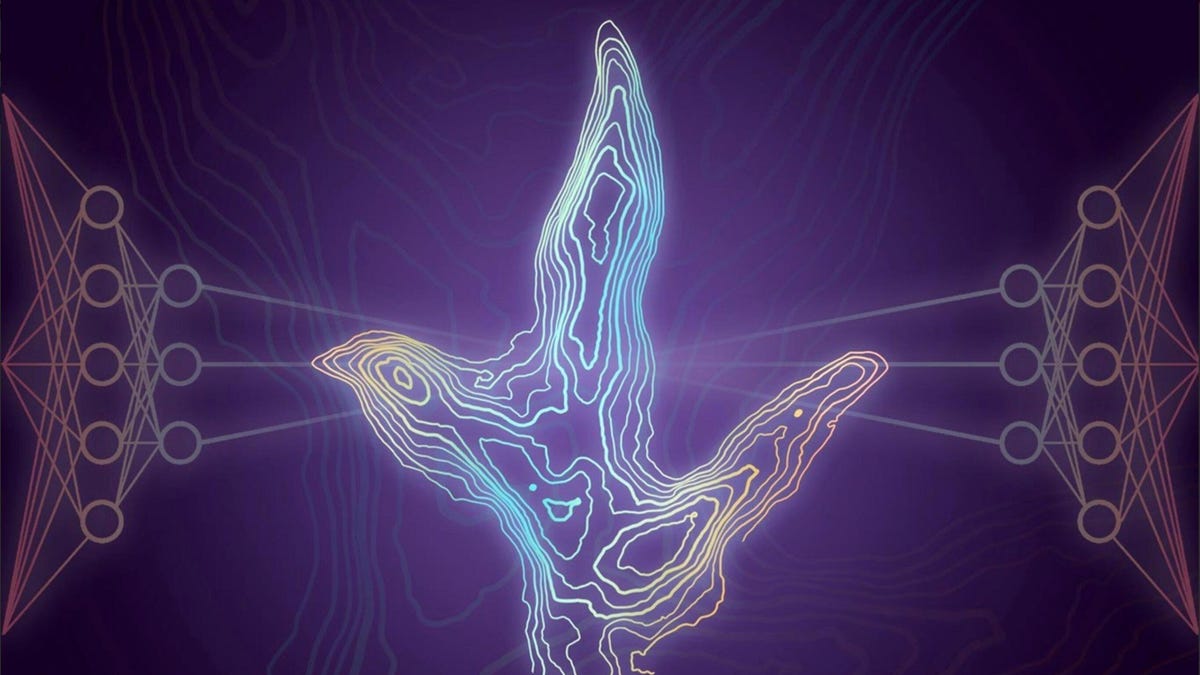
An international team of researchers has devised a futuristic tool to examine the footprints left by dinosaurs in our ancient past. The AI-powered app, Dinotracker, can identify dinosaur footprints in moments.
The research comes from a joint project by the Helmholtz-Zentrum research center in Berlin and the University of Edinburgh in Scotland. The Proceedings of the National Academy of Sciences published the paper on Monday.
Don’t miss any of our unbiased tech content and lab-based reviews. Add CNET as a preferred Google source.
Identifying a dinosaur species from a footprint isn’t always easy. The footprint is hundreds of millions of years old, often preserved in layers of rock that have shifted over the eons since the track was laid.
Also, we still have a lot to learn about dinosaurs, and it’s not always clear which species left a footprint. Subjectivity or bias can come into play when identifying them, and scientists don’t always agree with the results.
Gregor Hartmann of Helmholtz-Zentrum, who led the project, told CNET that the research team sought to remove this propensity from the identification process by developing an algorithm that could be neutral.
«We bring a mathematical, unbiased point of view to the table to assist human experts in interpreting the data,» Hartmann said.
Researchers trained the algorithm on thousands of real fossil footprints, as well as millions of simulated versions that could recreate «natural distortions such as compression and shifting edges.»
How AI is being used on dinosaur tracks
The system was trained to focus on eight major characteristics of dinosaur footprints, including the width of the toes, the position of the heel, the surface area of the foot that contacted the ground and the weight distribution across the foot.
The AI tool uses these traits to compare new footprints to existing fossils, and then determines which dinosaur was most likely responsible for the footprint.
The team tested it against human expert classifications and found that the AI agreed with them 90% of the time.
Hartmann made it clear that the AI system is «unsupervised.»
«We do not use any labels (like bird, theropod, ornithopod) during training. The network has no idea about it,» Hartmann said. «Only after training, we compare how the network encodes the silhouettes and compare this with the human labels.»
Hartmann said that the hope is for Dinotracker to be used by paleontologists and that the AI tool’s data pool grows as it’s used by more experts.
Bird vs. dinosaur
Using Dinotracker, the researchers have already uncovered some intriguing possibilities on the evolution of birds. When analyzing footprints more than 200 million years old, the AI found strong similarities with the foot structures of extinct and modern birds.
The team says one possibility is that birds originated tens of millions of years earlier than we thought. But it’s also possible that early dinosaur feet just look remarkably like bird feet.
This evidence, Hartmann notes, isn’t enough to rethink the evolution of birds, since a skeleton is the «true evidence» of earlier bird existence.
«It is essential to keep in mind that over these millions of years, lots of different things can happen to these tracks, starting from the moisture level of the mud where it was created, over the substrate it was created on, up to erosion later,» he said. «All this can heavily change the shape of the fossilized track we find, and ultimately makes it too difficult to interpret footprints, which was the motivation for our study.»
Dinotracker is available for free on GitHub. It’s not in a download-and-use format, so you’ll have to know a bit about software to get it up and running.
Technologies
Belkin Is Ending Support for Wemo Smart Home Devices. Here’s What That Means for You
If you own certain Belkin Wemo devices, they’ll stop working as soon as Jan. 31. Here’s what to know before it happens.
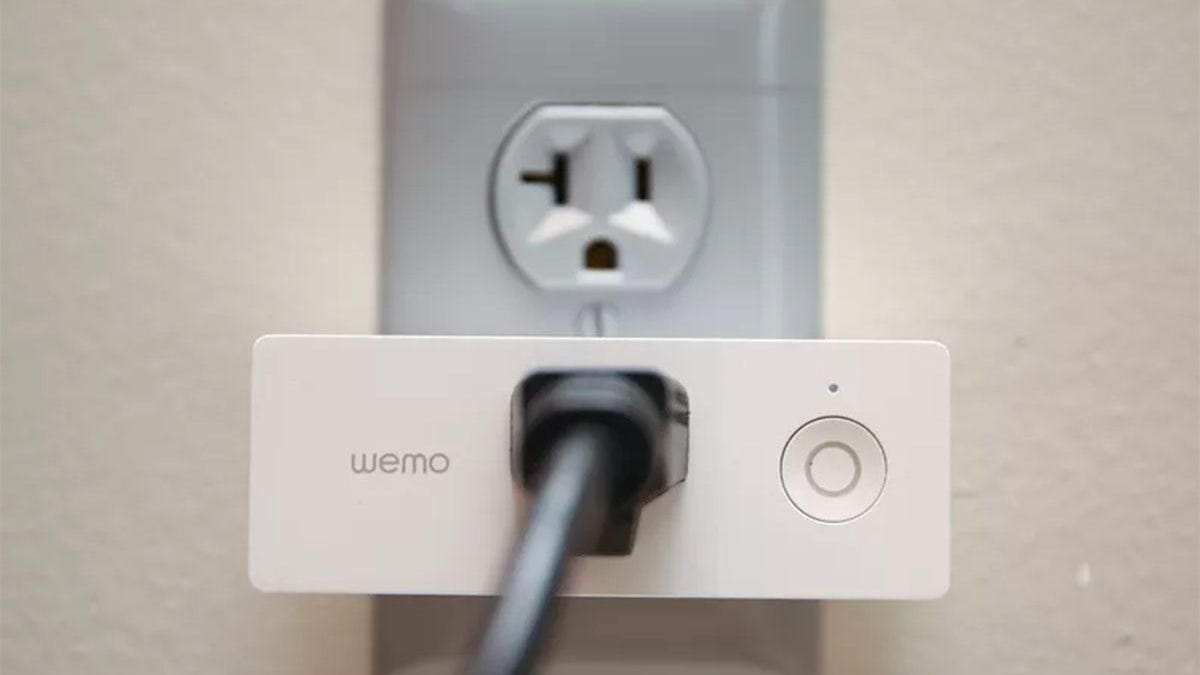
Belkin is ending support for most of its Wemo smart home devices, a move that will shut down the Wemo app and cloud services and significantly reduce the functionality of many popular smart plugs, switches and sensors.
The change takes effect at the end of January, so you have only a few days to migrate compatible devices or start planning for replacements.
You can see the full list of affected devices on Belkin’s support page. Once support ends, features that rely on the cloud — including remote access, schedules and integrations with Amazon Alexa and Google Assistant — will stop working. Those Wemo devices will no longer function as «smart» products, even if the hardware still powers on.
Since Belkin will also stop releasing firmware updates, affected devices won’t receive bug fixes or security improvements.
Belkin’s decision highlights a growing issue in the smart home world: Devices can stop being «smart» long before the hardware wears out.
Apple Home users get a limited lifeline
There is one major exception. Some Wemo devices that are compatible with Apple Home and HomeKit can continue working after the Wemo app shuts down, but only if you migrate them before the end-of-support deadline.
«Since the Wemo app will be ending, it’s very important that users switch to Apple Home/HomeKit by the end of the month,» says CNET smart home editor Tyler Lacoma. «Belkin has a long-term partnership with Apple, so for compatible devices, that transition is usually pretty simple.»
However, Lacoma warns that older Wemo products may not support Apple Home at all.
«If someone has a Wemo device that’s not on the list of Apple-compatible products, it won’t have much functionality left,» he says. «It won’t get firmware updates to fix bugs or improve security, so at that point, it makes sense to factory reset it and recycle it before the end of the month, then look for a replacement.»
Belkin has published a list of Wemo devices that support Apple HomeKit, and users need to complete the setup process before the Wemo app is retired. The following products will continue to work through Apple HomeKit:
- Wemo Smart Light Switch 3-Way (WLS0403, WLS0503)
- Wemo Wi-Fi Smart Light Switch with Dimmer (WDS060)
- Wemo Smart Light Switch (WLS040)
- Wemo HomeKit Bridge (F7C064)
- Wemo Dimmer Light Switch (F7C059)
- Wemo Mini Plugin Switch (F7C063)
- Wemo Outdoor Plug (WSP090)
- Wemo Mini Smart Plug (WSP080)
- Wemo Stage Smart Scene Controller (WSC010)
- Wemo Smart Plug with Thread (WSP100)
- Wemo Smart Video Doorbell (WDC010)
What about refunds?
Belkin says customers with Wemo devices that are still under warranty when support ends may be eligible for a partial refund. You can find the warranty period for each device in the list of devices on Belkin’s support page linked above. Refund requests won’t be processed until after the end-of-support date, and eligibility will depend on the product and purchase date.
Because many Wemo products were released years ago, most people should not expect to qualify for a refund. We’ve reached out to Belkin to ask whether other products will lose support in the near future. We haven’t heard back at the time of publishing.
What Wemo owners should do now
If you own Wemo devices, the clock is ticking. Here’s what to do next:
- Check whether your Wemo products support Apple Home and migrate them as soon as possible.
- If your devices don’t support Apple Home, plan to replace them before support ends.
- Consider recycling unsupported devices once they lose smart functionality.
- Remove the Wemo app after services shut down to avoid confusion.
If you’re shopping for replacements, this is a good time to look at CNET’s list of the best smart plugs and review our guide on what to do when smart home devices lose support.
Technologies
Today’s NYT Strands Hints, Answers and Help for Jan. 28 #696
Here are hints and answers for the NYT Strands puzzle for Jan. 28, No. 696.
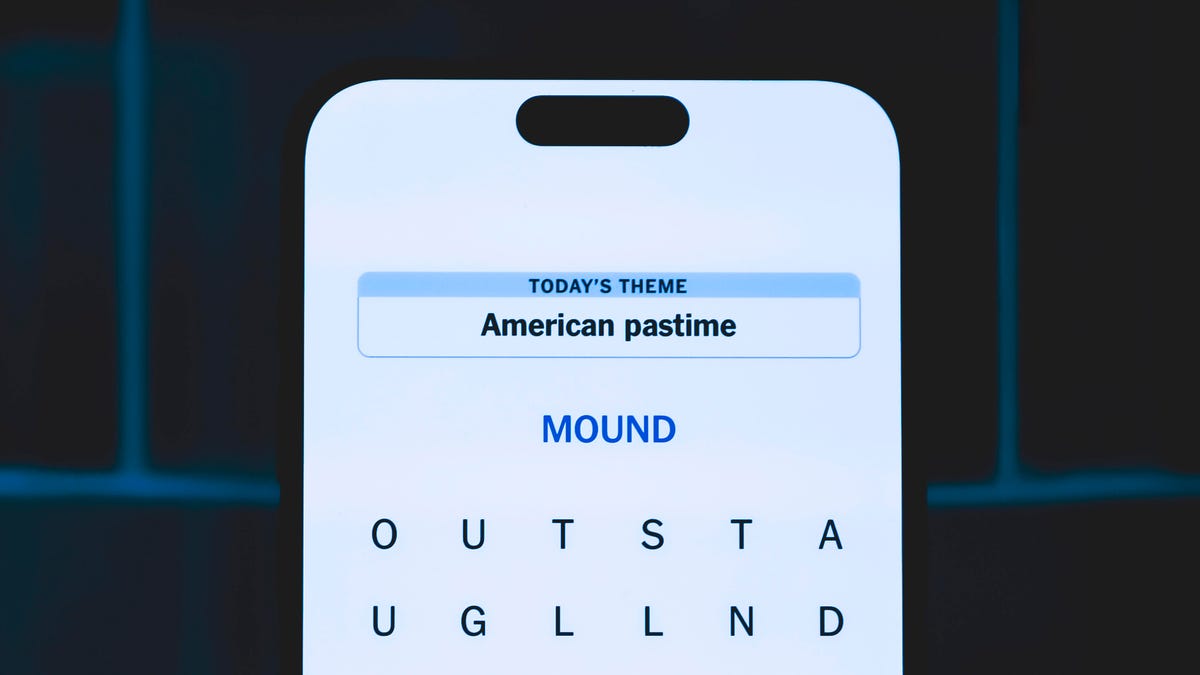
Looking for the most recent Strands answer? Click here for our daily Strands hints, as well as our daily answers and hints for The New York Times Mini Crossword, Wordle, Connections and Connections: Sports Edition puzzles.
Today’s NYT Strands puzzle is a bit of an odd one, but it might calm you down — hint, hint. If you need hints and answers, read on.
I go into depth about the rules for Strands in this story.
If you’re looking for today’s Wordle, Connections and Mini Crossword answers, you can visit CNET’s NYT puzzle hints page.
Read more: NYT Connections Turns 1: These Are the 5 Toughest Puzzles So Far
Hint for today’s Strands puzzle
Today’s Strands theme is: Zen state
If that doesn’t help you, here’s a clue: Mellow out.
Clue words to unlock in-game hints
Your goal is to find hidden words that fit the puzzle’s theme. If you’re stuck, find any words you can. Every time you find three words of four letters or more, Strands will reveal one of the theme words. These are the words I used to get those hints but any words of four or more letters that you find will work:
- COIL, COIF, COIFS, MATE, TAME, TAMED, CONE, CODE, NEST, NETS, LENS, TIED, DIET, MIND
Answers for today’s Strands puzzle
These are the answers that tie into the theme. The goal of the puzzle is to find them all, including the spangram, a theme word that reaches from one side of the puzzle to the other. When you have all of them (I originally thought there were always eight but learned that the number can vary), every letter on the board will be used. Here are the nonspangram answers:
- FOCUS, RELAX, LISTEN, NOTICE, BREATHE, MEDITATE
Today’s Strands spangram
Today’s Strands spangram is MINDFULNESS. To find it, start with the M that’s the first letter on the top row, at the far left, and wind down and then over and up.
Don’t miss any of our unbiased tech content and lab-based reviews. Add CNET as a preferred Google source.
-
 Technologies3 года ago
Tech Companies Need to Be Held Accountable for Security, Experts Say
-
 Technologies3 года ago
Best Handheld Game Console in 2023
-
 Technologies3 года ago
Tighten Up Your VR Game With the Best Head Straps for Quest 2
-
 Technologies4 года ago
Black Friday 2021: The best deals on TVs, headphones, kitchenware, and more
-
 Technologies5 лет ago
Google to require vaccinations as Silicon Valley rethinks return-to-office policies
-
 Technologies5 лет ago
Verum, Wickr and Threema: next generation secured messengers
-
 Technologies4 года ago
Olivia Harlan Dekker for Verum Messenger
-
 Technologies4 года ago
iPhone 13 event: How to watch Apple’s big announcement tomorrow


