

Technologies
Your Bluetooth Audio Devices Could Be at Risk of Hijacking, Researchers Say
Google says it has addressed security vulnerabilities that could affect Bluetooth products, but researchers contend that issues persist.

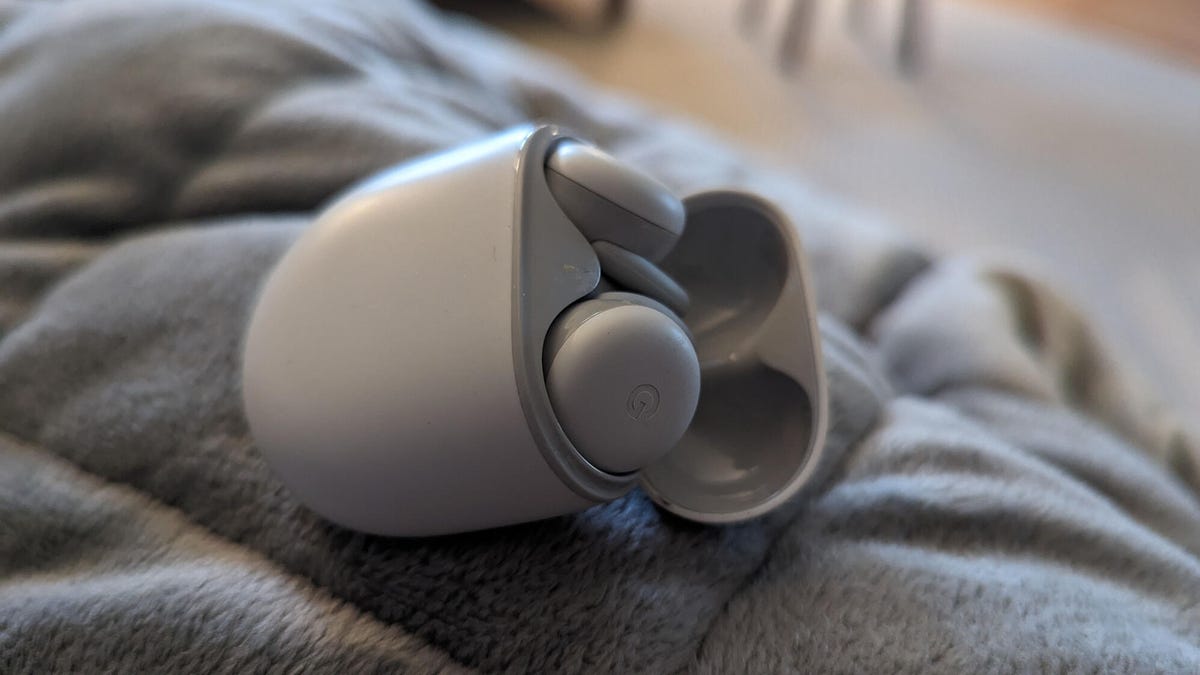
Researchers working at KU Leuven University in Belgium are warning people who use Bluetooth audio products that their devices may be at risk due to vulnerabilities in Google’s Fast Pair technology, a feature that makes it quicker and easier to connect Bluetooth devices.
Google says it has addressed issues that could allow hackers to hijack audio devices and track their location. But the researchers say the vulnerabilities, which it collectively refers to as WhisperPair, still affect products from device makers including Sony, Harman and Google itself. In their tests, the researchers found these products could be hacked from as far as about 46 feet away.
A Google representative told CNET that it has updated the software for some of its own audio products, including its Pixel Buds Pro, and that some of the vulnerabilities stemmed from other companies not properly following Fast Pair specifications. Google said it had informed companies about this in September.
Don’t miss any of our unbiased tech content and lab-based reviews. Add CNET as a preferred Google source.
«We appreciate collaborating with security researchers through our Vulnerability Rewards Program, which helps keep our users safe. We worked with these researchers to fix these vulnerabilities, and we have not seen evidence of any exploitation outside of this report’s lab setting,» Google said in a statement provided to CNET. «As a best security practice, we recommend users check their headphones for the latest firmware updates. We are constantly evaluating and enhancing Fast Pair and Find Hub security.»
In response to specific concerns about device tracking, Google added, «We rolled out a fix on our end to prevent Find Hub network provisioning in this scenario, which completely addresses the potential location tracking issue across all devices.»
Google has issued two security updates this month, one for Wear OS and one for Google Pixel devices. Each contains information about the company’s security patches.
The WhisperPair research group said it’s working on an academic paper detailing its findings. On its website, the researcher group said, «Our findings show how a small usability ‘add-on’ can introduce large-scale security and privacy risks for hundreds of millions of users.»
The research group released a YouTube video discussing problems with Fast Pair, a Google technology introduced in 2017 that connects Bluetooth devices with one tap across Android and Chrome OS.
The group said that it worked with Google after reporting its findings and was awarded a $15,000 bounty. The researchers said they agreed to a 150-day disclosure window in which Google would release security patches. However, the website points out that users of Bluetooth devices like earbuds may not be aware of security updates that could protect them.
The website includes a page where users can look up which audio products are vulnerable, with details on how to get them updated. Google doesn’t have detailed information about these vulnerabilities on its Fast Pair Known Issues page.
Technologies
Today’s NYT Connections: Sports Edition Hints and Answers for Jan. 17, #481
Here are hints and the answers for the NYT Connections: Sports Edition puzzle for Jan. 17, No. 481.
Looking for the most recent regular Connections answers? Click here for today’s Connections hints, as well as our daily answers and hints for The New York Times Mini Crossword, Wordle and Strands puzzles.
Today’s Connections: Sports Edition is a tough one. The blue group is a bit funny, once you recognize the connection. If you’re struggling with today’s puzzle but still want to solve it, read on for hints and the answers.
Connections: Sports Edition is published by The Athletic, the subscription-based sports journalism site owned by The Times. It doesn’t appear in the NYT Games app, but it does in The Athletic’s own app. Or you can play it for free online.
Read more: NYT Connections: Sports Edition Puzzle Comes Out of Beta
Hints for today’s Connections: Sports Edition groups
Here are four hints for the groupings in today’s Connections: Sports Edition puzzle, ranked from the easiest yellow group to the tough (and sometimes bizarre) purple group.
Yellow group hint: Leading the pack.
Green group hint: Football division.
Blue group hint: Like Bridges or Goldblum.
Purple group hint: Blast off.
Answers for today’s Connections: Sports Edition groups
Yellow group: In No. 1 position.
Green group: AFC East teams.
Blue group: Jeffs.
Purple group: Rockets.
Read more: Wordle Cheat Sheet: Here Are the Most Popular Letters Used in English Words
What are today’s Connections: Sports Edition answers?
The yellow words in today’s Connections
The theme is in No. 1 position. The four answers are first, front, lead and pole.
The green words in today’s Connections
The theme is AFC East teams. The four answers are Buffalo, Miami, New England and New York.
The blue words in today’s Connections
The theme is Jeffs. The four answers are Bagwell, Kent, Saturday and Van Gundy.
The purple words in today’s Connections
The theme is Rockets. The four answers are Clemens, Houston, Richard and Toledo.
Don’t miss any of our unbiased tech content and lab-based reviews. Add CNET as a preferred Google source.
Technologies
Verizon Outage Caused by Software Issue, but Details Are Still Elusive
We’re still piecing together what caused Verizon’s extended service blackout, but network experts point to possibilities based on how it transpired.

After Verizon suffered a widespread, all-day outage this week that affected potentially 2 million customers, the cause still remains elusive. The company is offering a $20 credit to impacted customers, which appears to be trickling out via text message and in the myVerizon app.
Verizon hasn’t responded to a request for clarity about what happened. It did say that the problem was a «software issue» and that there was no indication of a «cybersecurity issue» in a statement to Mashable Thursday morning.
The loss in service was unique for its longevity. Unlike previous cellular outages, this one wasn’t region-specific and affected users across the US. When natural disasters take down cellular towers or hardware failures happen, the effects are felt in specific cities or areas. We saw reports (and CNET staffers chimed in) of service being down in New York, New Jersey, Florida, Hawaii, California and other spots.
Until Verizon shares more information, we can piece together some possibilities.
Analyst Roger Entner of Recon Analytics, a telecommunications research firm, suspects that a feature update went awry, based on how devices were affected. «It looks like their 5G SA (Standalone) core went down during a minor feature change,» he wrote to CNET.
Entner noted that the outage was limited to new high-end devices in selected markets where Verizon’s 5G SA core is deployed, which is why the outage wasn’t felt everywhere. The term 5G SA core refers to a network that uses only 5G technology and doesn’t rely on older 4G LTE infrastructure.
Entner also suggested the outage’s timing was unusual. «When carriers do massive upgrades, they do that between 2 a.m. and 4 a.m. in the morning,» he said, suggesting that it could be due to an input error or automatic failure. «A noon start for the crash indicates ‘fat fingers’ for a smaller change that cascaded through the system.»
Lee W. McKnight, an Associate Professor at Syracuse University’s School of Information Studies, believes the problem originated with a failed update to a Virtual Network Function (VNF), leading to «data overflows/cascading failures of other VNFs that were collateral damage from the first failure,» he wrote in an email exchange.
That also explains, McKnight theorizes, why many customers reported that their service resumed temporarily, only to fail again. «Like an engine stalling out, if all Verizon VNFs are not in sync [or] well orchestrated, the network is off-key,» he said.
A VNF is a virtualized service running on cloud platforms, versus on dedicated hardware. For this reason, McKnight’s proposed solution moving forward is that the big carriers need to provide more paid training for its technical staff «in what they are now: cloud software engineers,» he said.
Although we can’t confirm a specific cause for this outage, many Reddit commenters (some who claim to have worked at Verizon) lay some of the blame on Verizon’s recent layoffs that removed roughly 13,000 employees, many of them highly technical engineers with years of experience. Some discussions online speculate on what are frequent causes for network outages, like infrastructure damage, technical glitches or server failures, among others.
This is a developing story. Follow all of CNET’s Verizon news for more about the network outage.
Technologies
Motorola’s Moto Watch Is Officially Here With Polar-Level Fitness Cred
The $150 Moto Watch is built for work and workouts alike, and will be available for preorder starting January 22.
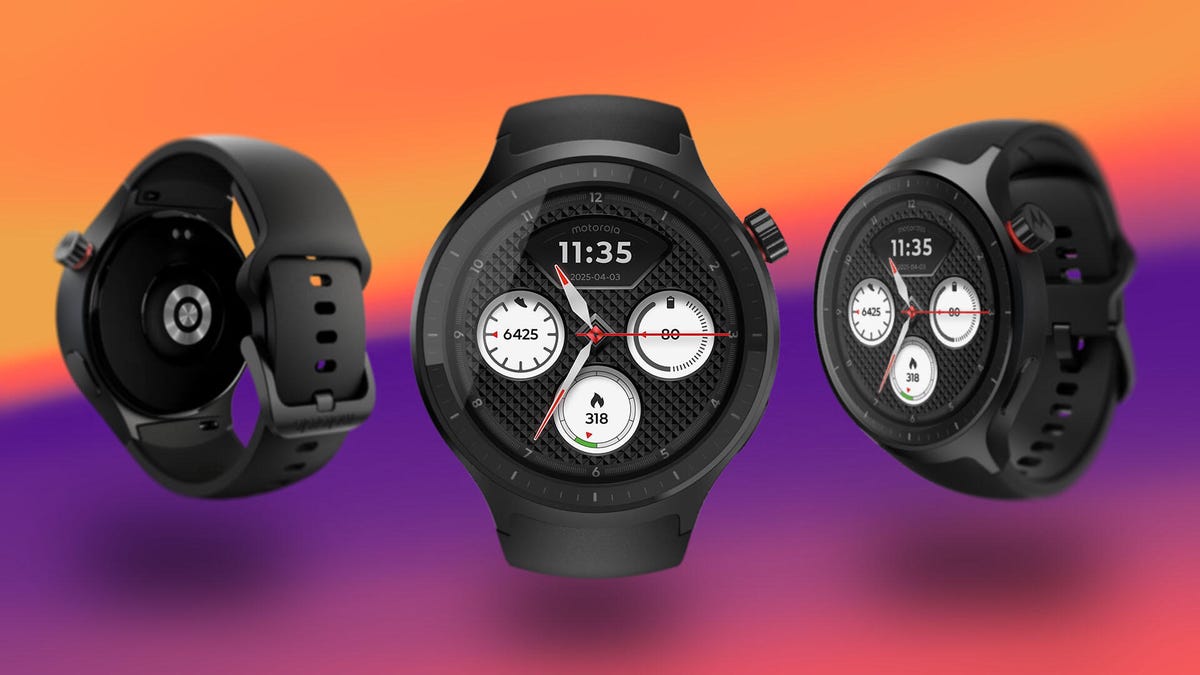
Motorola is adding more muscle to its smartwatch lineup. Unveiled at CES 2026, the $150 Moto Watch combines a polished design with Polar-backed health tracking, bringing the insights of a sports watch to to a smartwatch that looks just as much at home in the gym as it does at the office.
Instead of going all-in on a rugged sports-watch look, the Moto Watch is designed to feel like a jack of all trades, with advanced features like dual-band GPS and a battery life that lasts over a week, putting other flagships to shame.
But the Moto Watch isn’t exactly trying to go head to head with Android smartwatches either. Like recent Motorola watches, the Moto Watch doesn’t run Google’s Wear OS. Instead it relies on Motorola’s own software, with support limited to Android phones. That puts it closer in spirit to brands like Amazfit or Withings, carving out its own lane between fitness-focused wearables and full-fledged smartwatches.
The Polar partnership brings health clout
One of the biggest curveballs to come from the announcement is Motorola’s partnership with Polar, a veteran in the fitness world. Polar is known for its highly accurate heart-rate chest straps used by professional and serious athletes, as well as dedicated sports watches that compete more directly with Garmin than mainstream smartwatches.
By teaming up with Polar, Motorola is making it clear that it’s serious about health tracking and the partnership instantly brings credibility and expertise from a trusted name in the space. Motorola says the watch supports more nuanced fitness insights such as heart-rate variability, sleep stages and recovery. It’ll also support dual-frequency GPS for more accurate location tracking, a feature typically reserved for dedicated sport watches or higher-end models like the Apple Watch Ultra 3, the Pixel Watch 4 and newer Galaxy Watches.
Easy on the eyes, heavy on the battery life
The Moto Watch looks like a blend of rugged sportwatch and polished analogue, and that’s no accident. Motorola designed it to be sleek yet tough, built to transition seamlessly from sweaty gym sessions to formal evening wear.
It has an aluminum frame, stainless steel crown and a 47mm (1.43-inch) round OLED display covered in Corning’s Gorilla Glass 3. The watchbands are meant to be interchangeable, with a stainless steel, silicone and leather-like options. It’s also compatible with third-party watchbands. The watch has an IP68 rating for water and dust resistance, which means it can be submerged under a meter of water for 30 minutes.
Battery life is another major selling point for Motorola. The company says the Moto Watch can last up to 13 days on a charge in raise-to-wake mode, or up to seven days with the always-on display enabled. If those claims hold up, the Moto Watch would leave most Android smartwatches from Samsung and Google trailing behind with their typical two-day battery life. Motorola also says the Moto Watch supports fast charging, adding roughly a day’s worth of charge in just 5 minutes.
Part of a broader Motorola ecosystem
Rather than positioning the Moto Watch as a standalone product, Motorola repeatedly framed it as part of its expanding Moto Things ecosystem. The watch integrates with Smart Connect, Motorola’s app for managing experiences across phones, tablets, and accessories.
Motorola also teased future alignment with its upcoming Qira AI platform, designed to work across Lenovo PCs, Motorola phones, tablets, and wearables. While there was no mention of any watch-specific AI features, Motorola says future updates could allow notifications, reminders and tasks to flow more seamlessly between devices.
Too soon to reach a verdict
Time will tell how the Moto Watch holds up in real-world testing. The watch will be available for preorders starting January 22 through Motorola’s website, and will officially go on sale on January 28.
For now, the Moto Watch offers a glimpse of Motorola’s vision for wearables, aiming to build an ecosystem of products that work seamlessly together. It’s not trying to pick up where it left off with its Moto 360 smartwatch (discontinued in 2019), but rather carve out a new lifestyle-focused niche backed by credible fitness tracking and long battery life.
For more announcements and first looks ahead of CES 2026, check out CNET’s full CES coverage.
-
 Technologies3 года ago
Tech Companies Need to Be Held Accountable for Security, Experts Say
-
 Technologies3 года ago
Best Handheld Game Console in 2023
-
 Technologies3 года ago
Tighten Up Your VR Game With the Best Head Straps for Quest 2
-
 Technologies4 года ago
Black Friday 2021: The best deals on TVs, headphones, kitchenware, and more
-
 Technologies4 года ago
Google to require vaccinations as Silicon Valley rethinks return-to-office policies
-
 Technologies5 лет ago
Verum, Wickr and Threema: next generation secured messengers
-
 Technologies4 года ago
Olivia Harlan Dekker for Verum Messenger
-
 Technologies4 года ago
iPhone 13 event: How to watch Apple’s big announcement tomorrow


