

Technologies
Withings’ New Smart Scale Turns Your Daily Weigh-In Into a Longevity Check
This $600 Body Scan 2 measures things most people only hear about in a doctor’s office and can calculate how fast your body is aging.


Longevity has become one of the biggest buzzwords in health tech, and Withings is leaning in hard with the Body Scan 2, a $600 smart scale designed to paint a more complete picture of your health than just a standard bathroom weigh-in ever could.
Launched at CES 2026 as part of the wave of Consumer Electronics Show announcements, the Body Scan 2 is packed with firsts for an at-home device. It promises to assess everything from your risk of hypertension (high blood pressure) to early signs of glycemic dysregulation (a precursor to diabetes). In total, Withings says the scale measures more than 60 biomarkers that can influence long-term health, aging and the risk of chronic illness.
The goal isn’t just to show you numbers, but to spot small physiological changes early — while they’re still reversible — and guide you toward lifestyle changes that, over time, could extend and improve your quality of life.
The Body Scan 2 still looks like a futuristic bathroom scale with a pull-up exercise bar tied to the top. It has a flat tempered-glass surface and a retractable handle bar that’s connected by a cord. That handle has a color screen that displays on-the-spot metrics during weigh-ins.
Under the glasshood, the scale uses eight embedded electrodes in the platform and four stainless steel electrodes in the handle to collect its data and automatically sync data via Wi-Fi or Bluetooth to the Withings app on your iPhone or Android. It runs on a rechargeable battery that Withings says can last up to 15 months.
Don’t miss any of our unbiased tech content and lab-based reviews. Add CNET as a preferred Google source.
Withings isn’t new to this space. The company created one of the original connected scales back in 2009 and has since expanded into smartwatches, blood pressure monitors and other connected health devices. Body Scan 2 seems to be a culmination of all of these efforts, turning what used to be a single-measurement device into what the company calls an «at-home longevity station.»
Longevity has become a major theme in health tech, as companies look beyond the narrow snapshots captured during doctor visits. Instead, they’re starting to focus more on continuous, big-picture monitoring that reflects how people actually live day-to-day. Withings is betting that frequent, at-home measurements can help catch early warning signs related to heart health, metabolism or blood sugar regulation long before they turn into chronic conditions like diabetes, hypertension or heart disease.
Turning a mountain of metrics into actionable insights
According to Withings, the Body Scan 2 uses five medical-grade technologies that, until now, have largely been limited to clinical or research settings. Combined, they track 60 biomarkers that fall into three core categories:
Heart and vascular health: The scale can flag your potential risk for high blood pressure without using a traditional cuff, similar to the blood pressure notifications found on newer Apple Watch models. It also looks at how efficiently your heart is pumping blood and the flexibility of your arteries. Together, these measurements offer early clues about heart health and whether your cardiovascular system may be under extra strain.
Cellular and metabolic health: The scale also looks at how efficiently your body uses energy at the cellular level and how your cells are aging. These measurements can offer insight into whether factors like stress, inactivity, inflammation or diet may be affecting your overall health.
Diet and glycemic regulation: The scale also looks for early signs of glycemic dysregulation, or how well your body manages blood sugar. Poor regulation can be a precursor to prediabetes and cause fatigue, abdominal fat gain, and ultimately accelerate aging (often without any obvious symptoms).
After a roughly 90-second weigh-in which requires you to pull the handle bar up to hip level, the app uses these measurements to come up with what Withings calls a Health Trajectory score that you can view in the Withings app. It establishes a personalized baseline for your health and tracks how it trends over time, rather than focusing on daily fluctuations.
Beyond the score itself, the app flags any major changes from that baseline and gives you guidance on lifestyle adjustments that could help correct any negative trends. The idea is to spot potential issues early, when they’re more likely to be reversible, and give you a preview of how those changes can influence long-term health.
As with all health data, privacy is a major concern. Withings addresses this by disclosing that the Body Scan 2 complies with GDPR and HIPAA, and carries ISO 27001 and ISO 27701 certifications for data security and privacy management.
Pricing and availability
Body Scan 2 is pending FDA clearance for select metrics and is scheduled to launch in Q2 2026. Pricing is set at $600, £450 and AU$899, respectively. It will be available through Withings, Amazon and select retailers.
We haven’t tested Body Scan 2 yet, but we’ll update our coverage once we’re able to spend time with it in the real world.
For more product launches and first looks ahead of CES 2026, check out CNET’s full CES coverage.
Technologies
I Got Up Close and Personal With Boston Dynamics’ New Atlas Robot
Before Atlas takes its first steps into the world of work later this year, I found myself face-to-face with CES 2026’s most talked-about robot on the show floor.
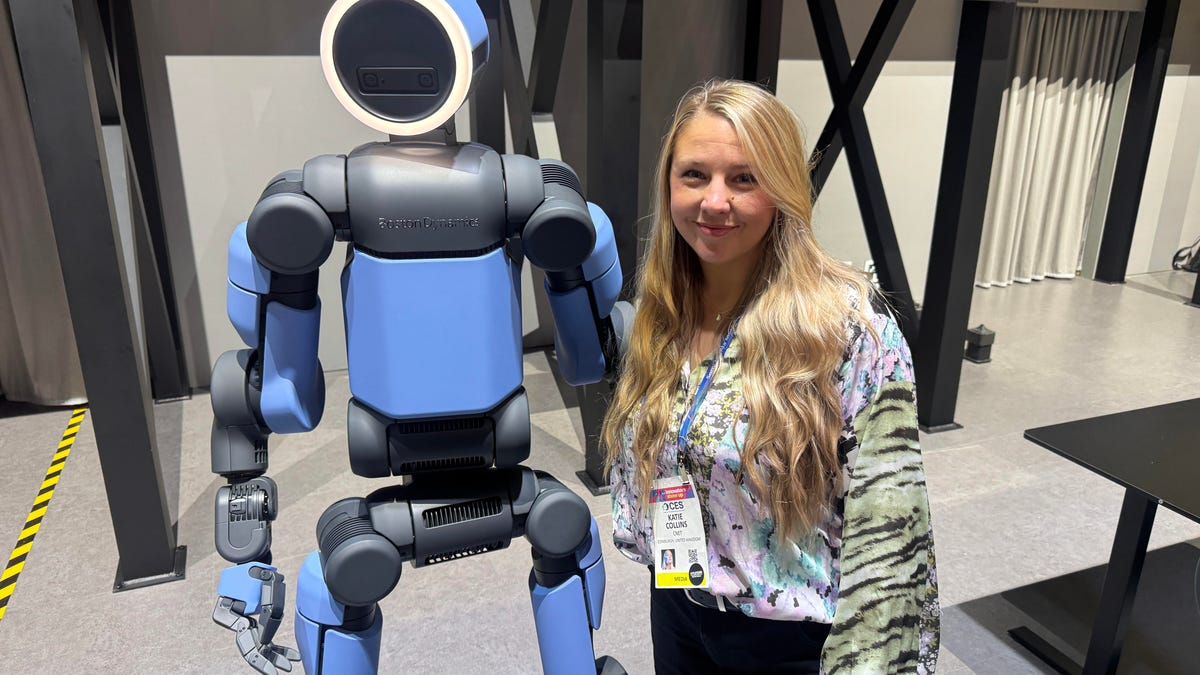
When I say that I went hands-on with the new Boston Dynamics Atlas robot, I mean that I actually held hands with it. This humanoid robot, which CNET just awarded the Best Robot of CES Award, is one of the most advanced in the world, and I couldn’t pass up the opportunity to get up close and personal with it.
This product version of the robot, which is set to be shipped to Hyundai factories imminently to start working, has been the talk of CES this year. The specific Atlas robot I encountered was a static model that wasn’t turned on or fully operational. Our interactions were, therefore, sadly one-sided. Still, I ran my hands over its soft-touch plastic shell and gently prodded at its finger joints, wondering how it would feel if they gripped me back.
People tend to have varying feelings about humanoid robots — understandable given that they are built to some degree in our image, while also usually being stronger than us, with «brains» that we don’t fully understand. Atlas definitely evokes contradictory emotions for me — even more so when I stood face-to-face with it.
I’m in awe of the engineering, a little fearful of its capabilities, hesitant about what it could mean for the future of humanity and charmed by its design and styling. The periwinkle blue iteration of Atlas that I met on the show floor at CES 2026 almost bears more resemblance to a Dyson product than it does the industrial robots that defined Boston Dynamics’ early days, when it was best known for its work with DARPA.
«There’s a lot of really specific things about this robot that probably look a little weird,» said Zachary Jackowski, Boston Dynamics VP and general manager of Atlas. He pointed to the legs, which he described as «like nothing anyone else was doing.»
Atlas’ thighs are narrow set and in line with the torso, while the calves are wider set, attached to their upper counterparts with a circular joint. This robot is, in fact, all subtle curves and soft lines. There are no harsh edges or stark angles.
During a year when CES has been flooded with humanoid robots, Atlas definitely does stand out due to its design. It appears both less classically human and less industrial than some of its peers, while also lacking the often intimidating, featureless faces they tend to exhibit. Instead, it has two low-set cameras resembling eyes placed where you’d usually expect a mouth to be. Its face is a perfect flat circle, defined by an LED halo that gives it a somewhat Pixar lamp effect.
I asked Jackowski why Boston Dynamics decided to skew so relatively unhuman with this version of its humanoid. «Well, it’s not a human,» he said. «It projects the wrong first impression about a robot to have it pretend to be something that it’s not.»
Particularly in the early days of humanoids, he added, robots won’t have anything like human-like intelligence. People should look at it and see it for what it is — a tool for performing tasks safely and efficiently.
In fact, most of the design decisions were made to keep Atlas as simple, scalable and safe as possible, Jackowski said. I remark that there’s some irony in thinking of a humanoid robot as simple, given the complexity of the technology and development process to bring Atlas to life.
The key to making it simple, Jackowski said, is having a strong enough grasp of the technology to «accomplish the complex thing of building a humanoid robot,» but then being able to take it apart and understand that you can use fewer computers and actuators in it while achieving the same results.
And it’s essential to Boston Dynamics that Atlas is perceived as simple. After all, it’s a general-purpose humanoid, which might eventually be sent far and wide to fulfil all manner of roles. Jackowski calls it the «ultimate generalist.»
Simplicity aside, there are aspects of Atlas that Jackowski believes set it apart from other humanoids at the show. «The repairability of this robot is crazy good,» he said. «The runtime is crazy good. The strength is unlike anything.»
From working in Hyundai’s manufacturing plants, Atlas’s job trajectory is to eventually graduate to many of the same industrial environments where Boston Dynamics’ Spot robot works, before moving to bussing tables in the service industry and eventually into the home. The robot will evolve between now and then, Jackowski said. However, this could be an early glimpse of the type of humanoid that will eventually be our housemate.
That’s some way away, though, which is probably for the best. As I gaze up at Atlas, which I’d guess is around the same height as my husband, my feeling is that, however impressive Atlas is, I’m still not ready for it to move in.
Technologies
This Star Wars Dartboard Has a Secret That Will Stop You From Using the Force to Win
This cool dartboard has cameras to track your score and keep you honest
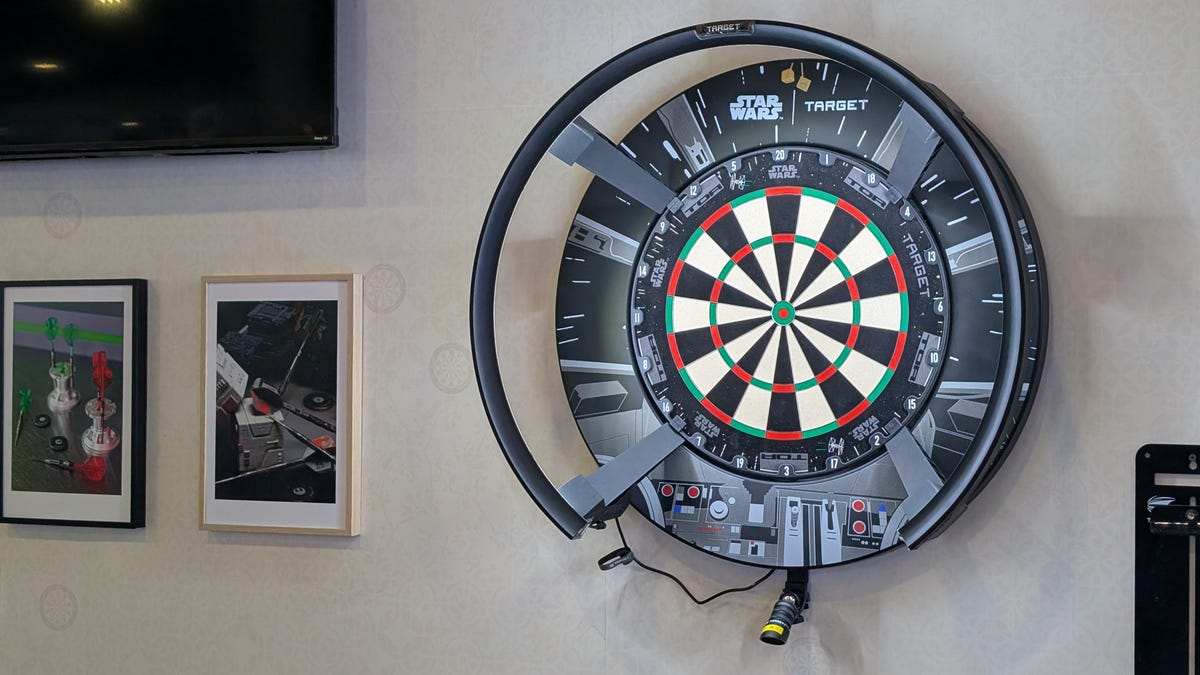
Right in the middle of the high-tech show floor at CES 2026 sits a pub called the Bull and Barrel with some of the coolest dartboards I’ve seen. Target Darts was showcasing its collaboration with both Star Wars and Xbox. Darts may not be for everyone, but I love «shooting some arrows» in my basement with the family. I also love anything Star Wars themed, so these tick a lot of boxes.
The basic Star Wars set comes with a branded board and wall protector that resembles the cockpit of the Millennium Falcon and costs $200. The board is of very high quality, with a tight-knit sisal fiber face, and the protector is thick enough to keep stray shots out of your drywall. The graphics are cool too, with nods to the original Falcon and even have the gold dice hanging above.
The big tech twist to this board, though, is the Omni light ring around the outside. It uses four cameras to track your dart’s position, then sends that info to an app that keeps score. The scoreboard is crisp and clear and uses the voice of legendary darts announcer John McDonald to narrate your game. It’s pretty great to hear his voice announce my terrible scores.
The Omni also allows you to connect with other players worldwide via shared scoreboards. I love the idea of my dad having a board at his house or playing a match with me at my house. It adds a feeling of community to home darts that you don’t normally get outside a pub or bar.
The Omni is a much more expensive proposition than the Star Wars set, coming in at $650, but if you’re serious about the game and a Star Wars fan, it looks to be a great investment.
Technologies
TikTok and FIFA Team Up for World Cup 2026 Coverage
A new team-up aims to make this summer’s tournament more accessible for fans.

If you hadn’t already planned on swiping on TikTok videos of the 2026 FIFA World Cup, a new partnership between the social media platform and tournament organizer FIFA could motivate you to start stretching out your thumbs.
As the soccer tournament nears — it will take place from June 11 to July 19 and span 16 host cities in Canada, Mexico and the US — TikTok will become FIFA’s first «preferred platform.» According to a FIFA statement on Thursday, this entails TikTok providing more coverage of the World Cup, including original content and even livestreaming of some portions of matches.
Don’t miss any of our unbiased tech content and lab-based reviews. Add CNET as a preferred Google source.
You can use the FIFA World Cup 2026 hub on TikTok to find content, match tickets and viewing information, as well as participation incentives such as custom stickers and filters.
In the US, World Cup games will air live across Fox and FS1. If you don’t have cable, you can get a live TV streaming service, such as YouTube TV, which includes those channels. Additionally, every match will stream live on Fox One and the Fox Sports app.
«FIFA’s goal is to share the exhilaration of the FIFA World Cup 2026 with as many fans as possible,» FIFA Secretary General Mattias Grafström said.
-
 Technologies3 года ago
Tech Companies Need to Be Held Accountable for Security, Experts Say
-
 Technologies3 года ago
Best Handheld Game Console in 2023
-
 Technologies3 года ago
Tighten Up Your VR Game With the Best Head Straps for Quest 2
-
 Technologies4 года ago
Black Friday 2021: The best deals on TVs, headphones, kitchenware, and more
-
 Technologies4 года ago
Google to require vaccinations as Silicon Valley rethinks return-to-office policies
-
 Technologies4 года ago
Verum, Wickr and Threema: next generation secured messengers
-
 Technologies4 года ago
Olivia Harlan Dekker for Verum Messenger
-
 Technologies4 года ago
iPhone 13 event: How to watch Apple’s big announcement tomorrow


