

Technologies
I Saw the Sequel to The Witness, and Its World-Merging Puzzles Look Masterful
Order of the Sinking Star serves players plenty of brainteasers, while a background story grapples with what it means to be happy.

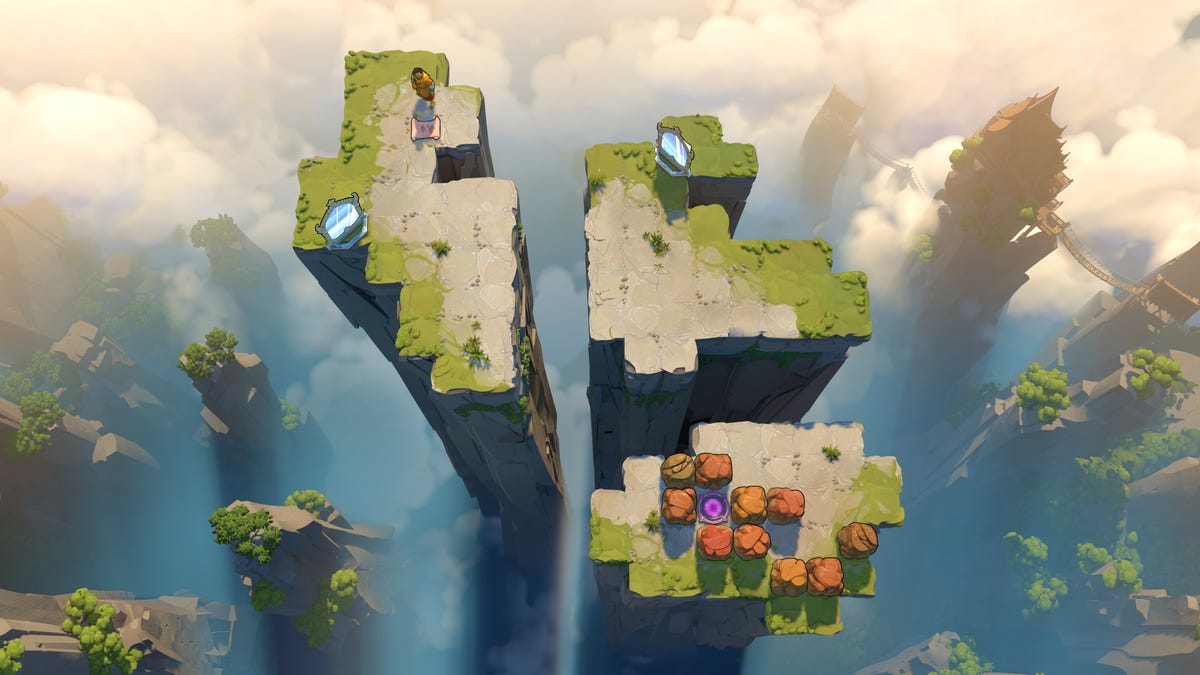
Jonathan Blow, creator of the 2008 platforming game Braid and the 2016 critically acclaimed puzzle title The Witness, has revealed his third game: Order of the Sinking Star. Over a video chat ahead of The Game Awards 2025, where the game was announced, Blow showed me his next clockwork world.
The new title from Blow’s personal studio Thekla, Inc. will be yet another puzzle game, but like his first two successes, Order of the Sinking Star has its own idiosyncratic rules and layers of depth. In it, players wander an overworld of islands that host myriad little puzzles to hop into. Each is a single screen of squares on a grid filled with doors with obstacles and enemies to navigate. Beat those to unlock islands with more brain-teasing challenges, and soon, you’ll even run into puzzles on the overworld.
Like Blow’s other games, Order of the Sinking Star is designed to reveal layers of meta-mechanics to the players as they dive deeper. Each of the four quadrants of the overworld map contains a different story, characters and basic mechanics — for instance, a trio of characters pushing, pulling and teleporting blocks around to reach the exit. But more heroes with different powers — even dragons — complicate the many puzzles as they go on.
And that’s just one of the four quadrants in the game, which have their own unique flavors of spatial challenge — all of which skyrockets in complexity in the places where they merge.
Order of the Sinking Star was partially inspired by the Japanese subgenre of Sokobon games, in which players carefully move boxes around a room (typically a warehouse) to avoid blocking themselves in a corner. The new game’s puzzles look to be thoughtful affairs, with simple levels giving way to more complex brainteasers and a background story trickling to the player in bits and pieces. Order of the Sinking Star will come out in 2026, and it looks promising.
Try making a game engine demo, end up with a whole game
After making The Witness, Blow was tired of developing in the C++ programming language, so he decided to make his own called Jai. But his team didn’t stop there and diverted to making their own specialized game engine. Order of the Sinking Star was intended to be a small proof of concept that would showcase the kinds of games possible to make with it. But Blow and his team couldn’t resist adding more and more puzzle dynamics.
«It was supposed to be a small game, but for some reason, it’s kind of stupid to build a game that’s about a combinatorial explosion and expect it to be small,» Blow said. «So for this game, that ended up meaning it’s really, really big. I probably will never do something this big again unless somehow I have a much bigger team.»
Order of the Sinking Star has a slight cartoonish look to it, at least from what was finished — I saw a good number of unfinished graphics, as Blow was eager to show off certain later game mechanics that hadn’t gotten finalized visuals. The complexity of the game won’t be in pushed pixels and lifelike graphics. But that’s likely for the best, as the simpler style makes the obstacles and map components as clear as possible to the players.
However, while players can proceed in any direction of the overworld, mechanics can get complicated pretty quickly. Blow showed me the first area, the northern quadrant, styled after a traditional swords-and-sorcery fantasy world. Players control three characters, each with different abilities: a warrior who can push objects, a thief who can’t help stealing and drags the last thing they touch behind them, and a wizard who teleports to swap places with the object they’re facing. Some puzzles have just one character, while more advanced ones will require players to swap between all three.
Players are dropped into the game without much preamble so they can get to puzzling, but text hints and audio logs (which Blow is an avowed fan of) will share the contextual story. The story consists of a queen who is using the heroes to help delve deeper into her land of puzzles in the northern section of the game.
Teleporters will enable players to hop around the different quadrants; if they get stuck, they can pop back to another area with different dynamics. The eastern quadrant, for instance, is all about using a magical mirror that beams a clone of the player’s character at a 90-degree angle to them, moving back and forth in tandem. In this land’s puzzles, players can swap from character to clone and back again to hop across islands.
But Blow and his team didn’t spend all this time just making four different puzzle biomes. On the overworld border where any of these quadrants collide, players will find levels that merge their mechanics. Following along the northeastern border, players will find maps with both fantasy hero and mirror puzzle mechanics mashed together.
Considering how long Blow’s team spent on the game and what little I saw, I only expect these complexities to grow and expand, surprising players with sophisticated alterations of these basic rules. That’s what made The Witness so compelling for me to explore deeper, as the game’s puzzles began to impact each other. Well, that and the philosophical underpinnings as the game’s setting and lore revealed its message.
The philosophy of Blow’s next game
After the storytelling depth layered into Blow’s previous blockbuster successes, it’s smart to expect similar meaning weaved into Order of the Sinking Star. Like Blow’s other games, the secrets are in the structure.
In Order of the Sinking Star’s case, the mystery lies in the overworld that players return to and explore between puzzles. What is it, who made it, and why? As the player drops into puzzles, the characters they control give a few lines of dialogue, which combine with audio logs to tell a bigger story: 500 years in the future, humanity exists in a postscarcity world.
«If you have no problems and everybody’s essentially infinitely rich, what is the point of life at that point?» Blow said. «Do people still interact in a normal way? Do they even talk to each other? How do they feel from day to day about themselves?»
Despite a true postscarcity society being far in the future, we’re also the richest society in the history of the world, Blow noted — and we already show plenty of rich society problems. He was quick to say that not everyone in the US feels wealthy right now. But even those with roofs over their heads who have jobs and live with someone in conditions where they’re generally taken care of are still challenged by questions a postscarcity civilization would have, which Blow quickly rattled off.
«How do I spend my days, and do I spend them being happy? What does being happy mean to me — is it a shallow form of being happy or a deep form? What are those two different things? Should one have judgment about that, and what kind of judgment?» Blow said.
The game’s story and art aren’t finished, so the delivery of these themes hasn’t been finalized. But Blow did confirm that Order of the Sinking Star has «way, way more story in it than either of my previous games — so I’m just really concerned with making sure it’s good.»
Making games that stretch past what’s out there — and what’s next for Blow
Though the 1993 classic first-person puzzle game Myst partially inspired (and was compared to) The Witness, there weren’t many games like it when it came out in 2016. Blow wasn’t sure folks would play the game, but plenty did. That supported his philosophy that you may have some idea what people would buy based on what’s out there, but nobody can tell how a game with an unknown design would land.
«That’s one interesting thing for a designer to do, and that’s what I try to do: make things that are a little bit outside the scope of what currently exists, and then hopefully other people appreciate those things as well,» Blow said.
Plenty has changed since his last game came out in 2016, including the noise of an increasing number of games jostling for attention upon release. Blow plays some of these, especially in his favored genre of puzzle games, which he still believes can be «really magical» when they have a mind-expanding idea. But too many other games are made by designers who don’t set their sights high, and their central idea is more of a tricky gimmick.
When I ask him about recent puzzle games he’s enjoyed, his tastes skew esoteric, like last year’s Shogun Showdown. Even a 20-minute demo for a game that hasn’t come out yet, Trifolium: The Adventures of Gary Pretzelneck, comes to Blow’s mind ahead of other popular puzzle games like this year’s The Blue Prince.
Yet he notes that The Blue Prince proves his point that games defying player tastes can make them desire the unexpected.
«If you asked people in January 2025, ‘What game do you most want to play this year,’ none of them would have described Blue Prince probably because they didn’t know that they wanted to play that, right?» Blow said.
Developing the game engine was a lengthy process that Blow and his team hope will translate to less time to develop their next game. He’s already got an idea of what he wants to do. Though it’s one of several potential game ideas he and his team could dig into, he already prototyped it privately — back before The Witness even came out.
«It’s not a puzzle game; I’ll drop a hint about that,» Blow said. «I’m looking forward to working on a nonpuzzle game.»
We’ll have to see whether Blow can resist avoiding the clockwork mechanics that have made his games irresistible to puzzle brains.
Technologies
Today’s NYT Connections Hints, Answers and Help for Dec. 24, #927
Here are some hints and the answers for the NYT Connections puzzle for Dec. 24 #927

Looking for the most recent Connections answers? Click here for today’s Connections hints, as well as our daily answers and hints for The New York Times Mini Crossword, Wordle, Connections: Sports Edition and Strands puzzles.
Today’s NYT Connections puzzle is kind of tough. Ooh, that purple category! Once again, you’ll need to look inside words for hidden words. Read on for clues and today’s Connections answers.
The Times has a Connections Bot, like the one for Wordle. Go there after you play to receive a numeric score and to have the program analyze your answers. Players who are registered with the Times Games section can now nerd out by following their progress, including the number of puzzles completed, win rate, number of times they nabbed a perfect score and their win streak.
Read more: Hints, Tips and Strategies to Help You Win at NYT Connections Every Time
Hints for today’s Connections groups
Here are four hints for the groupings in today’s Connections puzzle, ranked from the easiest yellow group to the tough (and sometimes bizarre) purple group.
Yellow group hint: Cash out.
Green group hint: Chomp
Blue group hint: Walleye and salmon.
Purple group hint: Make a musical sound, with a twist.
Answers for today’s Connections groups
Yellow group: Slang for money.
Green group: Masticate.
Blue group: Fish.
Purple group: Ways to vocalize musically plus a letter.
Read more: Wordle Cheat Sheet: Here Are the Most Popular Letters Used in English Words
What are today’s Connections answers?
The yellow words in today’s Connections
The theme is slang for money. The four answers are bacon, bread, cheese and paper.
The green words in today’s Connections
The theme is masticate. The four answers are bite, champ, chew and munch.
The blue words in today’s Connections
The theme is fish. The four answers are char, pollock, sole and tang.
The purple words in today’s Connections
The theme is ways to vocalize musically plus a letter. The four answers are hump (hum), rapt (rap), singe (sing) and whistler (whistle).
Don’t miss any of our unbiased tech content and lab-based reviews. Add CNET as a preferred Google source.
Toughest Connections puzzles
We’ve made a note of some of the toughest Connections puzzles so far. Maybe they’ll help you see patterns in future puzzles.
#5: Included «things you can set,» such as mood, record, table and volleyball.
#4: Included «one in a dozen,» such as egg, juror, month and rose.
#3: Included «streets on screen,» such as Elm, Fear, Jump and Sesame.
#2: Included «power ___» such as nap, plant, Ranger and trip.
#1: Included «things that can run,» such as candidate, faucet, mascara and nose.
Technologies
Today’s NYT Mini Crossword Answers for Wednesday, Dec. 24
Here are the answers for The New York Times Mini Crossword for Dec. 24.
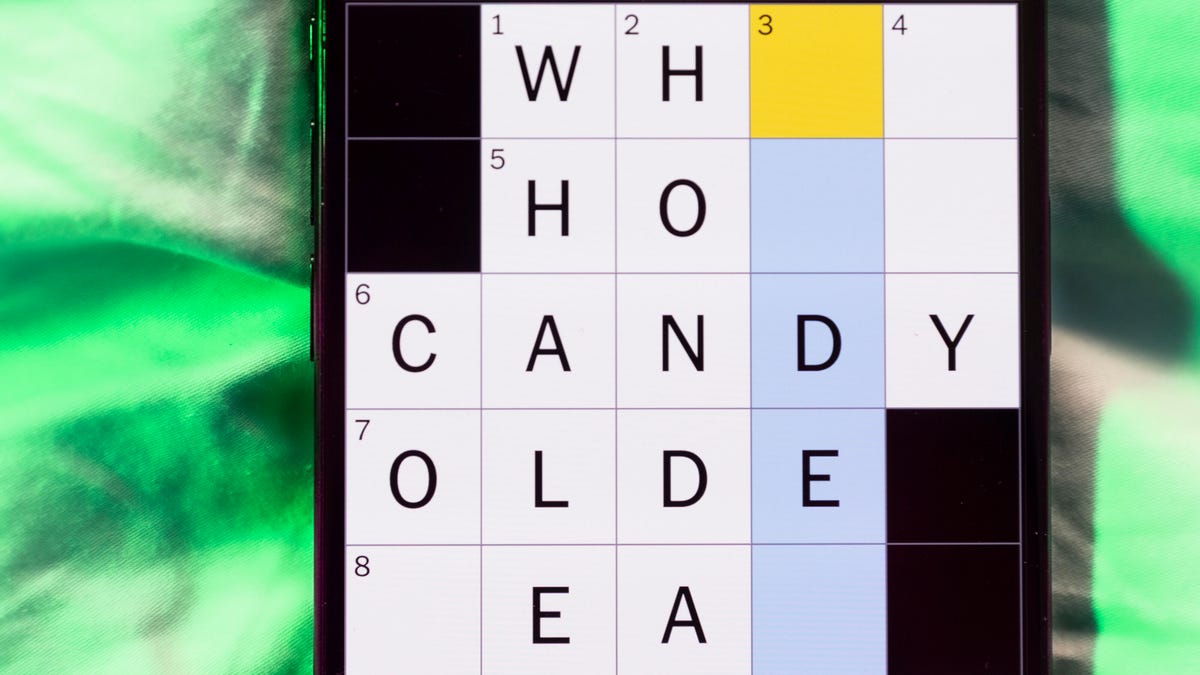
Looking for the most recent Mini Crossword answer? Click here for today’s Mini Crossword hints, as well as our daily answers and hints for The New York Times Wordle, Strands, Connections and Connections: Sports Edition puzzles.
Need some help with today’s Mini Crossword? I’m Irish-American, but yet 6-Down, which involves Ireland, stumped me at first. Read on for all the answers.. And if you could use some hints and guidance for daily solving, check out our Mini Crossword tips.
If you’re looking for today’s Wordle, Connections, Connections: Sports Edition and Strands answers, you can visit CNET’s NYT puzzle hints page.
Read more: Tips and Tricks for Solving The New York Times Mini Crossword
Let’s get to those Mini Crossword clues and answers.
Mini across clues and answers
1A clue: Wordle or Boggle
Answer: GAME
5A clue: Big Newton
Answer: ISAAC
7A clue: Specialized vocabulary
Answer: LINGO
8A clue: «See you in a bit!»
Answer: LATER
9A clue: Tone of many internet comments
Answer: SNARK
Mini down clues and answers
1D clue: Sharks use them to breathe
Answer: GILLS
2D clue: From Singapore or South Korea, say
Answer: ASIAN
3D clue: Large ocean ray
Answer: MANTA
4D clue: ___ beaver
Answer: EAGER
6D clue: Second-largest city in the Republic of Ireland, after Dublin
Answer: CORK
Don’t miss any of our unbiased tech content and lab-based reviews. Add CNET as a preferred Google source.
Technologies
Quadrantids Is a Short but Sweet Meteor Shower Just After New Year’s. How to See It
This meteor shower has one of the most active peaks, but it doesn’t last for very long.
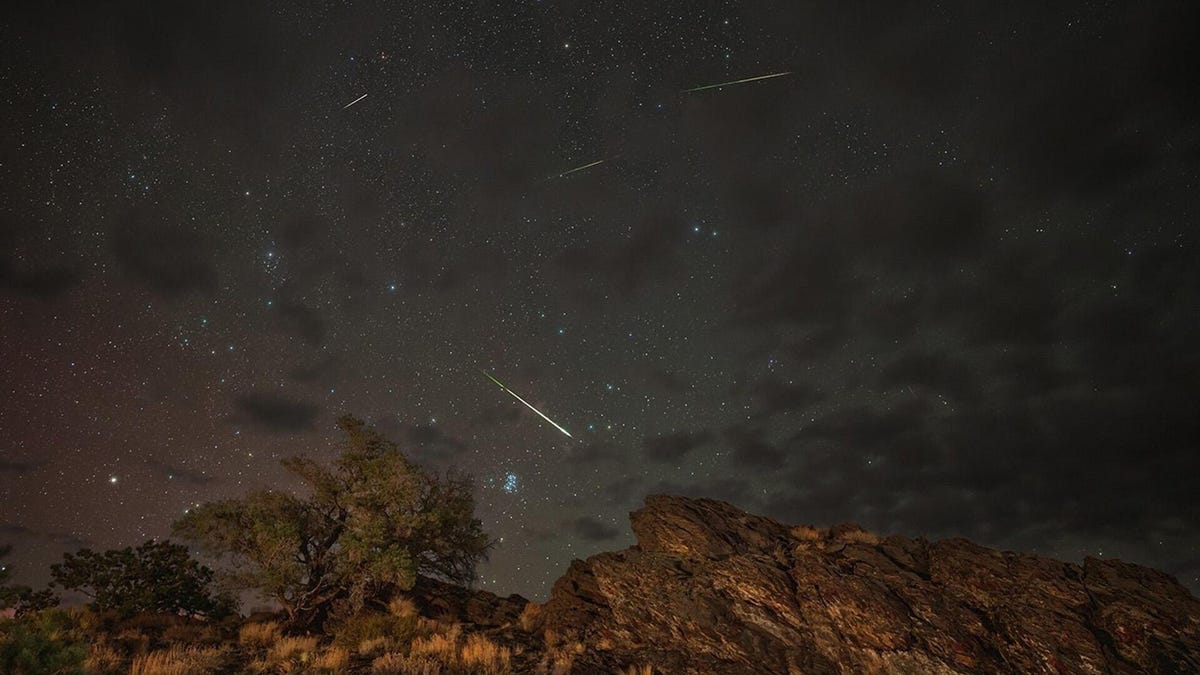
The Quadrantids has the potential to be one of the most active meteor showers of the year, and skygazers won’t have long to wait to see it. The annual shower is predicted to reach maximum intensity on Jan. 3. And with a display that can rival Perseids, Quadrantids could be worth braving the cold to see it.
Don’t miss any of our unbiased tech content and lab-based reviews. Add CNET as a preferred Google source.
The show officially begins on Dec. 28 and lasts until Jan. 12, according to the American Meteor Society. Quadrantids is scheduled to peak on Jan. 2-3, when it may produce upwards of 125 meteors per hour. This matches Perseids and other larger meteor showers on a per-hour rate, but Quadrantids also has one of the shortest peaks at just 6 hours, so it rarely produces as many meteors overall as the other big ones.
The meteor shower comes to Earth courtesy of the 2003 EH1 asteroid, which is notable because most meteor showers are fed from comets, not asteroids. Per NASA, 2003 EH1 is a near-Earth asteroid that orbits the sun once every five and a half years. Science posits that 2003 EH1 was a comet in a past life, but too many trips around the sun stripped it of its ice, leaving only its rocky core. The Earth runs through EH1’s orbital debris every January, which results in the Quadrantids meteor shower.
How and where to see Quadrantids
Quadrantids is named for the constellation where its meteors appear to originate, a point known as the radiant. This presents another oddity, as the shower originates from the constellation Quadrans Muralis. This constellation ceased to be recognized as an official constellation in the 1920s and isn’t available on most publicly accessible sky maps.
For the modern skygazer, you’ll instead need to find the Bootes and Draco constellations, both of which contain stars that were once a part of the Quadrans Muralis. Draco will be easier to find after sunset on the evening of Jan. 2, and will be just above the horizon in the northern sky. Bootes orbits around Draco, but will remain under the horizon until just after 1 a.m. local time in the northeastern sky. From that point forward, both will sit in the northeastern part of the sky until sunrise. You’ll want to point your chair in that direction and stay there to see meteors.
As the American Meteor Society notes, Quadrantids has a short but active peak, lasting around 6 hours. The peak is expected to start around 4 p.m. ET and last well into the evening. NASA predicts the meteor shower to start one day later on Jan. 3-4, so if you don’t see any on the evening of Jan. 2, try again on Jan. 3.
To get the best results, the standard space viewing tips apply. You’ll want to get as far away from the city and suburbs as possible to reduce light pollution. Since it’ll be so cold outside, dress warmly and abstain from alcoholic beverages, as they can affect your body temperature. You won’t need any binoculars or telescopes, and the reduced field of view may actually impact your ability to see meteors.
The bad news is that either way, the Quadrantids meteor shower coincides almost perfectly with January’s Wolf Moon, which also happens to be a supermoon. This will introduce quite a lot of light pollution, which will likely drown out all but the brightest meteors. So, while it may have a peak of over 100 meteors per hour, both NASA and the AMS agree that the more realistic expectation is 10 or so bright meteors per hour.
-
 Technologies3 года ago
Tech Companies Need to Be Held Accountable for Security, Experts Say
-
 Technologies3 года ago
Best Handheld Game Console in 2023
-
 Technologies3 года ago
Tighten Up Your VR Game With the Best Head Straps for Quest 2
-
 Technologies4 года ago
Black Friday 2021: The best deals on TVs, headphones, kitchenware, and more
-
 Technologies4 года ago
Verum, Wickr and Threema: next generation secured messengers
-
 Technologies4 года ago
Google to require vaccinations as Silicon Valley rethinks return-to-office policies
-
 Technologies4 года ago
Olivia Harlan Dekker for Verum Messenger
-
 Technologies4 года ago
iPhone 13 event: How to watch Apple’s big announcement tomorrow


