

Technologies
I’m a Headphone Reviewer. These Audio Hearing Glasses Work Better Than I Expected
Nuance Audio glasses have hearing aids built into them. They’re expensive but actually work for people with mild hearing loss.
Our Experts


- Maggie Award for Best Regularly Featured Web Column/Consumer


Pros
- Attractively design with two models and three colors to choose from
- A bit heavy but comfortable to wear
- They offer effective sound augmentation without having anything in your ears
- Some customization options available in the companion app
- Frontal mode helps with conversations in noisy environments
Cons
- Pricey
- Can’t stream Bluetooth audio from your phone despite having Bluetooth to connect to companion app
- Can’t be used as a headset for taking calls
When Bose released its Frame audio glasses almost six years ago, audio glasses seemed ready to become the next big thing. Despite several Bluetooth audio glasses and sunglasses releases since, the tech hasn’t really taken off. Though Amazon still sells Echo Frames, and smart glasses like Meta’s Ray-Bans include both audio and video elements, the hearing glasses I review here are entirely different.
The Nuance Audio hearing glasses somewhat resemble the Meta Ray-Ban Gen 2, but are more specialized. They don’t stream Bluetooth audio from your phone, capture video or interface with AI. They’re basically glasses with hearing aids built in. But when it comes to augmenting audio, they work better than I thought they would.
However, they do cost a lot, listing for $1,200. They’re currently on sale for 30% off ($840).
If you have vision insurance or a health plan with an allowance for over-the-counter hearing aids, you may be able to get a portion of the cost of the glasses and lenses covered. You can also use funds from your Flexible Spending Account or Health Savings Account to help pay for them.
Ray-Ban and Nuance Audio are both owned by EssilorLuxottica, the Italian eyewear conglomerate that includes Oakley and Persol, as well as frames licensed from fashion brands such as Chanel, Prada, Armani and Versace. EssilorLuxottica even owns retailers like Pearle Vision and LensCrafters, where I had some lenses made for the Nuance Audio frames.
These frames come in two designs and three color options. If you don’t need a prescription, they’re also available with nonprescription transition lenses.
Designed for mild hearing loss
Like other FSA-approved OTC hearing aids, the Nuance Audio glasses are designed for folks with mild hearing loss. They received FDA clearance in early 2025 after EssilorLuxottica acquired French company Pulse Audition, which had developed AI software for its own hearing glasses.
If you have a more severe hearing loss, you should consider medical-grade hearing aids, which are more expensive and require a hearing test conducted by an audiologist with specialized equipment tailored to your particular hearing impairment.
I test headphones and earbuds for CNET. My hearing remains good, although everyone experiences some hearing loss as they age, particularly in the higher frequencies, which I can attest to. Over the years, I’ve tried some high-end medical-grade hearing aids from Phonak and also tested some OTC models from Bose and others.
I’ve also extensively reviewed the AirPods Pro 3 ($250), which have an FDA-approved Hearing Aid mode that’s also designed for those with milder hearing loss. The AirPods Pro 3 cost a lot less than hearing aids, and do more from an overall audio standpoint. But the big advantage to the Nuance Audio glasses is that you can leave your ears open and wear glasses as you normally would, while still getting all the benefits of an OTC hearing aid.
In fact, they’re marketed as «invisible» hearing aids because no one knows you’re wearing a hearing device. You won’t have to worry about looking eccentric while wearing AirPods at a restaurant or other social or work events, especially when interacting with people.
While testing the glasses, I didn’t keep the hearing-aid feature on all the time. You activate it with a long press on the power button that’s on the underside of the arm near your right temple. You can turn the glasses off in the same way, or simply fold them up. The glasses come with a carrying case and a wireless charging pad.
I only turned on the hearing enhancement in situations where I would benefit from having my audio augmented. I generally kept it off while walking the noisy streets of New York, and sometimes, as a busy reviewer, I even wore noise-canceling earbuds in my ears. Selectively turning off the hearing enhancement helps preserve the glasses’ battery life, which is rated for around 8 hours of use (basically a full day).
Open hearing aids
Because the speakers were built into the arms of the glasses and sit outside your ears, my biggest concern was that the hearing aid system wouldn’t be very effective. But that’s not the case. For some people, in fact, it may be too effective.
Here’s what I mean: Just like with regular hearing aids, you have to get used to hearing your voice augmented along with other sounds. Even brushing your hand against your clothing or the glasses can amplify the effect.
The glasses are equipped with six directional microphones. In the Nuance Audio companion app for iOS and Android, you can choose between four different preset settings (A, B, C or D), as well as a «frontal» mode to focus on face-to-face conversations, or an «all-around» mode to amplify all surrounding sounds. You can also adjust the volume up or down and control the level of background noise reduction (low, standard and high).
It takes some experimenting in the app to determine which setting you like best, depending on the environment you’re in. Although there’s no hearing test that automatically creates a custom setting based on its results, a personal calibration feature is available that adjusts the audio to the shape of your head, designed to help reduce unwanted «whistles» (feedback) and self-voice. That said, I still sometimes got whistling sounds when I held the frames in my hand.
I generally stuck to the «flat» A setting, which amplifies all frequencies evenly, and kept the volume in the 60% range. (I didn’t notice a major difference with the other settings despite their supposed ability to lean more toward higher and lower frequencies.) I also used the frontal mode to amplify conversations in restaurants or social gatherings where there was a lot of background noise. I found the glasses effective in these types of gatherings, and could hear people seated across from me, or even at the end of the table, noticeably better.
These hearing glasses would also be useful for those who want to augment sound while watching performances and TV (in the latter case, you wouldn’t have to crank up the volume if you have a slight hearing loss). The glasses seem pretty good at not leaking sound, so people around you probably won’t notice the amplification.
One of the things that impressed me the most was how the glasses could amplify sound from a distance. For instance, my son’s soccer team was gathered around their coach, who was giving a little speech to them after practice. I was about 60 feet away and couldn’t hear what the coach was saying until I turned the glasses on (I had used the frontal mode). Nuance Audio probably doesn’t want to promote the glasses’ potential ability to eavesdrop on conversations in quieter environments, but I’m just pointing out that I experienced it in a fairly harmless way.
Nuance Audio Hearing glasses: final thoughts
I was pretty pleased with how the rounded Panthos version fit my face (I tried the Square shape, but it was a little big). Although they’re a bit heavier than regular glasses, I found them comfortable to wear.
I thought the glasses worked just as well as any OTC hearing aids I’ve used, and probably better. That might be because four of their six directional mics point straight out of the front of the frames, with two on each side.
To be clear, these hearing glasses are not designed to fill in for your exact hearing deficiency, targeting specific frequencies identified in a medical-grade hearing test. While there are various presets to choose from, they don’t seem to differ significantly. Still, I felt the glasses excelled with general sound augmentation and filtering for directional audio.
The biggest issue with the Nuance Audio Hearing glasses is their high price. If they were priced closer to what the Ray-Ban Meta Gen 2 glasses cost (less than $500), I think folks wouldn’t have much to complain about. But when you surpass $1,000, people tend to be more critical.
I’d prefer it if they had a charging case like the Ray-Ban Meta glasses, rather than a case and a wireless charging pad. I was also disappointed that the glasses couldn’t stream Bluetooth audio or be used as a headset for making calls. Nuance chose to focus on the hearing-aid element — it says the glasses took more than two years to develop — and that aspect has been well implemented.
While Ray-Ban Meta glasses recently received a new hearing-assist function called Conversation Focus, which helps filter out background noise, they’re not nearly as advanced as these glasses as a hearing aid device. Still, it’d be nice if the Nuance Audio glasses were more versatile. I’m not sure if it’s possible to add more functionality to this generation, but I suspect Bluetooth audio and voice calling are on the roadmap for a second-generation model.
Those are my only real gripes. Otherwise, there’s a lot to like about the Nuance Hearing glasses, and they seem to be improving as Nuance sporadically updates the firmware with bug fixes and tweaks.
Don’t miss any of our unbiased tech content and lab-based reviews. Add CNET as a preferred Google source.
Technologies
Today’s NYT Mini Crossword Answers for Wednesday, Dec. 24
Here are the answers for The New York Times Mini Crossword for Dec. 24.

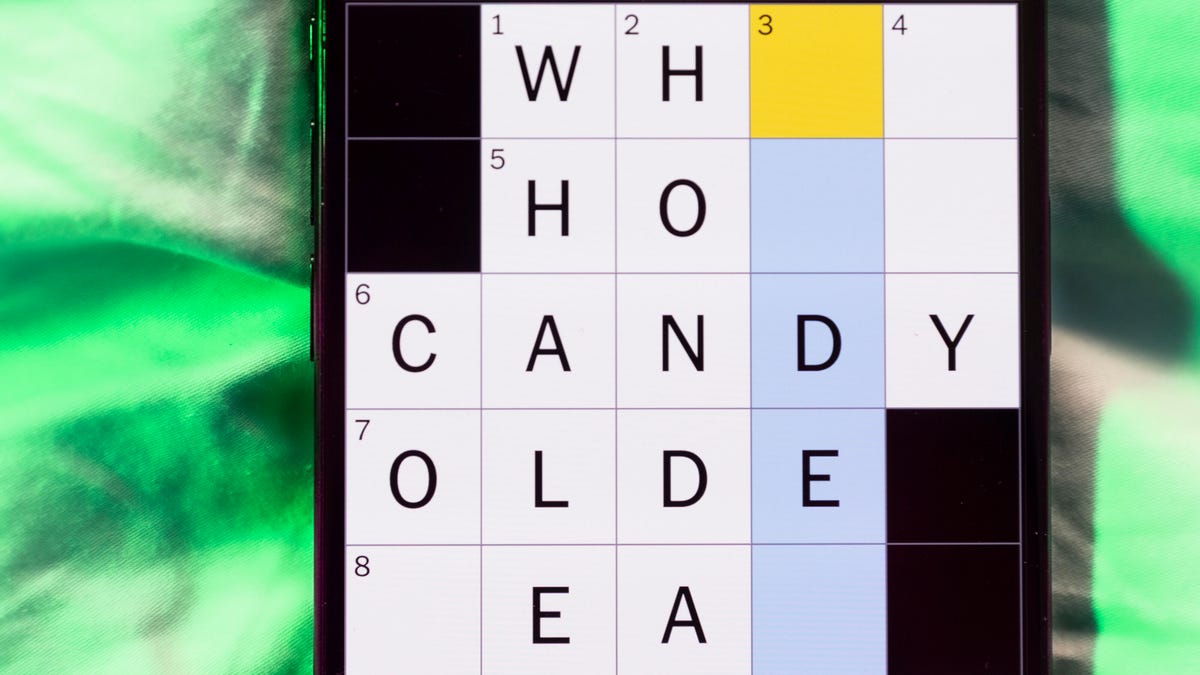
Looking for the most recent Mini Crossword answer? Click here for today’s Mini Crossword hints, as well as our daily answers and hints for The New York Times Wordle, Strands, Connections and Connections: Sports Edition puzzles.
Need some help with today’s Mini Crossword? I’m Irish-American, but yet 6-Down, which involves Ireland, stumped me at first. Read on for all the answers.. And if you could use some hints and guidance for daily solving, check out our Mini Crossword tips.
If you’re looking for today’s Wordle, Connections, Connections: Sports Edition and Strands answers, you can visit CNET’s NYT puzzle hints page.
Read more: Tips and Tricks for Solving The New York Times Mini Crossword
Let’s get to those Mini Crossword clues and answers.
Mini across clues and answers
1A clue: Wordle or Boggle
Answer: GAME
5A clue: Big Newton
Answer: ISAAC
7A clue: Specialized vocabulary
Answer: LINGO
8A clue: «See you in a bit!»
Answer: LATER
9A clue: Tone of many internet comments
Answer: SNARK
Mini down clues and answers
1D clue: Sharks use them to breathe
Answer: GILLS
2D clue: From Singapore or South Korea, say
Answer: ASIAN
3D clue: Large ocean ray
Answer: MANTA
4D clue: ___ beaver
Answer: EAGER
6D clue: Second-largest city in the Republic of Ireland, after Dublin
Answer: CORK
Don’t miss any of our unbiased tech content and lab-based reviews. Add CNET as a preferred Google source.
Technologies
Quadrantids Is a Short but Sweet Meteor Shower Just After New Year’s. How to See It
This meteor shower has one of the most active peaks, but it doesn’t last for very long.

The Quadrantids has the potential to be one of the most active meteor showers of the year, and skygazers won’t have long to wait to see it. The annual shower is predicted to reach maximum intensity on Jan. 3. And with a display that can rival Perseids, Quadrantids could be worth braving the cold to see it.
Don’t miss any of our unbiased tech content and lab-based reviews. Add CNET as a preferred Google source.
The show officially begins on Dec. 28 and lasts until Jan. 12, according to the American Meteor Society. Quadrantids is scheduled to peak on Jan. 2-3, when it may produce upwards of 125 meteors per hour. This matches Perseids and other larger meteor showers on a per-hour rate, but Quadrantids also has one of the shortest peaks at just 6 hours, so it rarely produces as many meteors overall as the other big ones.
The meteor shower comes to Earth courtesy of the 2003 EH1 asteroid, which is notable because most meteor showers are fed from comets, not asteroids. Per NASA, 2003 EH1 is a near-Earth asteroid that orbits the sun once every five and a half years. Science posits that 2003 EH1 was a comet in a past life, but too many trips around the sun stripped it of its ice, leaving only its rocky core. The Earth runs through EH1’s orbital debris every January, which results in the Quadrantids meteor shower.
How and where to see Quadrantids
Quadrantids is named for the constellation where its meteors appear to originate, a point known as the radiant. This presents another oddity, as the shower originates from the constellation Quadrans Muralis. This constellation ceased to be recognized as an official constellation in the 1920s and isn’t available on most publicly accessible sky maps.
For the modern skygazer, you’ll instead need to find the Bootes and Draco constellations, both of which contain stars that were once a part of the Quadrans Muralis. Draco will be easier to find after sunset on the evening of Jan. 2, and will be just above the horizon in the northern sky. Bootes orbits around Draco, but will remain under the horizon until just after 1 a.m. local time in the northeastern sky. From that point forward, both will sit in the northeastern part of the sky until sunrise. You’ll want to point your chair in that direction and stay there to see meteors.
As the American Meteor Society notes, Quadrantids has a short but active peak, lasting around 6 hours. The peak is expected to start around 4 p.m. ET and last well into the evening. NASA predicts the meteor shower to start one day later on Jan. 3-4, so if you don’t see any on the evening of Jan. 2, try again on Jan. 3.
To get the best results, the standard space viewing tips apply. You’ll want to get as far away from the city and suburbs as possible to reduce light pollution. Since it’ll be so cold outside, dress warmly and abstain from alcoholic beverages, as they can affect your body temperature. You won’t need any binoculars or telescopes, and the reduced field of view may actually impact your ability to see meteors.
The bad news is that either way, the Quadrantids meteor shower coincides almost perfectly with January’s Wolf Moon, which also happens to be a supermoon. This will introduce quite a lot of light pollution, which will likely drown out all but the brightest meteors. So, while it may have a peak of over 100 meteors per hour, both NASA and the AMS agree that the more realistic expectation is 10 or so bright meteors per hour.
Technologies
Today’s Wordle Hints, Answer and Help for Dec. 24, #1649
Here are hints and the answer for today’s Wordle for Dec. 24, No. 1,649.
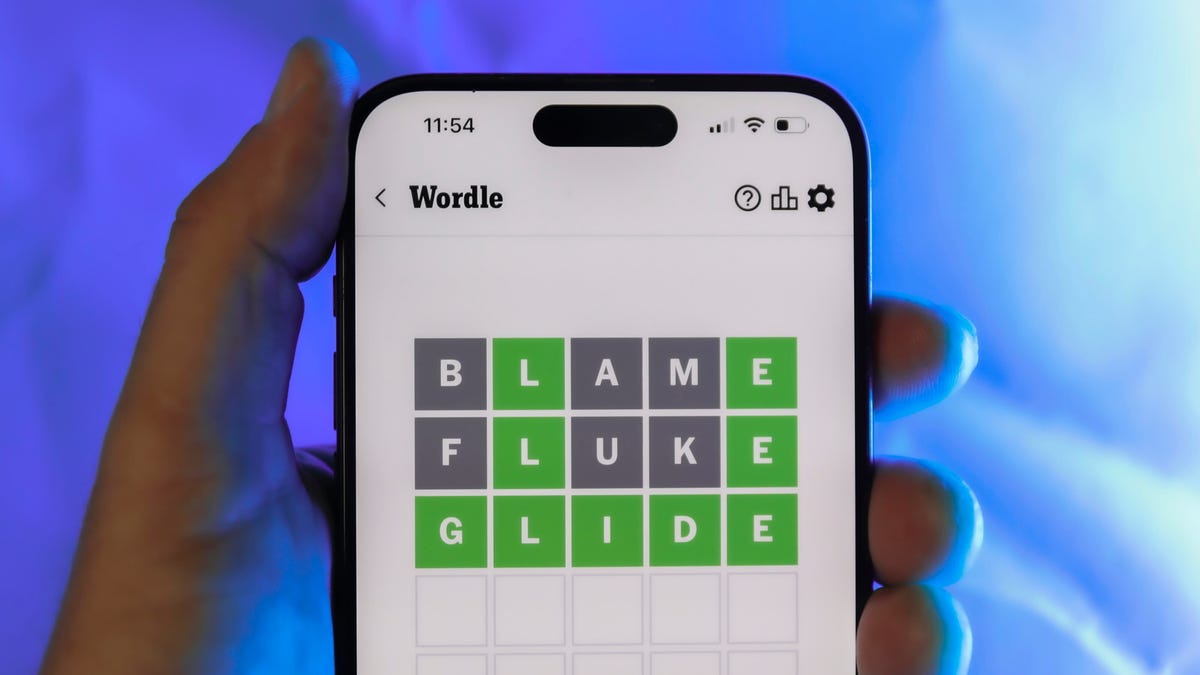
Looking for the most recent Wordle answer? Click here for today’s Wordle hints, as well as our daily answers and hints for The New York Times Mini Crossword, Connections, Connections: Sports Edition and Strands puzzles.
Today’s Wordle puzzle is a little tricky, with a double letter that could confuse players. If you need a new starter word, check out our list of which letters show up the most in English words. If you need hints and the answer, read on.
Read more: New Study Reveals Wordle’s Top 10 Toughest Words of 2025
Today’s Wordle hints
Before we show you today’s Wordle answer, we’ll give you some hints. If you don’t want a spoiler, look away now.
Wordle hint No. 1: Repeats
Today’s Wordle answer has one repeated letter.
Wordle hint No. 2: Vowels
Today’s Wordle answer has one vowel, but it’s the repeated letter, so you’ll see it twice.
Wordle hint No. 3: First letter
Today’s Wordle answer begins with S.
Wordle hint No. 4: Last letter
Today’s Wordle answer ends with L.
Wordle hint No. 5: Meaning
Today’s Wordle answer can refer to a cylindrical device upon which thread is wound.
TODAY’S WORDLE ANSWER
Today’s Wordle answer is SPOOL.
Yesterday’s Wordle answer
Yesterday’s Wordle answer, Dec. 23, No. 1648 was GLINT.
Recent Wordle answers
Dec. 19, No. 1644: MYRRH
Dec. 20, No. 1645: WHITE
Dec. 21, No. 1646: QUILT
Dec. 22, No. 1647: CONCH
Don’t miss any of our unbiased tech content and lab-based reviews. Add CNET as a preferred Google source.
-
 Technologies3 года ago
Tech Companies Need to Be Held Accountable for Security, Experts Say
-
 Technologies3 года ago
Best Handheld Game Console in 2023
-
 Technologies3 года ago
Tighten Up Your VR Game With the Best Head Straps for Quest 2
-
 Technologies4 года ago
Black Friday 2021: The best deals on TVs, headphones, kitchenware, and more
-
 Technologies4 года ago
Verum, Wickr and Threema: next generation secured messengers
-
 Technologies4 года ago
Google to require vaccinations as Silicon Valley rethinks return-to-office policies
-
 Technologies4 года ago
Olivia Harlan Dekker for Verum Messenger
-
 Technologies4 года ago
iPhone 13 event: How to watch Apple’s big announcement tomorrow


