

Technologies
AI Slop for Christmas: Why McDonald’s and Coca-Cola’s AI Holiday Ads Missed the Mark
Commentary: Two billion-dollar companies using AI for holiday ads isn’t giving me that holly jolly feeling.

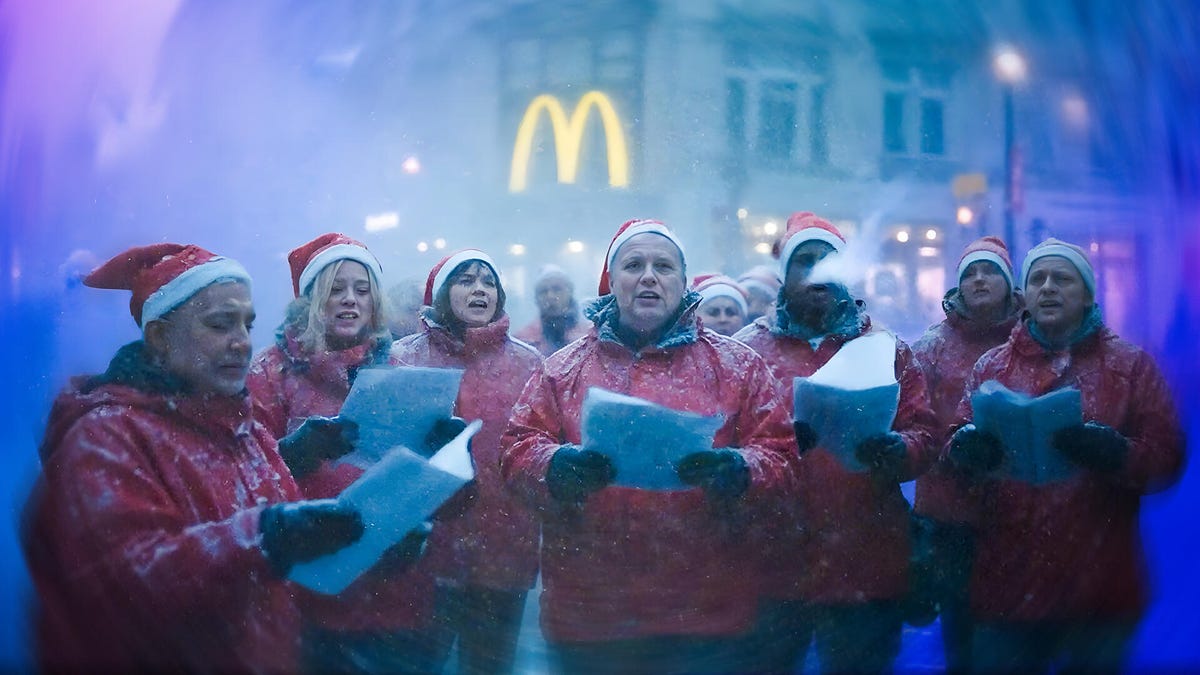
I am completely exhausted by huge corporations like McDonald’s and Coca-Cola choosing to rely so heavily on AI for their holiday ads. McDonald’s made $25.9 billion in revenue in 2024, and Coca-Cola made $47.1 billion. Do these companies expect us to be OK with AI slop garbage when they could’ve spent a tiny fraction of that to hire a real animator or videographer?
In case you haven’t been inundated with these AI commercials, I’ll back up a bit. Both McDonald’s and Coca-Cola have launched holiday-themed commercials that are undeniably made with AI — each bragged about its use of AI, which they have probably come to regret. They’re very different, showing the full range of what’s possible with AI in advertising. But the backlash against both proves we don’t have the appetite for AI slop.
McDonald’s commercial features a series of holiday-themed mishaps, set to a parody of the song It’s the Most Wonderful Time of the Year, about how it’s actually the most terrible time of the year. The commercial is only 30 seconds long and intended only for the Netherlands, but it has already garnered so much hate online that the company removed the video from its pages. The marketing agency behind the spot, The Sweetshop Film, still has the video up on its website.
The McDonald’s ad is very clearly AI, with short clips stitched together with a bunch of hard jump cuts. The text isn’t nearly legible, fine details are off and it just has that AI look I’ve come to quickly recognize as an AI reporter. In a now-deleted social media post, the marketing agency’s CEO talked about how it used various AI tools to create it. By contrast, the Coca-Cola commercial is a little more put-together. A Coca-Cola truck drives through a wintry landscape and into a snowy town, and forest animals awaken to follow the truck and its soda bottle contents to a lit Christmas tree in a town square. But even this video has clearly AI-generated elements.
While disappointed, I wasn’t surprised when I saw the ad and the resulting backlash. There has been a surge in creative generative AI tools, especially in the past year, with numerous AI tools built specifically for marketers. They promise to help create content, automate workflows and analyze data. A huge proportion (94%) of marketers have a dedicated AI budget, and three-quarters of them expect that budget to grow, according to Canva’s 2025 Marketing and AI report. That’s partly why we’ve seen a massive increase of AI-generated content in our social media feeds. It’s no wonder Merriam-Webster selected ‘slop’ as its word of the year.
McDonald’s and Coca-Cola’s feel-good, festive commercials manage to hit upon every single controversial issue in AI, which is why they’re inspiring such strong reactions from viewers. AI content is becoming — has already become — normalized. We can’t escape chatbots online and AI slop in our feeds. McDonald’s and Coca-Cola’s use of AI is yet another sign that companies are plowing ahead with AI without truly considering how we’ll react. Like advertisements, AI is inescapable.
If AI in advertising is here to stay, it’s worth breaking down how it’s used and where we, as media consumers, don’t want to see it used.
Don’t miss any of our unbiased tech content and lab-based reviews. Add CNET as a preferred Google source.
Spotting the AI in Coca-Cola’s ad
McDonald’s now-removed ad was clearly AI, with its plastic-y people and jerky motions. Its format, a series of short clips stitched together with hard jump cuts, is another telltale sign since most AI video generators can only generate clips up to 10 or so seconds long. Coca-Cola’s ad was a little different, but the AI use was just as obvious.
The Holidays Are Coming ad is a remake of Coca-Cola’s popular 1995 ad. In a behind-the-scenes video, Coca-Cola breaks down how it was created. It’s obvious where AI was used to create the animals. But I’m not sure I believe the company went «pixel by pixel» to create its fuzzy friends.
Coca-Cola’s AI animals don’t look realistic; they look like AI. Their fur has some detail, but those finer elements aren’t as defined as they could be. They also aren’t consistent across the animal’s body. You can see the fur gets less detailed further back on the animal. That kind of detailed work is something AI video generators struggle with, but it’s something a (human) animator likely would’ve caught and corrected.
The animals make overexaggerated surprised faces when the truck drives past them, their mouths forming perfect circles. That’s another sign of AI. You can see in the behind-the-scenes video that someone clicks through different AI variations of a sea lion’s nose, which is a common feature of AI programs. There’s also a glimpse of a feature that looks an awful lot like Photoshop’s generative fill. Google’s Veo video generator was definitely used at least once.
The company has been all-in on AI for a while, starting with a 2023 partnership with OpenAI. Even Coca-Cola’s advertising agency, Publicis Group, bragged about snatching Coca-Cola’s business with an AI-first strategy. It seems clear that the company won’t be swayed by its customers’ aversion to AI. (Disclosure: Ziff Davis, CNET’s parent company, in April filed a lawsuit against OpenAI, alleging it infringed Ziff Davis copyrights in training and operating its AI systems.)
All I want for Christmas is AI labels
There is exactly one thing Coca-Cola got right, and that’s the AI disclosure at the beginning of the video. It’s one thing to use AI in your content creation; it’s entirely another to lie about it. Labels are one of the best tools we have to help everyone who encounters a piece of content decipher whether it’s real or AI. Many social media apps let you simply toggle a setting before you post.
It’s so easy to be clear, yet so many brands and creators don’t disclose their AI use because they’re afraid of getting hate for it. If you don’t want to get hate for using AI, don’t use it! But letting people sit and debate about whether you did or didn’t is a waste of everyone’s time. The fact that AI-generated content is becoming indistinguishable from real photos and videos is exactly why we need to be clear when it’s used.
It’s our collective responsibility as a society to be transparent with how we’re using AI. Social media platforms try to flag AI-generated content, but those systems aren’t perfect. We should appreciate that Coca-Cola didn’t lie to us about this AI-generated content. It’s a very, very low bar, but many others don’t pass it. (I’m looking at you, Mariah Carey and Sephora. Did you use AI? Just tell us.)
AI in advertising
In June, Vogue readers were incensed when the US magazine ran a Guess ad featuring an AI-generated model. Models at the time spoke out about how AI was making it harder to get work on campaigns. Eagle-eyed fans caught J.Crew using «AI photography» a month later. Toys R Us made headlines last year when it ran a weird ad with an AI giraffe, though it did share that it was made with an early version of OpenAI’s Sora.
Something that really stung about the use of AI by Guess and J.Crew is how obvious it was that AI was used in place of real models and photographers. While Coca-Cola and Toys R Us’s use of AI was equally clear, the AI animals didn’t hit quite the same. As the Toys R Us president put it, «We weren’t going to hire a giraffe.» Points for honesty?
Even so, it’s more than likely that real humans lost out on jobs in the creation of these AI ads. Both commercials could’ve been created, and probably improved, if they had used animators, designers and illustrators. Job loss due to AI worries Americans, and people working in creative industries are certainly at risk. It’s not because AI image and video generators are ready to wholly replace workers. It’s because, for businesses, AI’s allure of cutting-edge efficiency offers executives an easy rationale. It’s exactly what just happened at Amazon as it laid off thousands of workers.
It’s easy to look at Coca-Cola’s and McDonald’s AI holiday ads and brush them off as another tone-deaf corporate blunder, especially when there are so many other things to worry about. But in our strange new AI reality, it’s important to highlight the quiet moments that normalize this consequential, controversial technology just as much as the breakthrough moments.
So this holiday season, I think I’ll drink a Pepsi-owned Poppi cranberry fizz soda instead of a Coke Zero.
Technologies
The Most Exciting Video Game Rumors and Leaks Ahead of 2026
Technologies
Today’s NYT Mini Crossword Answers for Wednesday, Dec. 17
Here are the answers for The New York Times Mini Crossword for Dec. 17.
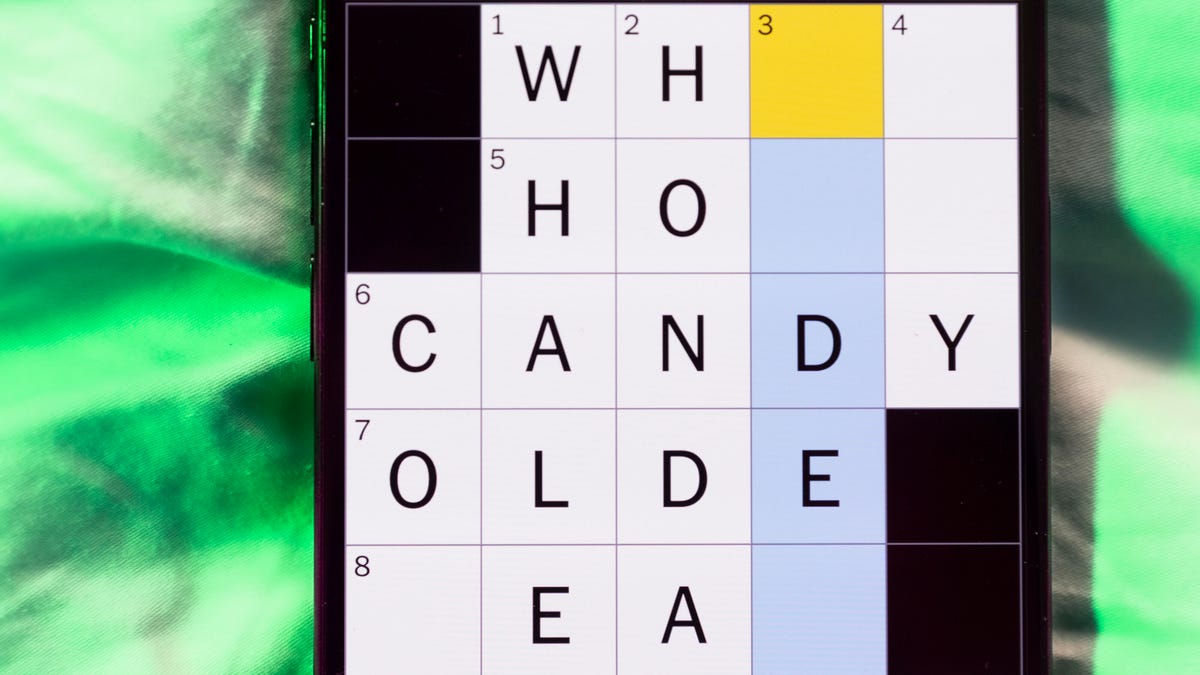
Looking for the most recent Mini Crossword answer? Click here for today’s Mini Crossword hints, as well as our daily answers and hints for The New York Times Wordle, Strands, Connections and Connections: Sports Edition puzzles.
Need some help with today’s Mini Crossword? Read on. And if you could use some hints and guidance for daily solving, check out our Mini Crossword tips.
If you’re looking for today’s Wordle, Connections, Connections: Sports Edition and Strands answers, you can visit CNET’s NYT puzzle hints page.
Read more: Tips and Tricks for Solving The New York Times Mini Crossword
Let’s get to those Mini Crossword clues and answers.
Mini across clues and answers
1A clue: Nod (off)
Answer: DOZE
5A clue: Naval submarine in W.W. II
Answer: UBOAT
7A clue: Tricky thing to do on a busy highway
Answer: MERGE
8A clue: Heat-resistant glassware for cooking
Answer: PYREX
9A clue: Put into groups
Answer: SORT
Mini down clues and answers
1D clue: Break up with
Answer: DUMP
2D clue: Falls in line, so to speak
Answer: OBEYS
3D clue: Legendary vigilante who cuts a «Z» with his sword
Answer: ZORRO
4D clue: Rarin’ to go
Answer: EAGER
6D clue: Common reminder for an upcoming appointment
Answer: TEXT
Don’t miss any of our unbiased tech content and lab-based reviews. Add CNET as a preferred Google source.
Technologies
You Can Watch an Exclusive Avatar: Fire and Ash Scene on TikTok Right Now
Disney and TikTok partner on an immersive content hub for James Cameron’s latest movie about the alien Na’vi.
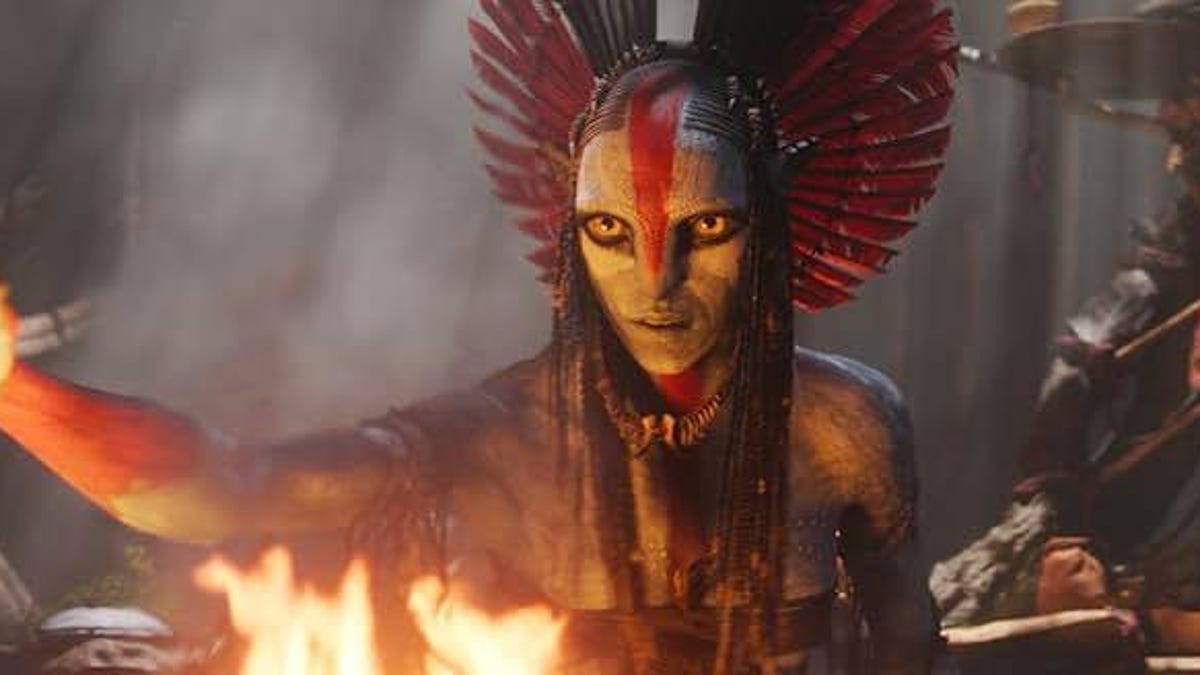
If you’re not quite ready to head to the theater to watch Avatar: Fire and Ash, an exclusive scene preview might sell you on the visual spectacle. As part of a new collaboration with the social media giant, Disney is posting snippets of its new movie to its TikTok account.
This scene isn’t part of any trailer and won’t be posted to other social media accounts, making TikTok the only place you can view it — unless you buy a movie ticket. A first look at the new movie’s scenes isn’t the only Avatar-related bonus on the social media platform right now, either. TikTok has partnered with the house of mouse to bring an entire «immersive content hub» to the app.
A special section of TikTok includes quizzes and educational videos that explore the alien world of Pandora shown off in the movies. On TikTok, you can take a personality quiz to find out what Na’vi clan you most closely align with and unlock a special profile picture border to use on your account.
Science and fiction blend together with a series of videos from real doctors who explain the basis for some of Avatar’s world-building. If you want to learn about exoplanets or how realistic the anatomy of the movie’s alien animals is, these videos will feed your brain while still providing entertainment value.
Perhaps the most enticing part of Disney’s latest social media collaboration is the opportunity for fans to win prizes and trips. TikTok creators who make edits with the #TikTokAvatarContest hashtag are entered into a competition to win Avatar merchandise. The biggest winners will be able to take a trip to visual effects studio Wētā Workshop in New Zealand or visit Avatar director James Cameron’s Lightstorm Entertainment Studio in Los Angeles.
Avatar: Fire and Ash is the third installment in director Cameron’s cinematic passion project. While the first Avatar movie was released in 2009, Cameron didn’t release another entry in the franchise until 2022. In total, there is a five-movie arc planned for the indigo alien Na’vi on the moon of Pandora.
The Avatar movies are known for pushing the boundaries of CGI visual effects in cinema. They are also historically big winners at the box office: the original Avatar is the highest-grossing film of all time, earning $2.9 billion across its theatrical releases. Its sequel, Avatar: The Way of Water, is the third-highest-grossing film of all time, trailing Avengers: Endgame. You can stream those movies on Disney Plus.
It remains to be seen whether Avatar: Fire and Ash will financially live up to its predecessors. The film currently has mixed reviews from critics on Rotten Tomatoes.
-
 Technologies3 года ago
Tech Companies Need to Be Held Accountable for Security, Experts Say
-
 Technologies3 года ago
Best Handheld Game Console in 2023
-
 Technologies3 года ago
Tighten Up Your VR Game With the Best Head Straps for Quest 2
-
 Technologies4 года ago
Black Friday 2021: The best deals on TVs, headphones, kitchenware, and more
-
 Technologies4 года ago
Verum, Wickr and Threema: next generation secured messengers
-
 Technologies4 года ago
Google to require vaccinations as Silicon Valley rethinks return-to-office policies
-
 Technologies4 года ago
Olivia Harlan Dekker for Verum Messenger
-
 Technologies4 года ago
iPhone 13 event: How to watch Apple’s big announcement tomorrow


