

Technologies
Today’s NYT Mini Crossword Answers for Wednesday, Nov. 5
Here are the answers for The New York Times Mini Crossword for Nov. 5.

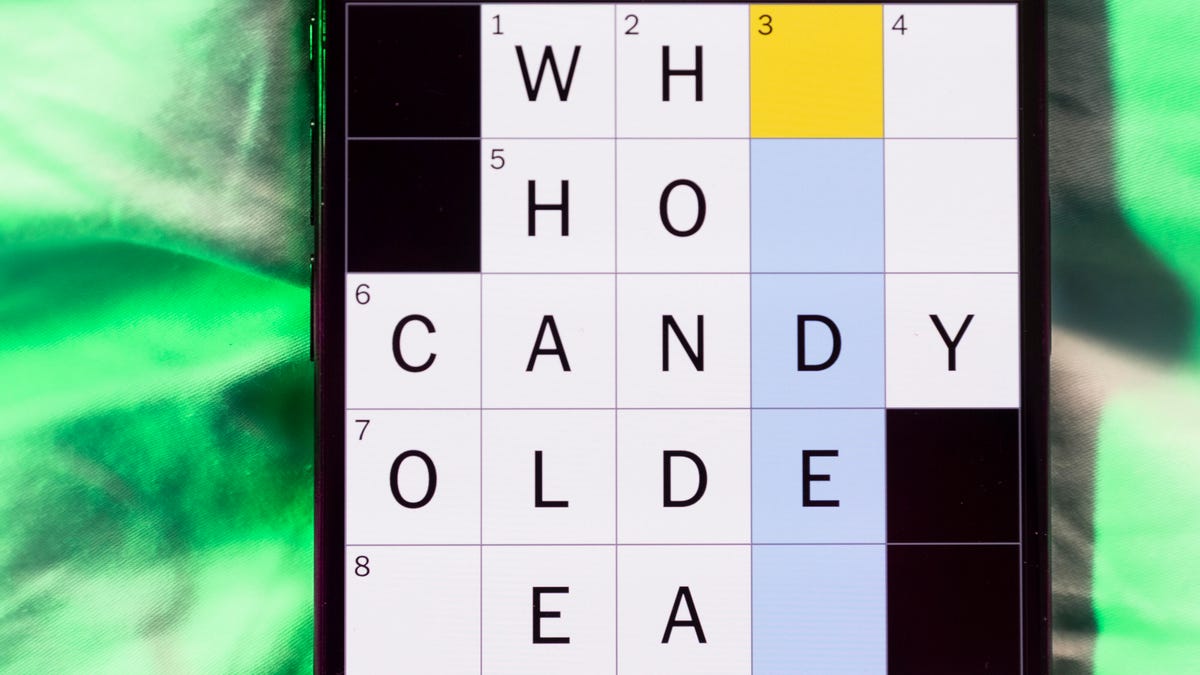
Looking for the most recent Mini Crossword answer? Click here for today’s Mini Crossword hints, as well as our daily answers and hints for The New York Times Wordle, Strands, Connections and Connections: Sports Edition puzzles.
Need some help with today’s Mini Crossword? Some of the clues are tricky, but we have all the answers, so read on. And if you could use some hints and guidance for daily solving, check out our Mini Crossword tips.
If you’re looking for today’s Wordle, Connections, Connections: Sports Edition and Strands answers, you can visit CNET’s NYT puzzle hints page.
Read more: Tips and Tricks for Solving The New York Times Mini Crossword
Let’s get to those Mini Crossword clues and answers.
Mini across clues and answers
1A clue: Fresh addition to a pasta sauce, perhaps
Answer: BASIL
6A clue: Log ___ (water park ride)
Answer: FLUME
7A clue: Group of ships
Answer: FLEET
8A clue: Some drinks from «streams»
Answer: SODAS
9A clue: Documentarian Burns
Answer: KEN
Mini down clues and answers
1D clue: Closest pals, for short
Answer: BFFS
2D clue: «No problems here!»
Answer: ALLOK
3D clue: Shoe material in an Elvis hit
Answer: SUEDE
4D clue: «That is to say …»
Answer: IMEAN
5D clue: Tennis do-overs
Answer: LETS
Technologies
November Nights Dazzle with Three Meteor Showers. How to Watch Like a Pro
You’ll need to get away from urban and suburban lights, but you won’t need binoculars or a telescope.
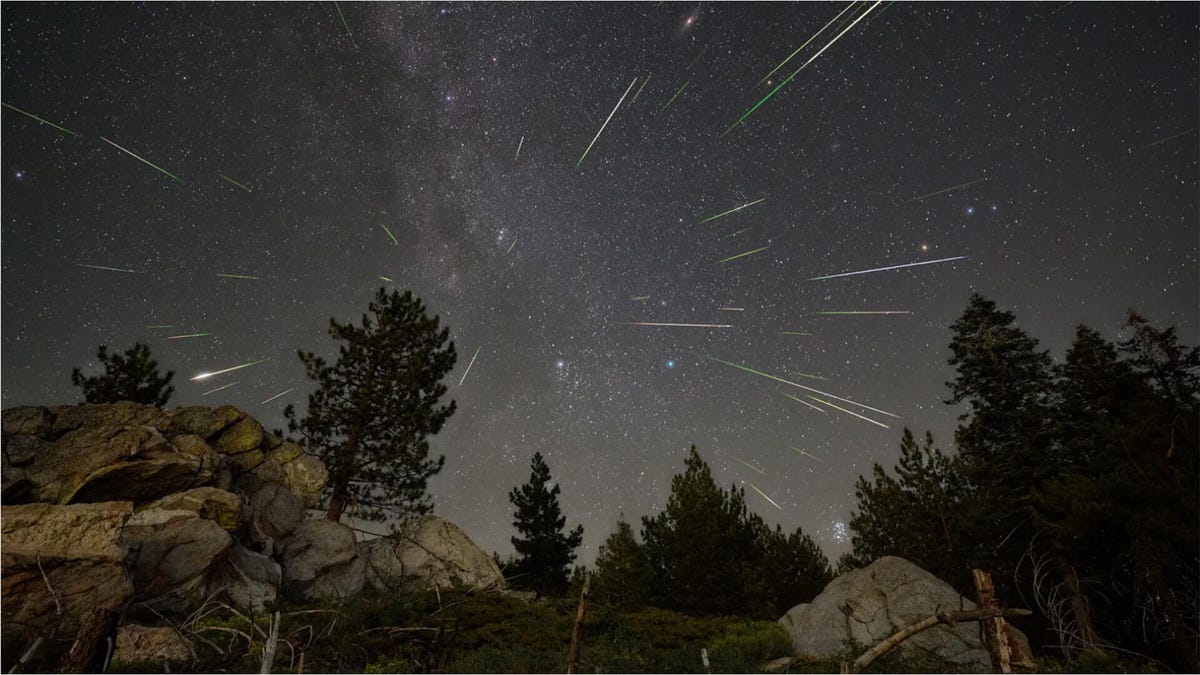
Skygazers, get ready for an active November. Following Tuesday’s supermoon, this month we’ve also got three annual meteor showers: the Northern Taurids, the Southern Taurids and the Leonids. Northern Taurids started on Oct. 20, and Southern Taurids — one of the longest meteor showers of the year — began on Sept. 20. The Leonids are expected to start Thursday, on Nov. 6.
Even though two of these meteor showers are already in progress, the best parts of each are still to come. And while these showers aren’t as prolific as the biggest ones, including August’s Perseids and January’s Quadrantids, you can still marvel at meteors with a bit of luck and some tips we’ll provide.
Not everyone understands what a meteor shower actually is, but it’s fairly simple. Shooting stars are a common occurrence in space around planet Earth. According to NASA, 48.5 tons of meteoritic material hit Earth’s atmosphere every year. Sometimes, enough of that material comes from the same spot, and we humans refer to those as meteor showers.
Don’t miss any of our unbiased tech content and lab-based reviews. Add CNET as a preferred Google source.
Southern Taurids: The longest one
The Southern Taurids shower lasts for two months, making it one of the longest meteor showers of the year.
Southern Taurids peaked on the evening of Nov. 4 into Nov. 5, spawning upwards of five meteors per hour during that peak. Southern Taurids is known for its increased chance of fireballs, which are meteors that are brighter than most. According to some reports, these fireballs can be brighter than the planet Venus when they streak across the night sky.
All meteor showers are named for the constellations where they appear to originate, a spot known as the radiant. For the Southern Taurids, the radiant is in the Taurus constellation near the Pleiades star cluster, so that is where you’ll want to look for them. Taurus will be visible in the eastern sky shortly after sunset and end its evening in the western sky as the sun rises.
Northern Taurids: Peaks later than its sibling
The Northern Taurids meteor shower is set to peak next week, on Nov. 11 and 12. It’s identical to the Southern Taurids, only with a later peak date. The origin point will be the Taurus constellation, producing an average of five meteors per hour with an increased chance of fireballs.
The Leonids: The most active
Of the three November meteor showers, Leonids should be the most active. It is fed by the Tempel-Tuttle Comet, which can produce some dense debris clouds, resulting in very strong showers. The Leonids meteor shower is set to peak on Nov. 16-17.
Some sources say that seeing as many as 15 visible meteors per hour is possible, while NASA estimates a more conservative three per hour under dark skies. It’s impossible to know for sure how active this shower will be until the peak occurs.
As the name implies, Leonids will appear out of the Leo constellation. Leo is visible in the eastern sky between midnight and 1 a.m. local time.
According to the American Meteor Society, Leonids has produced some intense meteor showers as recently as 2002, but isn’t scheduled to do so again until 2031, 2064 and 2099 as the comet returns to the solar system. During these rare meteor storms, NASA says that it’s possible to see upwards of 1,000 meteors per hour.
Tips for watching meteor showers
Here are some tips and tricks that will help increase your odds of spotting a meteor in November.
Get away from light pollution
This is the most important guideline to follow. Simply put, city lights make meteors harder to see.
«Light pollution will definitely hamper your viewing of meteors,» Michelle Nichols, director of public observing at the Adler Planetarium in Chicago, told CNET. «The more light pollution you are under, the fewer meteors you’ll see.»
Nichols says that unfavorable conditions can reduce the number of meteors you see by upwards of 75%.
Head to the countryside and find a spot that is as dark as possible. (There are other sources of light pollution that humans can’t do anything about, like the moon.)
The Southern Taurids peaks during November’s full moon, which is also a supermoon, meaning it shares the maximum amount of light pollution you can get from the moon. If you’re going to skip any of these showers, the Southern Taurids is probably the best choice. The other two showers will have much more favorable celestial conditions.
Don’t take any equipment
Meteor showers typically have an origin point, but you won’t need binoculars or telescopes.
«You want to just use your eyes,» said Nichols. «Binoculars or telescopes both look at ever-smaller pieces of sky, and you want to be able to look around at the entire sky.»
Meteors are very fast, and a magnification device may obstruct your ability to see the whole path. Nichols says that Taurids meteors tend to travel at 17 to 18 miles per second while Orionids may travel as fast as 41 miles per second.
Also, meteors don’t last for a long time.
«Look for short-lived, quick streaks of light,» Nichols says. «Meteors tend to last a fraction of a second to maybe a few seconds for the longer-lived ones.»
Nichols also notes that much of the material falling to Earth’s surface is «only about the size of a grain of sand.» As such, the streak humans often see isn’t the meteor itself, but rather the «glowing, superheated air that surrounds that bit of comet material» as it plummets toward Earth.
Dress for the occasion
Unless you live in the Deep South, it’s likely to be cold outside in November. Dressing for the occasion means you’ll be able to stay out longer, even if it’s chilly.
«When you go outside, dress warmly in layers, even if it’s not terribly cold where you are,» says Nichols. «You’ll be out there for a while, and at night, you may easily get chilled, especially if it’s damp out.»
Nichols recommends bringing an extra chair to put your feet on to keep them off the cold ground, especially if it’s wet, and also recommends against drinking alcohol, which causes blood vessels to dilate, causing the body to lose heat faster.
Patience is a virtue
The phrase «it’s a marathon, not a sprint» is about as apropos as it gets for meteor watching. Showers are unpredictable, and every number you’ve seen in this article or elsewhere online is essentially an estimate. You’ll want to make sure to give yourself as much time as you can to get settled.
«Give your eyes at least 20-30 minutes to adjust to the darkness,» Nichols advises. «You may not see meteors right away. And when you do, they’ll be sporadic.»
If it were easy to spot meteors, then it wouldn’t be special. You can help yourself by reducing your phone screen brightness to its lowest setting to preserve your night vision, and by using flashlights, not big camping lanterns.
Technologies
You Probably Have a Better Password Than The Louvre Did: Learn From Its Mistake
Following the infamous jewel heist, reports show the museum’s security and password habits were atrocious.
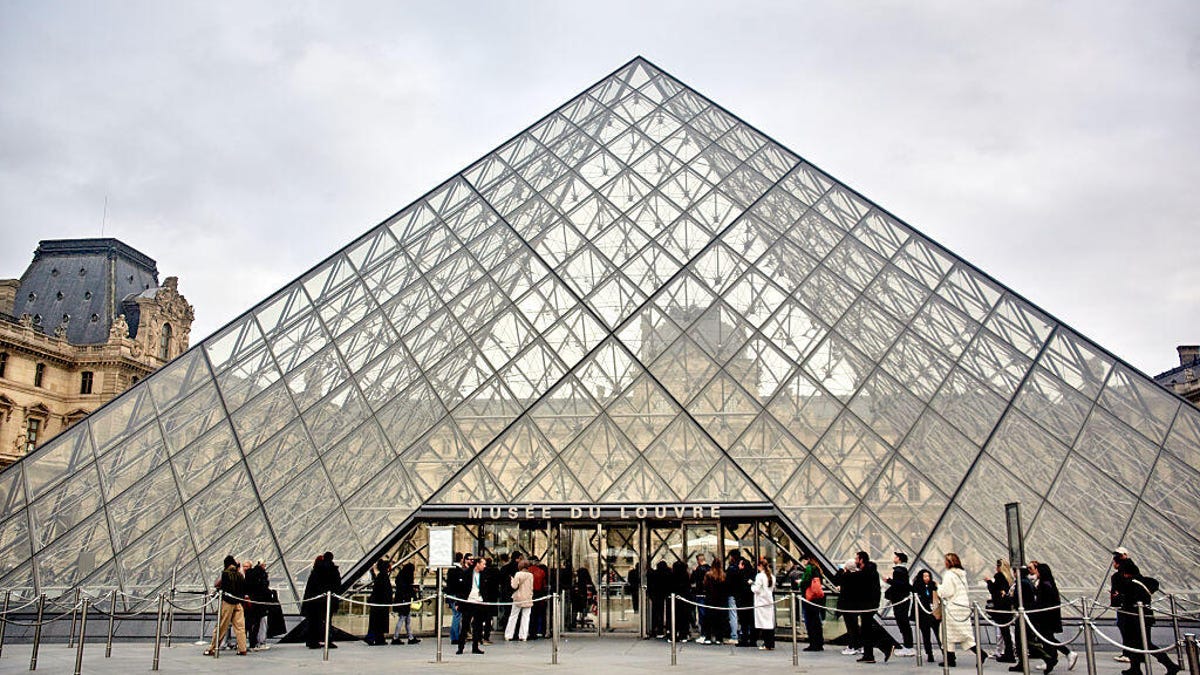
Is your password easily guessable? Is it, oh, I don’t know, maybe the name of the world-famous Paris museum you’re trying to protect?
The brazen theft of more than $100 million in jewels from the world-famous Louvre on Oct. 19 captured the world’s attention, for obvious reasons. As of Wednesday, French police have arrested seven suspects, but the jewels have not yet been recovered. Now reports show the Louvre has had security issues in the past, including one that wouldn’t pass the most basic cybersecurity test: The museum’s name itself, Louvre, may have been one of its passwords.
The French newspaper Libération reports that the French cybersecurity agency ANSSI audited the Louvre’s security in 2014 and 2015. The museum failed badly.
One part of the audit described unguarded rooftop access. That’s somewhat relevant today, since thieves reportedly used a truck-mounted electric ladder to reach a balcony and cut through window glass. Not quite the roof, but apparently equally unguarded.
The audit also said the museum’s security software at the time was running on Windows Server 2003, which was set to lose support from Microsoft at that time, more than a decade ago.
Don’t miss any of our unbiased tech content and lab-based reviews. Add CNET as a preferred Google source.
The Louvre’s password was once ‘Louvre’
One of the most significant flaws in the Louvre’s cybersecurity was lazy password use. «Louvre» appeared to be the password to access the museum’s video surveillance. One computer login password was «Thales,» the name of the software developer, which we’re guessing was visible on the login screen.
A representative for the Louvre didn’t immediately respond to a request for comment.
While Libération’s investigation indicated that many of the same problems remain, we don’t know which issues the Louvre staff corrected in the decade since the audit. Perhaps the Louvre’s current password is L0uvr31500$$ now or something even tougher to guess. M0n@ L1$@, maybe?
Now is an excellent time to update your own passwords
If the Louvre report wasn’t enough incentive, it’s essential to give your own passwords a check ahead of the holidays, when many people increase their online shopping time.
CNET’s latest survey shows that nearly half of Americans engage in risky password habits. US adults don’t shy away from using personal information as a part of their passwords. Fifteen percent include birthdays or anniversaries, 14% include a pet’s name and 11% use part of the user’s own name or a family member’s name.
You can improve passwords with a few simple steps, or use a password manager that can generate strong passwords and keep them organized. When creating passwords, keep a few essential points in mind.
- Don’t use your name or any identifying information as part of your password.
- Use passwords that include upper and lowercase letters, numbers and symbols.
- Update your passwords if you become aware of a data breach affecting services you use.
- Don’t leave any unencrypted notes revealing your password lying around.
Remember, today’s passwords aren’t just on your phone and computer, but also on potentially vulnerable devices like Wi-Fi routers, security systems and more.
Technologies
Got Poor Internet Access? Verizon’s New $25 Per Month Internet Plan May Help
-
 Technologies3 года ago
Tech Companies Need to Be Held Accountable for Security, Experts Say
-
 Technologies3 года ago
Best Handheld Game Console in 2023
-
 Technologies3 года ago
Tighten Up Your VR Game With the Best Head Straps for Quest 2
-
 Technologies4 года ago
Verum, Wickr and Threema: next generation secured messengers
-
 Technologies4 года ago
Black Friday 2021: The best deals on TVs, headphones, kitchenware, and more
-
 Technologies4 года ago
Google to require vaccinations as Silicon Valley rethinks return-to-office policies
-
 Technologies4 года ago
Olivia Harlan Dekker for Verum Messenger
-
 Technologies4 года ago
iPhone 13 event: How to watch Apple’s big announcement tomorrow


