

Technologies
ROG Xbox Ally: Price, Preorders, Release Date and How It Compares to Steam Deck
Will the $1,000 price tag turn off gamers?

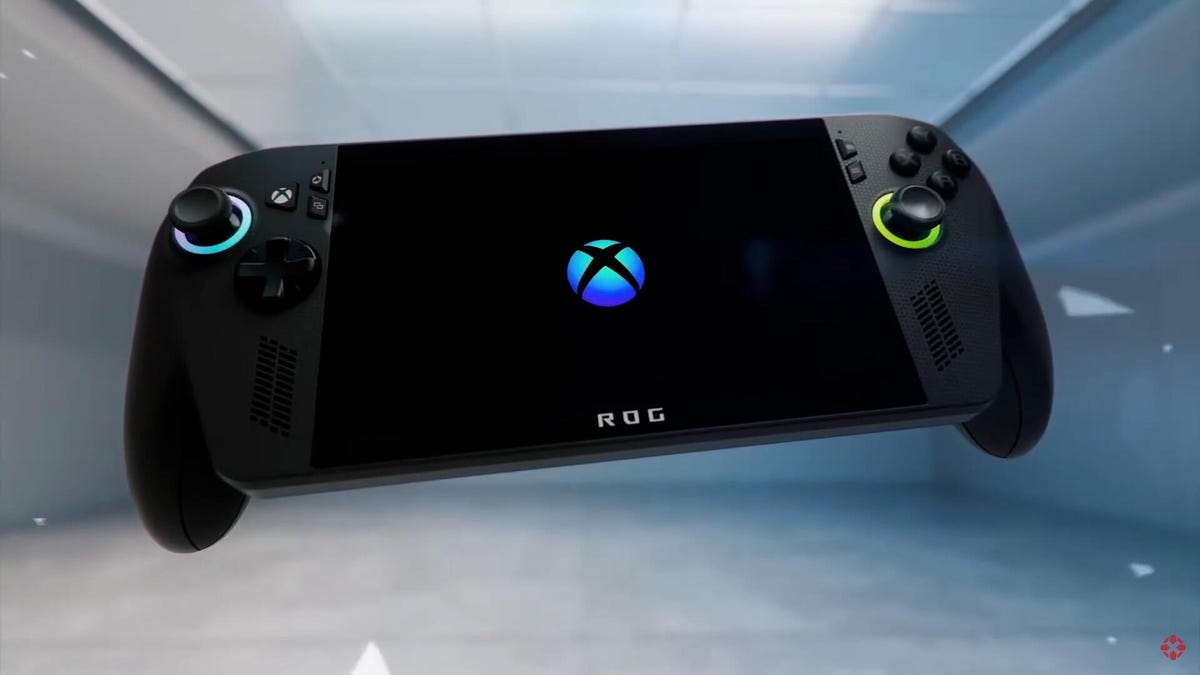
Microsoft and Asus’ Steam Deck rival, the ROG Xbox Ally, will be released in a few weeks. It will have a tough battle to dethrone Valve’s portable gaming machine and its price won’t help.
Microsoft this week revealed that the upcoming Xbox Ally will cost $600, and the even more powerful Xbox Ally X will cost $1,000. They’re scheduled to come out on Oct. 16, and preorders are open now. But the expense is likely to cause hesitation among gamers.
Will the Xbox Ally outdo the Steam Deck, or will it wind up being just another wannabe?
How much will the Xbox Ally cost?
The new portable console isn’t cheap. The Xbox Ally and Ally X will cost $600 and $1,000, respectively.
There was speculation that the Xbox Ally X’s price would be closer to $800, close to the price in both the UK (£800) and the EU (€899). Rumors circulating prior to Thursday were that US pricing would stay in that $800 range, but the announced sticker price hike is likely due to tariffs. Microsoft has already increased the price of its Xbox Series consoles twice since President Donald Trump instituted new tariffs in April.
When does the Xbox Ally come out?
Microsoft confirmed the Xbox Ally’s release date of Oct. 16, which matches previous leaks.
When can I preorder the Xbox Ally?
Preorders started Thursday, but Microsoft took a different approach than usual. The more expensive Xbox Ally X will be available for preorder only at Best Buy, Asus and Microsoft. It’s unclear if the Xbox Ally X will be more widely available after launch.
The lower-priced Xbox Ally will be available at more retailers, including Amazon, Best Buy, Walmart, Microsoft, Asus and Ant Online.
What’s the difference between the Xbox Ally and the Xbox Ally X?
There are two versions of the Xbox Ally. The key differences between the two are in their processors, storage and memory.
The Xbox Ally will have the AMD Ryzen Z2 A Processor, while the Xbox Ally X will use the faster AMD Ryzen AI Z2 Extreme Processor. Memory will be different, with the lower-priced Xbox Ally having 16GB of LPDDR5X-6400 and the higher-cost handheld coming with 24GB of LPDDR5X-8000 RAM.
Both will come with solid-state storage, but the Xbox Ally will have 512GB, and the Xbox Ally X will have 1TB. The Xbox Ally X will also have a bigger battery, but with a faster processor and more memory, it’s not clear if that difference in capacity translates to a longer battery life.
Specs for Xbox Ally and Xbox Ally X
| ROG Xbox Ally | ROG Xbox Ally X | |
|---|---|---|
| Operating System | Windows 11 Home | Windows 11 Home |
| Controls and grip | Contoured grips inspired by Xbox Wireless Controllers deliver all-day comfort. ABXY buttons / D-pad / L & R Hall Effect analog triggers / L & R bumpers / Xbox button / View button / Menu button / Command Center button / Library button / 2x assignable back buttons / 2x full-size analog sticks / HD haptics / 6-axis IMU | Contoured grips inspired by Xbox Wireless Controllers deliver all-day comfort, complete with impulse triggers for enhanced control.ABXY buttons / D-pad / L & R impulse triggers / L & R bumpers / Xbox button / View button / Menu button / Command Center button / Library button / 2x assignable back buttons / 2x full-size analog sticks / HD haptics / 6-axis IMU |
| Processor | AMD Ryzen Z2 A Processor | AMD Ryzen AI Z2 Extreme Processor |
| Memory | 16GB LPDDR5X-6400 | 24GB LPDDR5X-8000 |
| Storage | 512GB M.2 2280 SSD for easier upgrade | 1TB M.2 2280 SSD for easier upgrade |
| Display | 7-inch, 1080p, IPS, 500 nits, 16:9; 120Hz refresh rate, FreeSync Premium;Corning Gorilla Glass Victus + DXC Anti-Reflection | 7-inch, 1080p, IPS, 500 nits, 16:9; 120Hz refresh rate, FreeSync Premium;Corning Gorilla Glass Victus + DXC Anti-Reflection |
| I/O Ports | 2x USB-C (2 x DP 2.1, PD 3.0), 1x microSD, 1x analog audio | 2x USB-C (1x USB4, 1x USB 3.2 both w/ DP 2.1, PD 3.0), 1x micro SD, 1x analog audio |
| Network and Communication | Wi-Fi 6E (2 x 2), Bluetooth 5.4 | Wi-Fi 6E (2 x 2), Bluetooth 5.4 |
| Dimensions | 29.1×12.2×5.1 cm | 29.1×12.2×5.1 cm |
| Weight | 670g | 715g |
| Battery | 60Wh | 80Wh |
| Included | ROG Xbox Ally 65W charger stand | ROG Xbox Ally X 65W charger stand |
What makes the Xbox Ally different from the Steam Deck?
The most notable difference between the Xbox Ally and the Steam Deck is the operating system. Like the ROG Ally, the Xbox Ally will also use Windows 11, while the Steam Deck uses Valve’s SteamOS.
Even though every PC game works with Windows, handheld gaming devices running Windows have had serious issues, as the OS implementation has been a bit buggy. Portable consoles like the ROG Ally, MSI Claw and Lenovo Legion Go simply don’t run well with full Windows because the OS is designed for laptops and desktops, not handheld devices. SteamOS, however, is designed to run almost every game on Steam without issues and regardless of device size.
The Xbox Ally changes that by giving it an Xbox interface. This would be similar to how the Xbox app on PCs works for running games. It would also be able to download Xbox games directly to it, remote play them off a console or stream them via Xbox Cloud.
Another big difference is the hardware. The Steam Deck came out in 2022, and it was the first mass-produced handheld gaming device for PC. At the time, Valve had to use custom AMD processors. Since then, AMD has produced more processors for handheld devices, which are now much more powerful in just a few years. The Xbox Ally would also have faster RAM. Both the improvement in processors and RAM should significantly increase the number of games the Xbox Ally can run versus the Steam Deck, which is already struggling to run newer games at 30fps.
Externally, the Xbox Ally will have the same size 7-inch display but a higher refresh rate of 120Hz, a brighter screen at 500 nits and increased resolution at 1080p. There will also be some slight differences in the physical size of the Xbox Ally, which will be a little bigger and heavier. Another difference from the Steam Deck is that the Xbox Ally controls will be more similar to the Xbox controller.
Microsoft and Asus have a large hill to climb if they plan to have the Xbox Ally dethrone the Steam Deck. It will be especially tough if Valve decides to announce the Steam Deck 2 soon.
Technologies
TMR vs. Hall Effect Controllers: Battle of the Magnetic Sensing Tech
The magic of magnets tucked into your joysticks can put an end to drift. But which technology is superior?
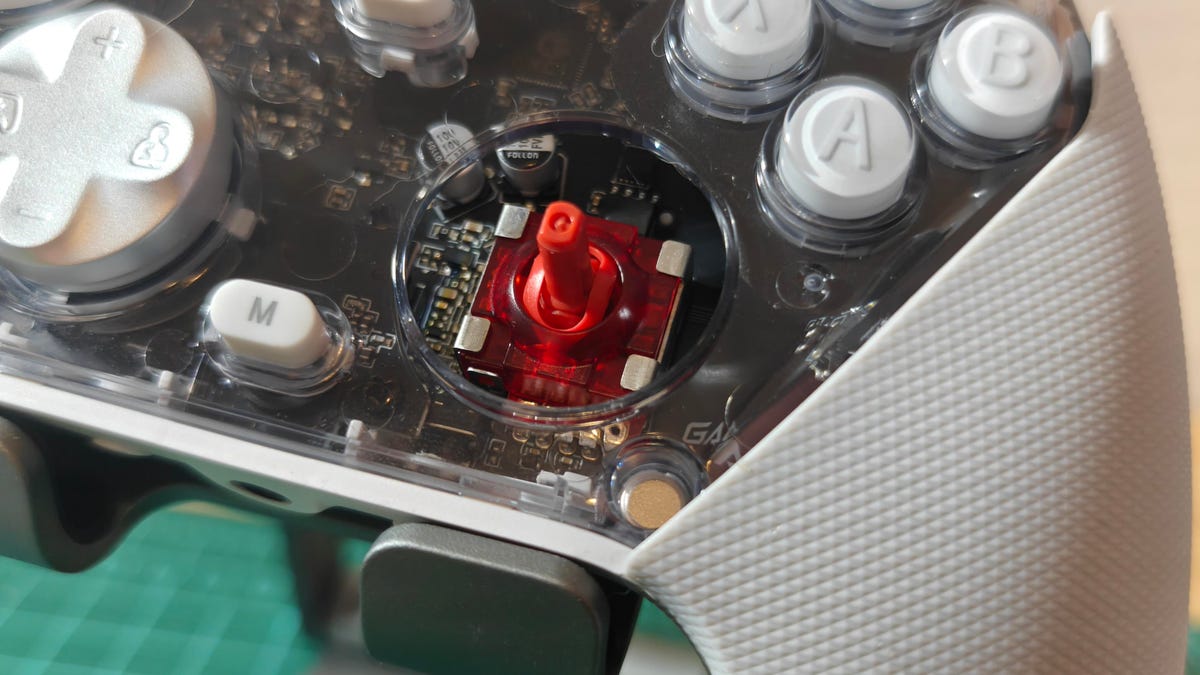
Competitive gamers look for every advantage they can get, and that drive has spawned some of the zaniest gaming peripherals under the sun. There are plenty of hardware components that actually offer meaningful edges when implemented properly. Hall effect and TMR (tunnel magnetoresistance or tunneling magnetoresistance) sensors are two such technologies. Hall effect sensors have found their way into a wide variety of devices, including keyboards and gaming controllers, including some of our favorites like the GameSir Super Nova.
More recently, TMR sensors have started to appear in these devices as well. Is it a better technology for gaming? With multiple options vying for your lunch money, it’s worth understanding the differences to decide which is more worthy of living inside your next game controller or keyboard.
How Hall effect joysticks work
We’ve previously broken down the difference between Hall effect tech and traditional potentiometers in controller joysticks, but here’s a quick rundown on how Hall effect sensors work. A Hall effect joystick moves a magnet over a sensor circuit, and the magnetic field affects the circuit’s voltage. The sensor in the circuit measures these voltage shifts and maps them to controller inputs. Element14 has a lovely visual explanation of this effect here.
The advantage this tech has over potentiometer-based joysticks used in controllers for decades is that the magnet and sensor don’t need to make physical contact. There’s no rubbing action to slowly wear away and degrade the sensor. So, in theory, Hall effect joysticks should remain accurate for the long haul.
How TMR joysticks work
While TMR works differently, it’s a similar concept to Hall effect devices. When you move a TMR joystick, it moves a magnet in the vicinity of the sensor. So far, it’s the same, right? Except with TMR, this shifting magnetic field changes the resistance in the sensor instead of the voltage.
There’s a useful demonstration of a sensor in action here. Just like Hall effect joysticks, TMR joysticks don’t rely on physical contact to register inputs and therefore won’t suffer the wear and drift that affects potentiometer-based joysticks.
Which is better, Hall effect or TMR?
There’s no hard and fast answer to which technology is better. After all, the actual implementation of the technology and the hardware it’s built into can be just as important, if not more so. Both technologies can provide accurate sensing, and neither requires physical contact with the sensing chip, so both can be used for precise controls that won’t encounter stick drift. That said, there are some potential advantages to TMR.
According to Coto Technology, who, in fairness, make TMR sensors, they can be more sensitive, allowing for either greater precision or the use of smaller magnets. Since the Hall effect is subtler, it relies on amplification and ultimately requires extra power. While power requirements vary from sensor to sensor, GameSir claims its TMR joysticks use about one-tenth the power of mainstream Hall effect joysticks. Cherry is another brand highlighting the lower power consumption of TMR sensors, albeit in the brand’s keyboard switches.
The greater precision is an opportunity for TMR joysticks to come out ahead, but that will depend more on the controller itself than the technology. Strange response curves, a big dead zone (which shouldn’t be needed), or low polling rates could prevent a perfectly good TMR sensor from beating a comparable Hall effect sensor in a better optimized controller.
The power savings will likely be the advantage most of us really feel. While it won’t matter for wired controllers, power savings can go a long way for wireless ones. Take the Razer Wolverine V3 Pro, for instance, a Hall effect controller offering 20 hours of battery life from a 4.5-watt-hour battery with support for a 1,000Hz polling rate on a wireless connection. Razer also offers the Wolverine V3 Pro 8K PC, a near-identical controller with the same battery offering TMR sensors. They claim the TMR version can go for 36 hours on a charge, though that’s presumably before cranking it up to an 8,000Hz polling rate — something Razer possibly left off the Hall effect model because of power usage.
The disadvantage of the TMR sensor would be its cost, but it appears that it’s negligible when factored into the entire price of a controller. Both versions of the aforementioned Razer controller are $199. Both 8BitDo and GameSir have managed to stick them into reasonably priced controllers like the 8BitDo Ultimate 2, GameSir G7 Pro and GameSir Cyclone 2.
So which wins?
It seems TMR joysticks have all the advantages of Hall effect joysticks and then some, bringing better power efficiency that can help in wireless applications. The one big downside might be price, but from what we’ve seen right now, that doesn’t seem to be much of an issue. You can even find both technologies in controllers that cost less than some potentiometer models, like the Xbox Elite Series 2 controller.
Caveats to consider
For all the hype, neither Hall effect nor TMR joysticks are perfect. One of their key selling points is that they won’t experience stick drift, but there are still elements of the joystick that can wear down. The ring around the joystick can lose its smoothness. The stick material can wear down (ever tried to use a controller with the rubber worn off its joystick? It’s not pleasant). The linkages that hold the joystick upright and the springs that keep it stiff can loosen, degrade and fill with dust. All of these can impact the continued use of the joystick, even if the Hall effect or TMR sensor itself is in perfect operating order.
So you might not get stick drift from a bad sensor, but you could get stick drift from a stick that simply doesn’t return to its original resting position. That’s when having a controller that’s serviceable or has swappable parts, like the PDP Victrix Pro BFG, could matter just as much as having one with Hall effect or TMR joysticks.
Technologies
Today’s NYT Connections: Sports Edition Hints and Answers for Feb. 18, #513
Here are hints and the answers for the NYT Connections: Sports Edition puzzle for Feb. 18, No. 513.

Looking for the most recent regular Connections answers? Click here for today’s Connections hints, as well as our daily answers and hints for The New York Times Mini Crossword, Wordle and Strands puzzles.
Today’s Connections: Sports Edition has a fun yellow category that might just start you singing. If you’re struggling with today’s puzzle but still want to solve it, read on for hints and the answers.
Connections: Sports Edition is published by The Athletic, the subscription-based sports journalism site owned by The Times. It doesn’t appear in the NYT Games app, but it does in The Athletic’s own app. Or you can play it for free online.
Read more: NYT Connections: Sports Edition Puzzle Comes Out of Beta
Hints for today’s Connections: Sports Edition groups
Here are four hints for the groupings in today’s Connections: Sports Edition puzzle, ranked from the easiest yellow group to the tough (and sometimes bizarre) purple group.
Yellow group hint: I don’t care if I never get back.
Green group hint: Get that gold medal.
Blue group hint: Hoops superstar.
Purple group hint: Not front, but…
Answers for today’s Connections: Sports Edition groups
Yellow group: Heard in «Take Me Out to the Ball Game.»
Green group: Olympic snowboarding events.
Blue group: Vince Carter, informally.
Purple group: ____ back.
Read more: Wordle Cheat Sheet: Here Are the Most Popular Letters Used in English Words
What are today’s Connections: Sports Edition answers?
The yellow words in today’s Connections
The theme is heard in «Take Me Out to the Ball Game.» The four answers are Cracker Jack, home team, old ball game and peanuts.
The green words in today’s Connections
The theme is Olympic snowboarding events. The four answers are big air, giant slalom, halfpipe and slopestyle.
The blue words in today’s Connections
The theme is Vince Carter, informally. The four answers are Air Canada, Half-Man, Half-Amazing, VC and Vinsanity.
The purple words in today’s Connections
The theme is ____ back. The four answers are diamond, drop, quarter and razor.
Technologies
Today’s NYT Mini Crossword Answers for Wednesday, Feb. 18
Here are the answers for The New York Times Mini Crossword for Feb. 18.
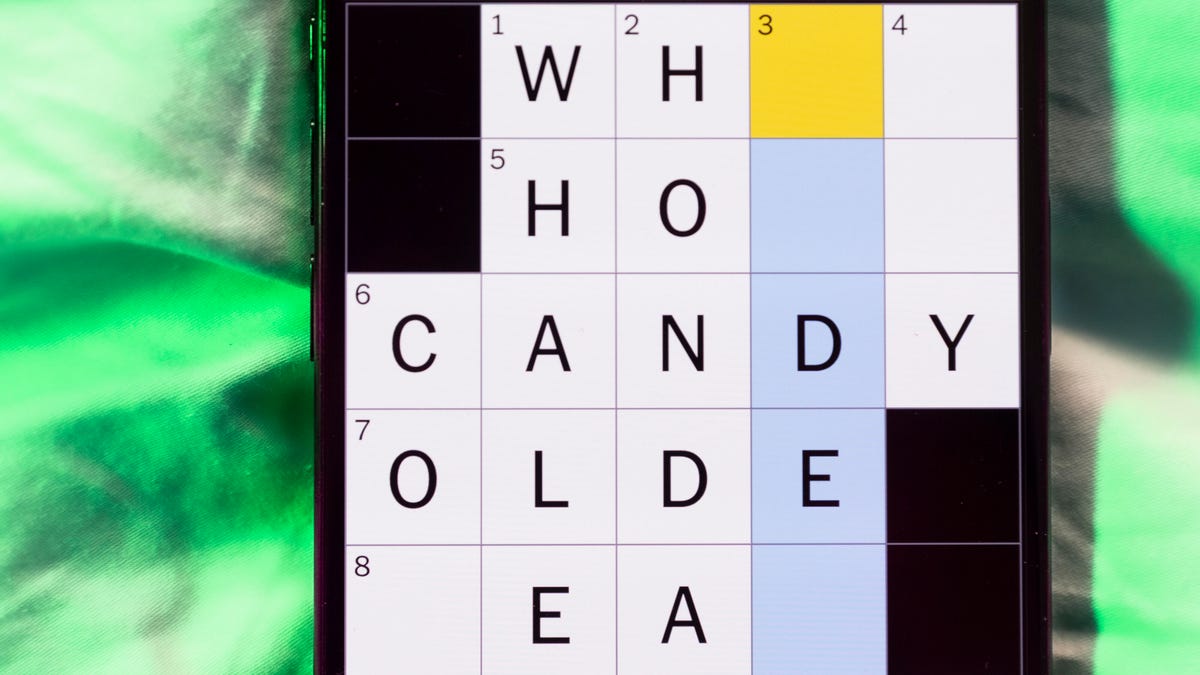
Looking for the most recent Mini Crossword answer? Click here for today’s Mini Crossword hints, as well as our daily answers and hints for The New York Times Wordle, Strands, Connections and Connections: Sports Edition puzzles.
Today’s Mini Crossword is a fun one, and it’s not terribly tough. It helps if you know a certain Olympian. Read on for all the answers. And if you could use some hints and guidance for daily solving, check out our Mini Crossword tips.
If you’re looking for today’s Wordle, Connections, Connections: Sports Edition and Strands answers, you can visit CNET’s NYT puzzle hints page.
Read more: Tips and Tricks for Solving The New York Times Mini Crossword
Let’s get to those Mini Crossword clues and answers.
Mini across clues and answers
1A clue: ___ Glenn, Olympic figure skater who’s a three-time U.S. national champion
Answer: AMBER
6A clue: Popcorn size that might come in a bucket
Answer: LARGE
7A clue: Lies and the Lying ___ Who Tell Them» (Al Franken book)
Answer: LIARS
8A clue: Close-up map
Answer: INSET
9A clue: Prepares a home for a new baby
Answer: NESTS
Mini down clues and answers
1D clue: Bold poker declaration
Answer: ALLIN
2D clue: Only U.S. state with a one-syllable name
Answer: MAINE
3D clue: Orchestra section with trumpets and horns
Answer: BRASS
4D clue: «Great» or «Snowy» wading bird
Answer: EGRET
5D clue: Some sheet music squiggles
Answer: RESTS
-
 Technologies3 года ago
Tech Companies Need to Be Held Accountable for Security, Experts Say
-
 Technologies3 года ago
Best Handheld Game Console in 2023
-
 Technologies3 года ago
Tighten Up Your VR Game With the Best Head Straps for Quest 2
-
 Technologies4 года ago
Black Friday 2021: The best deals on TVs, headphones, kitchenware, and more
-
 Technologies5 лет ago
Google to require vaccinations as Silicon Valley rethinks return-to-office policies
-
 Technologies5 лет ago
Verum, Wickr and Threema: next generation secured messengers
-
 Technologies4 года ago
Olivia Harlan Dekker for Verum Messenger
-
 Technologies4 года ago
iPhone 13 event: How to watch Apple’s big announcement tomorrow


