

Technologies
Ask AI Why It Sucks at Sudoku. You’ll Find Out Something Troubling About Chatbots
How much can you trust a generative AI tool if it can’t explain itself honestly or accurately?

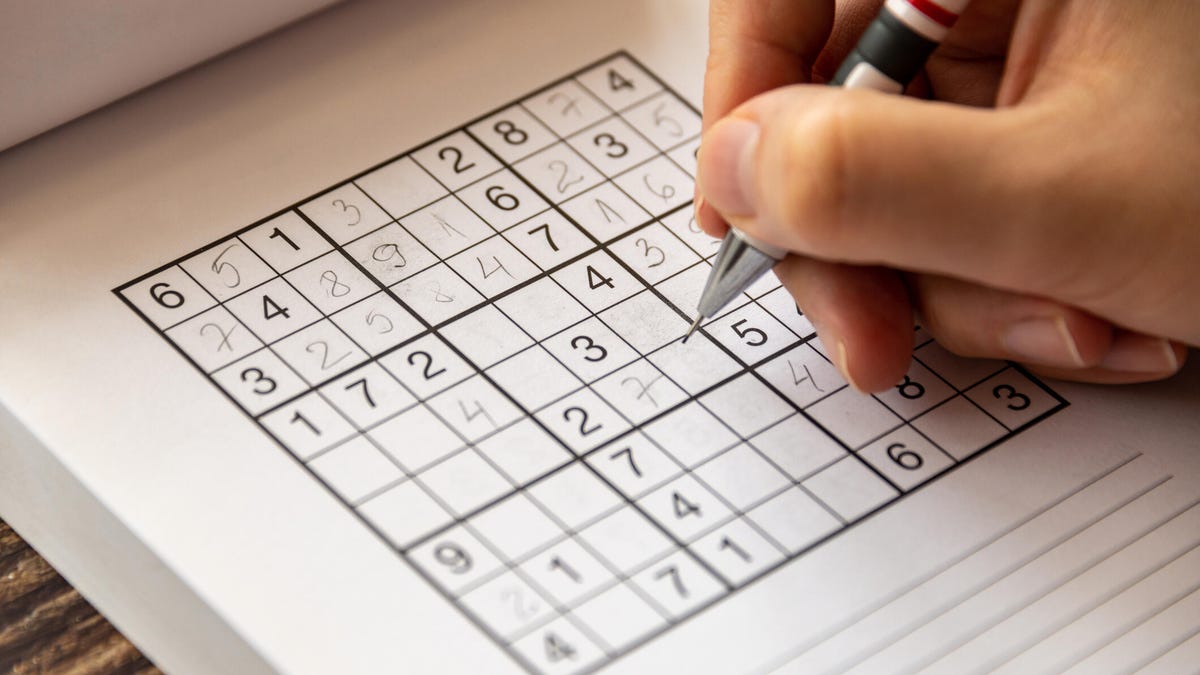
Chatbots are genuinely impressive when you watch them do things they’re good at, like writing a basic email or creating weird futuristic-looking images. But ask generative AI to solve one of those puzzles in the back of a newspaper, and things can quickly go off the rails.
That’s what researchers at the University of Colorado Boulder found when they challenged large language models to solve Sudoku. And not even the standard 9×9 puzzles. An easier 6×6 puzzle was often beyond the capabilities of an LLM without outside help (in this case, specific puzzle-solving tools).
A more important finding came when the models were asked to show their work. For the most part, they couldn’t. Sometimes they lied. Sometimes they explained things in ways that made no sense. Sometimes they hallucinated and started talking about the weather.
If gen AI tools can’t explain their decisions accurately or transparently, that should cause us to be cautious as we give these things more control over our lives and decisions, said Ashutosh Trivedi, a computer science professor at the University of Colorado at Boulder and one of the authors of the paper published in July in the Findings of the Association for Computational Linguistics.
«We would really like those explanations to be transparent and be reflective of why AI made that decision, and not AI trying to manipulate the human by providing an explanation that a human might like,» Trivedi said.
When you make a decision, you can try to justify it, or at least explain how you arrived at it. An AI model may not be able to accurately or transparently do the same. Would you trust it?
Why LLMs struggle with Sudoku
We’ve seen AI models fail at basic games and puzzles before. OpenAI’s ChatGPT (among others) has been totally crushed at chess by the computer opponent in a 1979 Atari game. A recent research paper from Apple found that models can struggle with other puzzles, like the Tower of Hanoi.
It has to do with the way LLMs work and fill in gaps in information. These models try to complete those gaps based on what happens in similar cases in their training data or other things they’ve seen in the past. With a Sudoku, the question is one of logic. The AI might try to fill each gap in order, based on what seems like a reasonable answer, but to solve it properly, it instead has to look at the entire picture and find a logical order that changes from puzzle to puzzle.
Read more: AI Essentials: 29 Ways You Can Make Gen AI Work for You, According to Our Experts
Chatbots are bad at chess for a similar reason. They find logical next moves but don’t necessarily think three, four, or five moves ahead — the fundamental skill needed to play chess well. Chatbots also sometimes tend to move chess pieces in ways that don’t really follow the rules or put pieces in meaningless jeopardy.
You might expect LLMs to be able to solve Sudoku because they’re computers and the puzzle consists of numbers, but the puzzles themselves are not really mathematical; they’re symbolic. «Sudoku is famous for being a puzzle with numbers that could be done with anything that is not numbers,» said Fabio Somenzi, a professor at CU and one of the research paper’s authors.
I used a sample prompt from the researchers’ paper and gave it to ChatGPT. The tool showed its work, and repeatedly told me it had the answer before showing a puzzle that didn’t work, then going back and correcting it. It was like the bot was turning in a presentation that kept getting last-second edits: This is the final answer. No, actually, never mind, this is the final answer. It got the answer eventually, through trial and error. But trial and error isn’t a practical way for a person to solve a Sudoku in the newspaper. That’s way too much erasing and ruins the fun.
AI struggles to show its work
The Colorado researchers didn’t just want to see if the bots could solve puzzles. They asked for explanations of how the bots worked through them. Things did not go well.
Testing OpenAI’s o1-preview reasoning model, the researchers saw that the explanations — even for correctly solved puzzles — didn’t accurately explain or justify their moves and got basic terms wrong.
«One thing they’re good at is providing explanations that seem reasonable,» said Maria Pacheco, an assistant professor of computer science at CU. «They align to humans, so they learn to speak like we like it, but whether they’re faithful to what the actual steps need to be to solve the thing is where we’re struggling a little bit.»
Sometimes, the explanations were completely irrelevant. Since the paper’s work was finished, the researchers have continued to test new models released. Somenzi said that when he and Trivedi were running OpenAI’s o4 reasoning model through the same tests, at one point, it seemed to give up entirely.
«The next question that we asked, the answer was the weather forecast for Denver,» he said.
(Disclosure: Ziff Davis, CNET’s parent company, in April filed a lawsuit against OpenAI, alleging it infringed Ziff Davis copyrights in training and operating its AI systems.)
Explaining yourself is an important skill
When you solve a puzzle, you’re almost certainly able to walk someone else through your thinking. The fact that these LLMs failed so spectacularly at that basic job isn’t a trivial problem. With AI companies constantly talking about «AI agents» that can take actions on your behalf, being able to explain yourself is essential.
Consider the types of jobs being given to AI now, or planned for in the near future: driving, doing taxes, deciding business strategies and translating important documents. Imagine what would happen if you, a person, did one of those things and something went wrong.
«When humans have to put their face in front of their decisions, they better be able to explain what led to that decision,» Somenzi said.
It isn’t just a matter of getting a reasonable-sounding answer. It needs to be accurate. One day, an AI’s explanation of itself might have to hold up in court, but how can its testimony be taken seriously if it’s known to lie? You wouldn’t trust a person who failed to explain themselves, and you also wouldn’t trust someone you found was saying what you wanted to hear instead of the truth.
«Having an explanation is very close to manipulation if it is done for the wrong reason,» Trivedi said. «We have to be very careful with respect to the transparency of these explanations.»
Technologies
Today’s NYT Strands Hints, Answers and Help for Oct. 23 #599
Here are hints and answers for the NYT Strands puzzle for Oct. 23, No. 599.
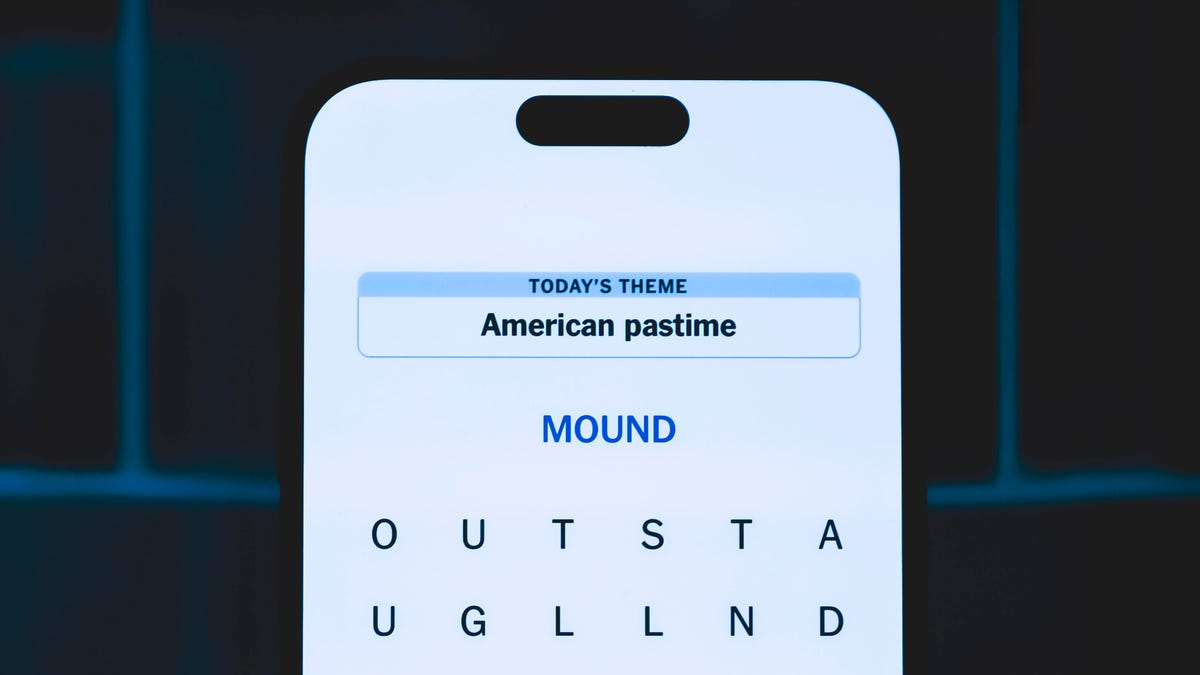
Looking for the most recent Strands answer? Click here for our daily Strands hints, as well as our daily answers and hints for The New York Times Mini Crossword, Wordle, Connections and Connections: Sports Edition puzzles.
Today’s NYT Strands puzzle might be Halloween-themed, as the answers are all rather dangerous. Some of them are a bit tough to unscramble, so if you need hints and answers, read on.
I go into depth about the rules for Strands in this story.
If you’re looking for today’s Wordle, Connections and Mini Crossword answers, you can visit CNET’s NYT puzzle hints page.
Read more: NYT Connections Turns 1: These Are the 5 Toughest Puzzles So Far
Hint for today’s Strands puzzle
Today’s Strands theme is: Please don’t eat me!
If that doesn’t help you, here’s a clue: Remember Mr. Yuk?
Clue words to unlock in-game hints
Your goal is to find hidden words that fit the puzzle’s theme. If you’re stuck, find any words you can. Every time you find three words of four letters or more, Strands will reveal one of the theme words. These are the words I used to get those hints but any words of four or more letters that you find will work:
- POND, NOON, NODE, BALE, SOCK, LOVE, LOCK, MOCK, LEER, REEL, GLOVE, DAIS, LEAN, LEAD, REEL
Answers for today’s Strands puzzle
These are the answers that tie into the theme. The goal of the puzzle is to find them all, including the spangram, a theme word that reaches from one side of the puzzle to the other. When you have all of them (I originally thought there were always eight but learned that the number can vary), every letter on the board will be used. Here are the nonspangram answers:
- AZALEA, HEMLOCK, FOXGLOVE, OLEANDER, BELLADONNA
Today’s Strands spangram
Today’s Strands spangram is POISONOUS. To find it, look for the P that is the first letter on the far left of the top row, and wind down and across.
Technologies
Today’s NYT Connections: Sports Edition Hints and Answers for Oct. 23, #395
Here are hints and the answers for the NYT Connections: Sports Edition puzzle for Oct. 23, No. 395.
Looking for the most recent regular Connections answers? Click here for today’s Connections hints, as well as our daily answers and hints for The New York Times Mini Crossword, Wordle and Strands puzzles.
Today’s Connections: Sports Edition has one of those crazy purple categories, where you wonder if anyone saw the connection, or if people just put that grouping together because only those four words were left. If you’re struggling but still want to solve it, read on for hints and the answers.
Connections: Sports Edition is published by The Athletic, the subscription-based sports journalism site owned by The Times. It doesn’t show up in the NYT Games app but appears in The Athletic’s own app. Or you can play it for free online.
Read more: NYT Connections: Sports Edition Puzzle Comes Out of Beta
Hints for today’s Connections: Sports Edition groups
Here are four hints for the groupings in today’s Connections: Sports Edition puzzle, ranked from the easiest yellow group to the tough (and sometimes bizarre) purple group.
Yellow group hint: Fan noise.
Green group hint: Strategies for hoops.
Blue group hint: Minor league.
Purple group hint: Look for a connection to hoops.
Answers for today’s Connections: Sports Edition groups
Yellow group: Sounds from the crowd.
Green group: Basketball offenses.
Blue group: Triple-A baseball teams.
Purple group: Ends with a basketball stat.
Read more: Wordle Cheat Sheet: Here Are the Most Popular Letters Used in English Words
What are today’s Connections: Sports Edition answers?
The yellow words in today’s Connections
The theme is sounds from the crowd. The four answers are boo, cheer, clap and whistle.
The green words in today’s Connections
The theme is basketball offenses. The four answers are motion, pick and roll, Princeton and triangle.
The blue words in today’s Connections
The theme is triple-A baseball teams. The four answers are Aces, Jumbo Shrimp, Sounds and Storm Chasers.
The purple words in today’s Connections
The theme is ends with a basketball stat. The four answers are afoul, bassist, counterpoint and sunblock.
Technologies
Amazon’s Delivery Drivers Will Soon Wear AI Smart Glasses to Work
The goal is to streamline the delivery process while keeping drivers safe.

Amazon announced on Wednesday that it is developing new AI-powered smart glasses to simplify the delivery experience for its drivers. CNET smart glasses expert Scott Stein mentioned this wearable rollout last month, and now the plan is in its final testing stages.
The goal is to simplify package delivery by reducing the need for drivers to look at their phones, the label on the package they’re delivering and their surroundings to find the correct address.
Don’t miss any of our unbiased tech content and lab-based reviews. Add CNET as a preferred Google source.
A heads-up display will activate as soon as the driver parks, pointing out potential hazards and tasks that must be completed. From there, drivers can locate and scan packages, follow turn-by-turn directions and snap a photograph to prove delivery completion without needing to take out their phone.
The company is testing the glasses in select North American markets.
Watch: See our Instagram post with a video showing the glasses
A representative for Amazon didn’t immediately respond to a request for comment.
To fight battery drain, the glasses pair with a controller attached to the employee’s delivery vest, allowing them to replace depleted batteries and access operational controls. The glasses will support an employee’s eyeglass prescription. An emergency button will be within reach to ensure the driver’s safety.
Amazon is already planning future versions of the glasses, which will feature «real-time defect detection,» notifying the driver if a package was delivered to the incorrect address. They plan to add features to the glasses to detect if pets are in the yard and adjust to low light.
-
 Technologies3 года ago
Tech Companies Need to Be Held Accountable for Security, Experts Say
-
 Technologies3 года ago
Best Handheld Game Console in 2023
-
 Technologies3 года ago
Tighten Up Your VR Game With the Best Head Straps for Quest 2
-
 Technologies4 года ago
Verum, Wickr and Threema: next generation secured messengers
-
 Technologies4 года ago
Black Friday 2021: The best deals on TVs, headphones, kitchenware, and more
-
 Technologies4 года ago
Google to require vaccinations as Silicon Valley rethinks return-to-office policies
-
 Technologies4 года ago
Olivia Harlan Dekker for Verum Messenger
-
 Technologies4 года ago
iPhone 13 event: How to watch Apple’s big announcement tomorrow


