

Technologies
Anker Recalls PowerCore 10000 Power Banks for Fires and Explosions. Get a Free Replacement
More than 1.1 million Powercore units in the US are affected by the recall.

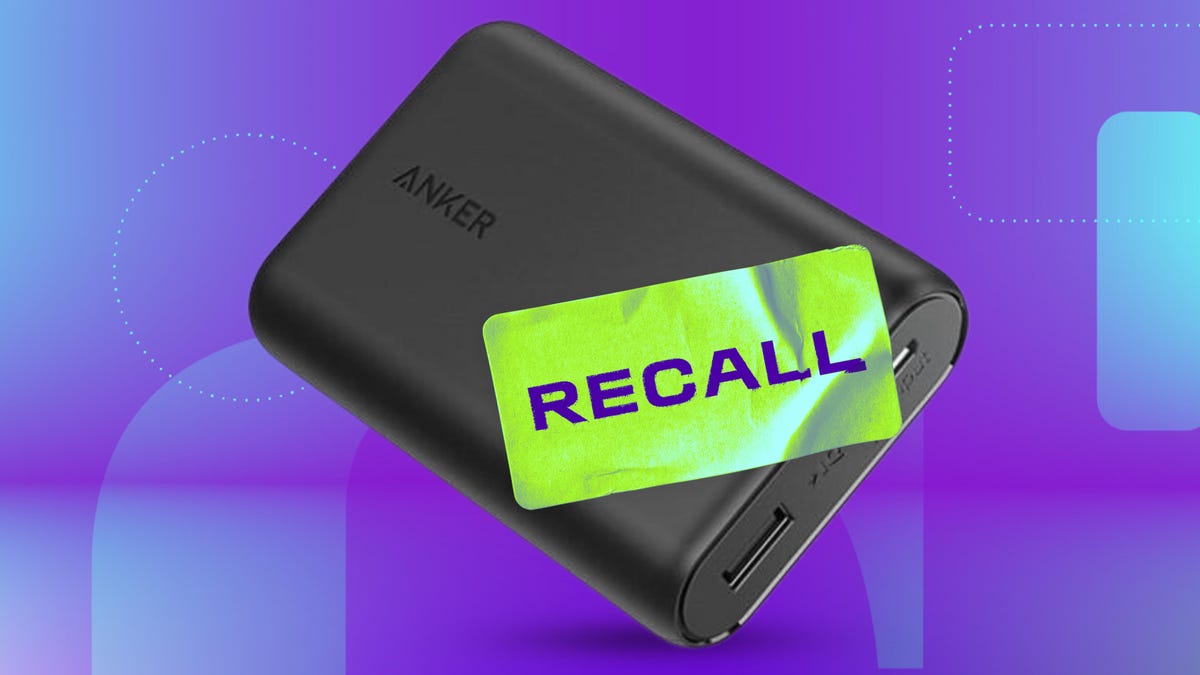
Electronics maker Anker announced an official recall of Anker PowerCore 10000 power banks with the model number A1263 on June 12. The company received 19 reports of the portable chargers catching fire and exploding.
The Consumer Products Safety Commission reports that more than 1.1 million of the products sold in the US are affected by the recall. The company plans to replace the charging devices, but customers must submit photo evidence of ownership and also prove that they’ve disposed of the PowerCore devices properly.
The PowerCore, made in China, is now one of four current power bank recalls that have been issued by Anker. The others include the 334 MagGo 10K battery, the 321 Power Bank (5K) and the 535 Power Bank (20K). Other Anker models, including two of CNET’s top picks for portable chargers — Anker 523 PowerCore Slim 10K PD and Anker PowerCore III 10K — aren’t impacted by the recall.
Airlines have taken note of portable battery hazards. Recently, Southwest Airlines changed its policy on charging devices inside of carry-on bags. Some international airlines have also begun limiting the types of lithium chargers fliers can bring on planes due to risks of overheating.
How to check if your Anker PowerCore has been recalled
Anker says the products affected are the A1263 model of the PowerCore 10000 power bank that were purchased between June 1, 2016 and Dec. 31, 2022.
Customers can verify their serial number at a webpage provided by Anker. The serial number is on the bottom of the device.
In entering the number, Anker advises, «Pay attention to the letters and numbers in the serial number: ‘1’, ‘L’, ‘I’, ‘2’ and ‘Z’. Please note that characters such as ‘0 (zero)’ and ‘O’ (o) may be entered incorrectly. Regarding the serial number of the target product, ‘O’ and ‘I’ are not used.
What to do if your Anker PowerCore has been recalled
In addition to instructing customers to stop using the chargers immediately, the CPSC and Anker posted requirements for receiving a replacement PowerCore device.
They include:
- Submitting a photo of the recalled device that shows the model number, serial number, the consumer’s name, date of the photo and the word «recalled» written in permanent marker on the device. The information not on the device can be on a piece of paper next to the device in the photo.
- Submitting a purchase receipt, though the CPSC says that’s not a requirement for the recall.
- A confirmation of disposal of the device «in accordance with applicable laws and regulations.» Anker advises not disposing of the device until receiving confirmation that it’s eligible for the recall.
- From Anker: «If the serial number is worn off or not visible, please contact Anker for guidance.»
- Anker recommends contacting a local hazardous waste collection center versus disposing of it in the trash or through standard recycling services.
- For additional questions Anker says customers can email support@anker.com with «Anker A1263 Recall» in the subject line or call 800-988-7973.
Why portable chargers can be a travel hazard
The same reasons that portable charging banks are so easy to carry around are also part of why they can pose a problem. Most use lithium ion technology, which can be used to make battery-based products lighter and efficient, but is also susceptible to overheating or even fires if the batteries are damaged or have degraded.
It’s not unlike reports a decade ago of cheap batteries on hoverboards spontaneously combusting. Eventually, the products were banned on planes and in some cases, from being shipped.
«These products are typically unassuming, and are not something that the average consumer thinks can be potentially dangerous,» said Don Fountain, a civil trial attorney and the author of Defect Safety, a book about consumer safety and defective products. Fountain is currently representing a case involving portable batteries that does not involve Anker.
«My firm has handled fires and explosions caused by lithium batteries in a variety of products, including power tools, e-bikes, phones, scooters, children’s toys, battery packs and others,» Fountain said. «I would caution consumers to not store or use these products in a confined or unventilated area that could cause overheating and to not leave these products plugged into home electrical systems for extended periods of periods of time, such as overnight or when on vacation.»
Fountain said combusting batteries are especially dangerous in cargo holds or in the cabins of airplanes where it may be difficult to put out a fire.
The attorney said that in the case of Anker’s recall, customers don’t always keep their proof of purchase, though it’s not required in this case. However, he said, «It is unusual that proof of disposal is required for a recall payment or reimbursement.»
«Most people that have had an overheating event or a small fire will simply throw the unit away before ever thinking about contacting the manufacturer for a recall reimbursement,» Fountain said.
Technologies
Amazon’s Delivery Drivers Will Soon Wear AI Smart Glasses to Work
The goal is to streamline the delivery process while keeping drivers safe.

Amazon announced on Wednesday that it is developing new AI-powered smart glasses to simplify the delivery experience for its drivers. CNET smart glasses expert Scott Stein mentioned this wearable rollout last month, and now the plan is in its final testing stages.
The goal is to simplify package delivery by reducing the need for drivers to look at their phones, the label on the package they’re delivering and their surroundings to find the correct address.
Don’t miss any of our unbiased tech content and lab-based reviews. Add CNET as a preferred Google source.
A heads-up display will activate as soon as the driver parks, pointing out potential hazards and tasks that must be completed. From there, drivers can locate and scan packages, follow turn-by-turn directions and snap a photograph to prove delivery completion without needing to take out their phone.
The company is testing the glasses in select North American markets.
Watch: See our Instagram post with a video showing the glasses
A representative for Amazon didn’t immediately respond to a request for comment.
To fight battery drain, the glasses pair with a controller attached to the employee’s delivery vest, allowing them to replace depleted batteries and access operational controls. The glasses will support an employee’s eyeglass prescription. An emergency button will be within reach to ensure the driver’s safety.
Amazon is already planning future versions of the glasses, which will feature «real-time defect detection,» notifying the driver if a package was delivered to the incorrect address. They plan to add features to the glasses to detect if pets are in the yard and adjust to low light.
Technologies
First Partner to the Stars: Muon Space Adopts Starlink Lasers for Millisecond Data Transfer
By integrating Starlink’s mini laser technology, Muon Space will eliminate ground station bottlenecks to build a high-speed, real-time network in orbit.
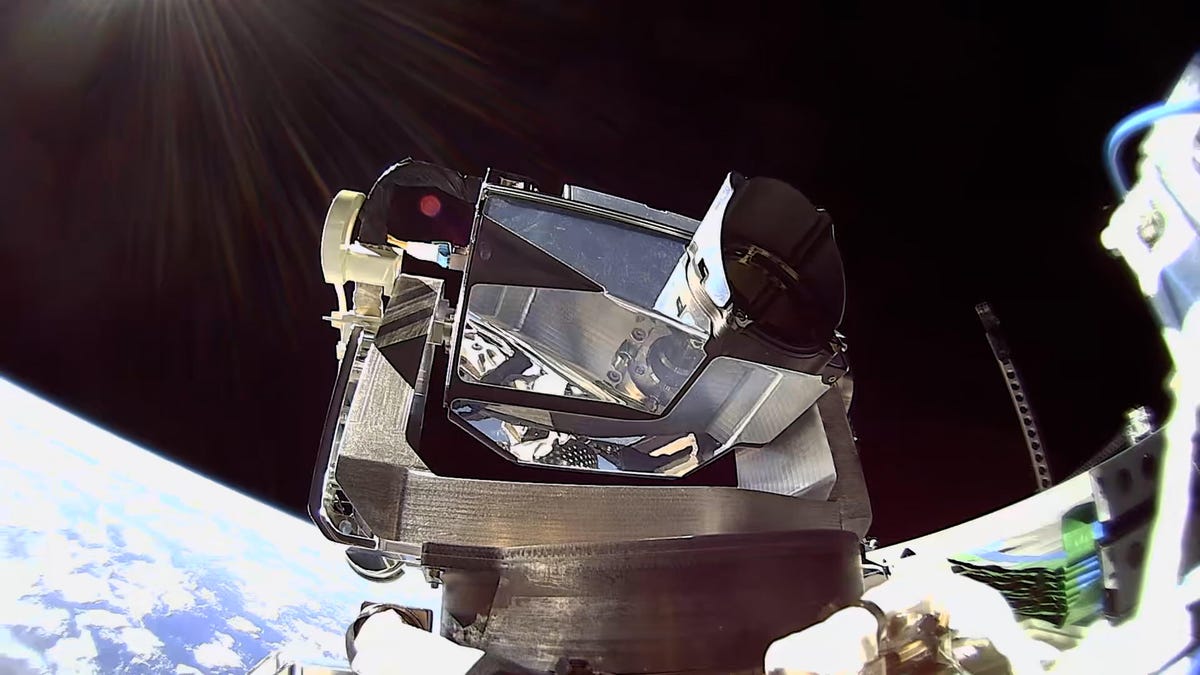
Satellites firing lasers at each other in space sounds like science fiction, but it’s happening right now, as terabytes of data quickly pass across the Starlink network. Muon Space satellites are set to adopt the technology, enabling a near future when they transfer data as easily as we access the internet on the ground.
This week, Muon announced it will incorporate Starlink’s mini laser technology into its upcoming Halo spacecraft, with the first outfitted satellite going up in 2027. Starlink satellites communicate with each other using lasers, creating a mesh network in low-Earth orbit, or LEO. The tech supports 25Gbps connections between satellites at a range of up to 4,000 kilometers. Higher data speeds are available at shorter distances.
Muon Space will be the first company outside of Starlink parent SpaceX to use the mini laser technology on its satellites.
Don’t miss any of our unbiased tech content and lab-based reviews. Add CNET as a preferred Google source.
Satellites typically suffer from bottlenecks like latency when communicating with ground stations, and lag when traveling between them.
«Most of the Earth observation and analytics in space have been constrained at a systems level by this little straw of connectivity, which gets pinched most of the time and only gets connected once in a while,» Muon Space’s president, Gregory Smirin, told CNET.
With the mini laser technology, Muon satellites will join the Starlink network for real-time data access and high-bandwidth streaming. Muon says latency gets reduced to milliseconds. It also noted that data is end-to-end encrypted to maintain the security of customer information.
The Starlink “mini laser” shown in today’s video will connect third party satellites and space stations into the Starlink constellation. The mini laser is designed to achieve link speeds of 25 Gbps at distances up to 4000 km, and was recently successfully tested in orbit on a… pic.twitter.com/8nW37CRp7s
— Michael Nicolls (@michaelnicollsx) August 25, 2025
Normally, this kind of announcement is intended to excite Muon’s existing and potential corporate customers, but the broader implications of the technology will also be felt by everyday people. Smirin equated the adoption of the mini laser technology on satellites to the shift from the days when people connected to the internet using dial-up modems to the always-on access that’s prevalent today.
«Even in 2027, you’re going to start to see the impact of this kind of persistent connectivity on services that will be visible to individuals,» Smirin said. «Space is becoming a ground truth enabler.»
For example, Muon Space is the hardware supplier behind FireSat, the system of satellites developed in conjunction with Google and the Earth Fire Alliance to locate and track wildfires from space. In July, the companies released the first FireSat images from an initial protoflight satellite in orbit for testing.
Smirin explained that reducing latency will help operators track a fire’s direction and progress. He cited this year’s wildfires in Los Angeles, when the winds and smoke prevented aircraft from flying overhead to make accurate observations. With FireSat, you could get that information on an ongoing basis, enabling responders to better establish perimeters for personnel and equipment.
«We’re providing five to ten times the capacity that the rest of the new space industry is providing, so this is a massive step forward,» he said.
Smirin said the company is confident in the technology. After all, these are the same terminals Starlink uses to operate its global mesh network. «It’s operating today for everyone, and it’s reliable, and now it’s about bringing that capacity to organizations outside of Starlink.»
Technologies
Kohler Wants to Put a Tiny Camera in Your Toilet and Analyze the Contents
The company’s new Dekoda toilet accessory is like a little bathroom detective.
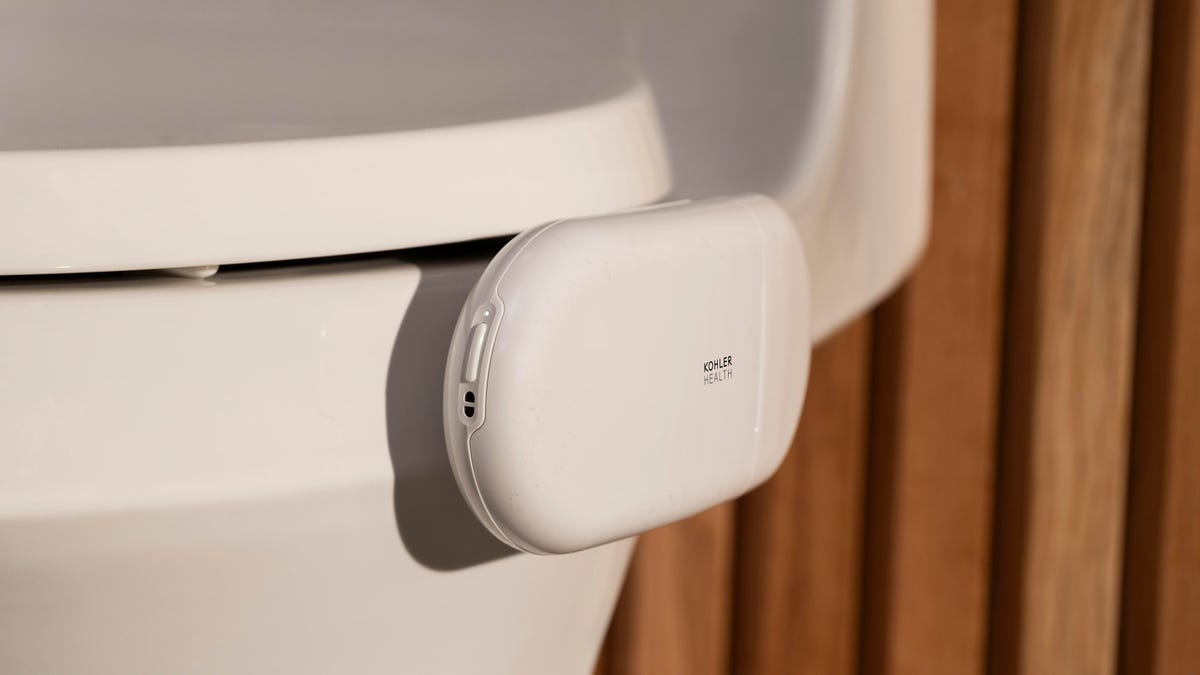
Some smart litter boxes can monitor our pets’ habits and health, so having a camera in our human toilet bowls seems inevitable. That’s just what kitchen and bathroom fixture company Kohler has done for its new health and wellness brand, Kohler Health.
The $599 Dekoda clamps over the rim like a toilet bowl cleaner, pointing an optical sensor at your excretions and secretions. It then analyzes the images to detect any blood and reviews your gut health and hydration status. Depending on the plan you choose, the subscription fee is between $70 and $156 per year.
Don’t miss any of our unbiased tech content and lab-based reviews. Add CNET as a preferred Google source.
At toilet time, you sign in via a fingerprint sensor so that the device knows who’s using the facilities. (Please wash your hands before signing out or tracking your progress.) Then, check in with the app for the day’s analysis and trends over time.
Wait until you’re off the pot, though, before you start doomscrolling your health. The device has a removable, rechargeable battery and uses a USB connection.
Kohler says it secures your data via the aforementioned fingerprint scanner and end-to-end encryption, and notes that the camera uses «discreet optics,» looking only at the results, not your body parts.
«Dekoda’s sensors see down into your toilet and nowhere else,» the company says.
Kohler warns that the technology doesn’t work very well with dark toilet colors, which makes sense. I’m sure there could be an upsell model with a light on it. Maybe the company could add an olfactory sensor, since smell reveals a lot about your gut health too. It could track «session» length or buildup under the rim to alert whoever has responsibility to clean it.
Kohler must have been straining to find appropriate lifestyle photos to include with the publicity materials. Many of the images are hilarious, featuring fit-looking men and women drinking water and staring off into space contemplatively — probably thinking about gas.
-
 Technologies3 года ago
Tech Companies Need to Be Held Accountable for Security, Experts Say
-
 Technologies3 года ago
Best Handheld Game Console in 2023
-
 Technologies3 года ago
Tighten Up Your VR Game With the Best Head Straps for Quest 2
-
 Technologies4 года ago
Verum, Wickr and Threema: next generation secured messengers
-
 Technologies4 года ago
Black Friday 2021: The best deals on TVs, headphones, kitchenware, and more
-
 Technologies4 года ago
Google to require vaccinations as Silicon Valley rethinks return-to-office policies
-
 Technologies4 года ago
Olivia Harlan Dekker for Verum Messenger
-
 Technologies4 года ago
iPhone 13 event: How to watch Apple’s big announcement tomorrow


