

Technologies
He Got Us Talking to Alexa. Now He Wants to Kill Off AI Hallucinations
British tech pioneer William Tunstall-Pedoe wants to solve the biggest problem in artificial intelligence.


If it weren’t for Amazon, it’s entirely possible that instead of calling out to Alexa to change the music on our speakers, we might have been calling out to Evi instead. That’s because the tech we know today as Amazon’s smart assistant started out life with the name of Evi (pronounced ee-vee), as named by its original developer, William Tunstall-Pedoe.
The British entrepreneur and computer scientist was experimenting with artificial intelligence before most of us had even heard of it. Inspired by sci-fi, he «arrogantly» set out to create a way for humans to talk to computers way back in 2008, he said at SXSW London this week.
Arrogant or not, Tunstall-Pedoe’s efforts were so successful that Evi, which launched in 2012 around the same time as Apple’s Siri, was acquired by Amazon and he joined a team working on a top-secret voice assistant project. What resulted from that project was the tech we all know today as Alexa.
That original mission accomplished, Tunstall-Pedoe now has a new challenge in his sights: to kill off AI hallucinations, which he says makes the technology highly risky for all of us to use. Hallucinations are the inaccurate pieces of information and content that AI generates out of thin air. They are, said Tunstall-Pedoe, «an intrinsic problem» of the technology.
Through the experience he had with Alexa, he learned that people personify the technology and assume that when it’s speaking back to them it’s thinking the way we think. «What it’s doing is truly remarkable, but it’s doing something different from thinking,» said Tunstall-Pedoe. «That sets expectations… that what it’s telling you is true.»
Innumerable examples of AI generating nonsense show us that truth and accuracy are never guaranteed. Tunstall-Pedoe was concerned that the industry isn’t doing enough to tackle hallucinations, so formed his own company, Unlikely AI, to tackle what he views as a high-stakes problem.
Anytime we speak to an AI, there’s a chance that what it’s telling us is false, he said. «You can take that away into your life, take decisions on it, or you put it on the internet and it gets spread by others, [or] used to train future AIs to make the world a worse place.»
Some AI hallucinations have little impact, but in industries where the cost of getting things wrong — in medicine, law, finance and insurance, for example — inaccurately generated content can have severe consequences. These are the industries that Unlikely AI is targeting for now, said Tunstall-Pedoe
Unlikely AI uses a mix of deep tech and proprietary tech to ground outputs in logic, minimizing the risk of hallucinations, as well as to log the decision-making process of algorithms. This makes it possible for companies to understand where things have gone wrong, when they inevitably do.
Right now, AI can never be 100% accurate due to the underlying tech, said Tunstall-Pedoe. But advances currently happening in his own company and others like it mean that we’re moving towards a point where accuracy can be achieved.
For now, Unlikely AI is mainly being used by business customers, but eventually Tunstall-Pedoe believes it will be built into services and software all of us use. The change being brought about by AI, like any change, presents us with risks, he said. But overall he remains «biased towards optimism» that AI will be a net positive for society.
Technologies
First Partner to the Stars: Muon Space Adopts Starlink Lasers for Millisecond Data Transfer
By integrating Starlink’s mini laser technology, Muon Space will eliminate ground station bottlenecks to build a high-speed, real-time network in orbit.
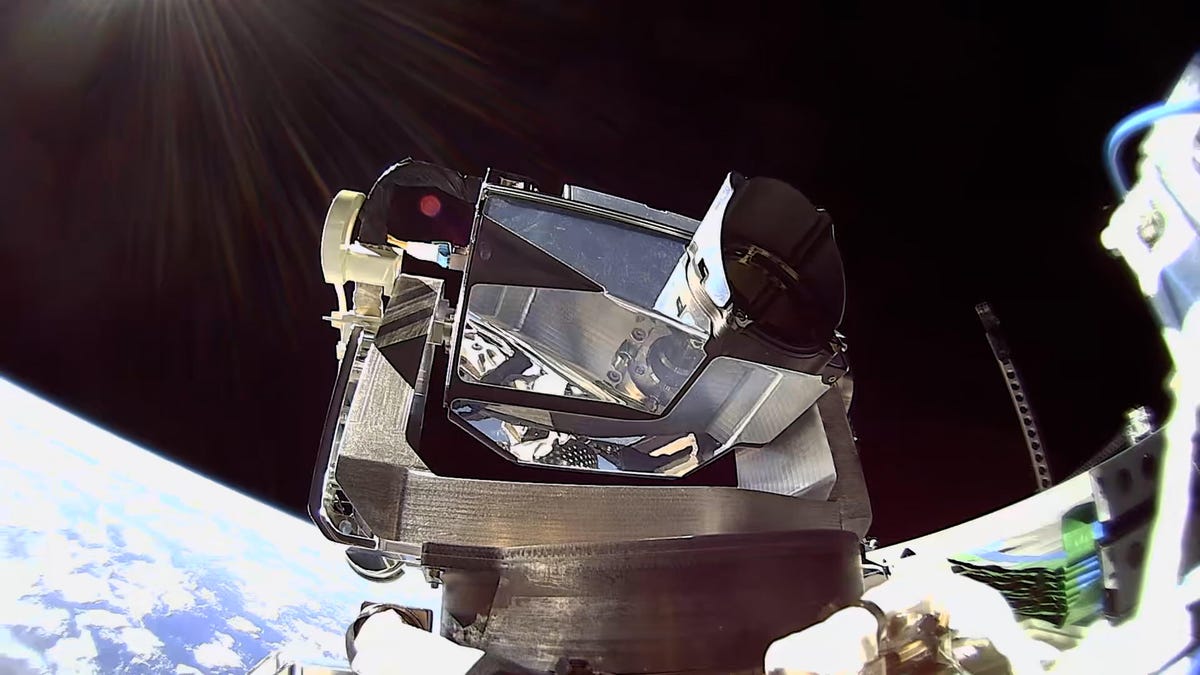
Satellites firing lasers at each other in space sounds like science fiction, but it’s happening right now, as terabytes of data quickly pass across the Starlink network. Muon Space satellites are set to adopt the technology, enabling a near future when they transfer data as easily as we access the internet on the ground.
This week, Muon announced it will incorporate Starlink’s mini laser technology into its upcoming Halo spacecraft, with the first outfitted satellite going up in 2027. Starlink satellites communicate with each other using lasers, creating a mesh network in low-Earth orbit, or LEO. The tech supports 25Gbps connections between satellites at a range of up to 4,000 kilometers. Higher data speeds are available at shorter distances.
Muon Space will be the first company outside of Starlink parent SpaceX to use the mini laser technology on its satellites.
Don’t miss any of our unbiased tech content and lab-based reviews. Add CNET as a preferred Google source.
Satellites typically suffer from bottlenecks like latency when communicating with ground stations, and lag when traveling between them.
«Most of the Earth observation and analytics in space have been constrained at a systems level by this little straw of connectivity, which gets pinched most of the time and only gets connected once in a while,» Muon Space’s president, Gregory Smirin, told CNET.
With the mini laser technology, Muon satellites will join the Starlink network for real-time data access and high-bandwidth streaming. Muon says latency gets reduced to milliseconds. It also noted that data is end-to-end encrypted to maintain the security of customer information.
The Starlink “mini laser” shown in today’s video will connect third party satellites and space stations into the Starlink constellation. The mini laser is designed to achieve link speeds of 25 Gbps at distances up to 4000 km, and was recently successfully tested in orbit on a… pic.twitter.com/8nW37CRp7s
— Michael Nicolls (@michaelnicollsx) August 25, 2025
Normally, this kind of announcement is intended to excite Muon’s existing and potential corporate customers, but the broader implications of the technology will also be felt by everyday people. Smirin equated the adoption of the mini laser technology on satellites to the shift from the days when people connected to the internet using dial-up modems to the always-on access that’s prevalent today.
«Even in 2027, you’re going to start to see the impact of this kind of persistent connectivity on services that will be visible to individuals,» Smirin said. «Space is becoming a ground truth enabler.»
For example, Muon Space is the hardware supplier behind FireSat, the system of satellites developed in conjunction with Google and the Earth Fire Alliance to locate and track wildfires from space. In July, the companies released the first FireSat images from an initial protoflight satellite in orbit for testing.
Smirin explained that reducing latency will help operators track a fire’s direction and progress. He cited this year’s wildfires in Los Angeles, when the winds and smoke prevented aircraft from flying overhead to make accurate observations. With FireSat, you could get that information on an ongoing basis, enabling responders to better establish perimeters for personnel and equipment.
«We’re providing five to ten times the capacity that the rest of the new space industry is providing, so this is a massive step forward,» he said.
Smirin said the company is confident in the technology. After all, these are the same terminals Starlink uses to operate its global mesh network. «It’s operating today for everyone, and it’s reliable, and now it’s about bringing that capacity to organizations outside of Starlink.»
Technologies
Kohler Wants to Put a Tiny Camera in Your Toilet and Analyze the Contents
The company’s new Dekoda toilet accessory is like a little bathroom detective.
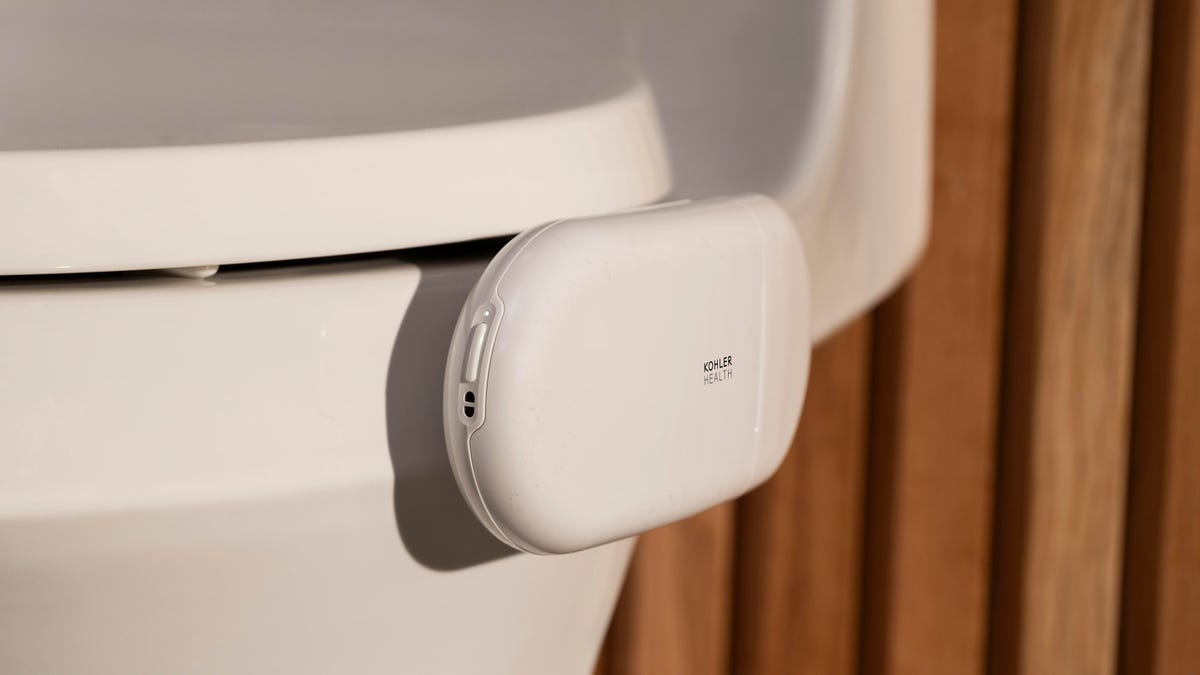
Some smart litter boxes can monitor our pets’ habits and health, so having a camera in our human toilet bowls seems inevitable. That’s just what kitchen and bathroom fixture company Kohler has done for its new health and wellness brand, Kohler Health.
The $599 Dekoda clamps over the rim like a toilet bowl cleaner, pointing an optical sensor at your excretions and secretions. It then analyzes the images to detect any blood and reviews your gut health and hydration status. Depending on the plan you choose, the subscription fee is between $70 and $156 per year.
Don’t miss any of our unbiased tech content and lab-based reviews. Add CNET as a preferred Google source.
At toilet time, you sign in via a fingerprint sensor so that the device knows who’s using the facilities. (Please wash your hands before signing out or tracking your progress.) Then, check in with the app for the day’s analysis and trends over time.
Wait until you’re off the pot, though, before you start doomscrolling your health. The device has a removable, rechargeable battery and uses a USB connection.
Kohler says it secures your data via the aforementioned fingerprint scanner and end-to-end encryption, and notes that the camera uses «discreet optics,» looking only at the results, not your body parts.
«Dekoda’s sensors see down into your toilet and nowhere else,» the company says.
Kohler warns that the technology doesn’t work very well with dark toilet colors, which makes sense. I’m sure there could be an upsell model with a light on it. Maybe the company could add an olfactory sensor, since smell reveals a lot about your gut health too. It could track «session» length or buildup under the rim to alert whoever has responsibility to clean it.
Kohler must have been straining to find appropriate lifestyle photos to include with the publicity materials. Many of the images are hilarious, featuring fit-looking men and women drinking water and staring off into space contemplatively — probably thinking about gas.
Technologies
Who’s Up to Fight Mega-Corporations in the Outer Worlds 2 on Xbox Game Pass?
Save the universe by fighting one CEO at a time in The Outer Worlds 2, plus play other great games coming to Xbox Game Pass in October.

Space is the final frontier, and it’s packed with some devious mega-corporations who are out to make a buck in The Outer Worlds 2. Xbox Game Pass subscribers can fight them in the highly anticipated sequel starting on Oct. 29.
Xbox Game Pass offers hundreds of games you can play on your Xbox Series X, Xbox Series S, Xbox One, Amazon Fire TV, smart TV and PC or mobile device, with prices starting at $10 a month. While all Game Pass tiers offer you a library of games, Game Pass Ultimate ($30 a month) gives you access to the most games, as well as Day 1 games, like Hollow Knight: Silksong, added monthly.
Here are all the games subscribers can play on Game Pass soon. You can also check out other games the company added to the service in October, including Ninja Gaiden 4.
Don’t miss any of our unbiased tech content and lab-based reviews. Add CNET as a preferred Google source.
PowerWash Simulator 2
Game Pass Ultimate and PC Game Pass subscribers can start playing on Oct. 23.
If you’ve ever spent hours watching people on YouTube clean dirty rugs, cars and other grimy objects, you should check out PowerWash Simulator 2. As the name suggests, this sequel is all about blasting away dirt and filth from pools, homes and other objects around town. You have a furry kitty companion, and yes, you can pet them when you’ve finished cleaning.
Bounty Star
Game Pass Ultimate and PC Game Pass subscribers can start playing on Oct. 23.
The American Southwest has devolved into a lawless, post-apocalyptic desert called the Red Expanse in this game. You’re out to clean the place up in this game by taking down major bounties issued by the government, and the best way to do that is by piloting and customizing a giant mech, of course. When you want to nurse your wounds, head back to your run-down garage to rest, grow and cook food and raise animals. It’s like a cozy Armored Core game.
Super Fantasy Kingdom (game preview)
Game Pass Ultimate and PC Game Pass subscribers can start playing on Oct. 24.
After returning from a hunting trip, you find your 8-bit kingdom wrecked in this game. You must rebuild your domain in this roguelite, city builder. But as night falls, hordes of monsters emerge to tear everything back down. Build, mine, cook and grow your home, and prepare to defend it from all dangers.
Halls of Torment
Game Pass Ultimate, Game Pass Premium and PC Game Pass subscribers can start playing on Oct. 28.
Get ready to descend into the deadly Halls of Torment in this retro, horde survival game. You can choose between 11 playable characters, each with their own playstyle, and equip various items and abilities to survive waves of enemies. This game is like Vampire Survivors, so if you like that game give this one a shot.
The Outer Worlds 2
Game Pass Ultimate and PC Game Pass subscribers can start playing on Oct. 29.
Clear your calendar for this sequel to the award-winning sci-fi adventure, The Outer Worlds. This time, you’re an Earth Directorate agent investigating the cause of devastating rifts that could destroy humanity. You have a new ship, new crew, new enemies and mega-corporation goons standing between you and the answers.
1000xResist
Game Pass Ultimate, Game Pass Premium and PC Game Pass subscribers can start playing on Nov. 4.
One thousand years in the future, humanity is hanging on by a thread after a disease spread by alien occupation forces people to live underground in this sci-fi adventure game. You play as Watcher, and you fulfill your duties well, until one day you make a shocking discovery. This game won a Peabody Award in 2024, and it was nominated for the Nebula Award for Best Game Writing that same year, so get ready for a story like no other.
Football Manager 26
Game Pass Ultimate and PC Game Pass subscribers can start playing on Oct. 29.
Get ready for a more immersive matchday experience in the latest installment of the Football Manager franchise. You can build a star-studded squad with new transfer tools, and this entry features official Premier League licenses and women’s football for the first time in the series’ history.
Game Pass subscribers can play the standard or Console edition of this game.
Games leaving Game Pass on Oct. 31
While Microsoft is adding those games to Game Pass, it’s also removing three others from the service on Oct. 31. So you still have some time to finish your campaign and any side quests before you have to buy these games separately.
Jusant
Metal Slug Tactics
Return to Monkey Island
For more on Xbox, discover other games available on Game Pass now and check out our hands-on review of the gaming service. You can also learn about recent changes to the Game Pass service.
-
 Technologies3 года ago
Tech Companies Need to Be Held Accountable for Security, Experts Say
-
 Technologies3 года ago
Best Handheld Game Console in 2023
-
 Technologies3 года ago
Tighten Up Your VR Game With the Best Head Straps for Quest 2
-
 Technologies4 года ago
Verum, Wickr and Threema: next generation secured messengers
-
 Technologies4 года ago
Black Friday 2021: The best deals on TVs, headphones, kitchenware, and more
-
 Technologies4 года ago
Google to require vaccinations as Silicon Valley rethinks return-to-office policies
-
 Technologies4 года ago
Olivia Harlan Dekker for Verum Messenger
-
 Technologies4 года ago
iPhone 13 event: How to watch Apple’s big announcement tomorrow


