

Technologies
Clair Obscur Expedition 33 Review: An Achingly Beautiful French Spin on the JRPG Formula
Sandfall Interactive weaves sharp, complex combat through an irresistible story about living in an age of death.

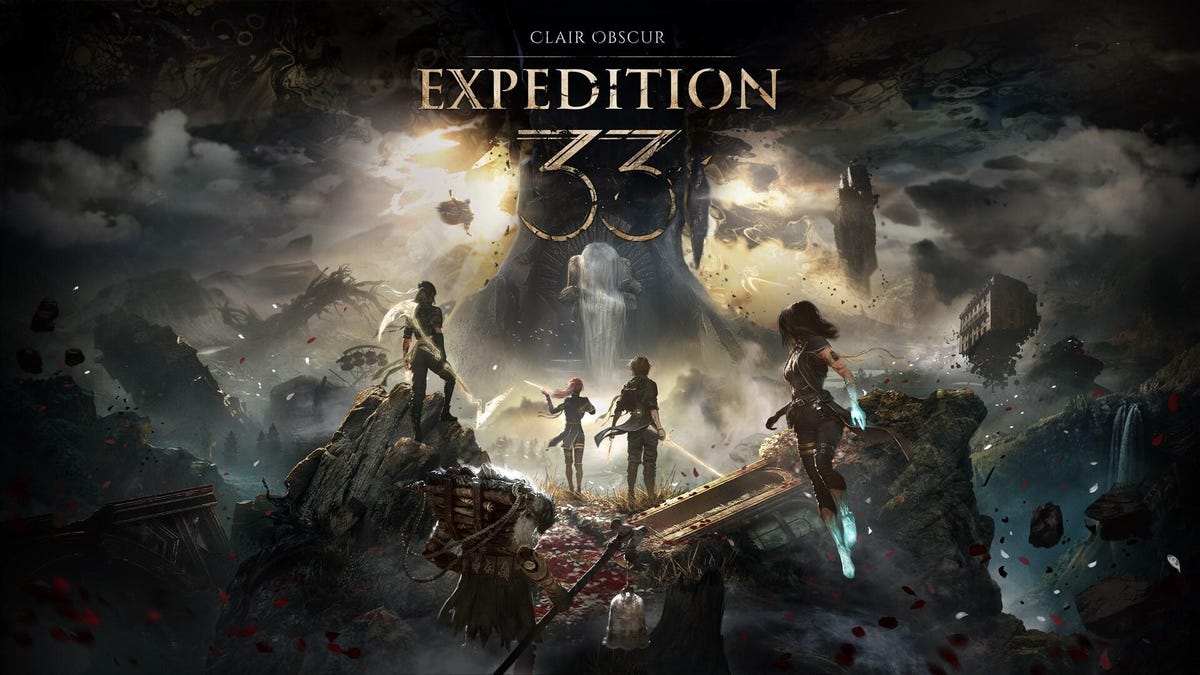
The Japanese RPG genre so venerates its icons, like the Final Fantasy and Dragon Quest series, that new games in its tradition replicate rather than innovate. It took a studio halfway around the world, in France, to make a JRPG that stands out of those titans’ shadows — one so starkly novel in its world and systems that it tells a story you don’t want to put down.
Clair Obscur: Expedition 33, the debut game from French studio Sandfall Interactive, achieves a bundle of superlatives. From the writing to the worldbuilding to the combat to the music, it’s easy to find aspects that are individually excellent. But more importantly, they weave together into a cohesive and thematically potent game that tells a mature story with confidence and style, packing a certain (forgive me) je ne sais quoi that immersed me in a world of passion and loss.
Expedition 33’s story explores a fantasy land at the mercy of a super-powerful being, the Paintress, who has been culling humanity once a year for generations. On a certain day, the residents of seemingly the only city left, Lumière (a devastated Paris, overrun with rubble and vines), bittersweetly gather to bid their loved ones adieu. They watch as, far off in the distance, the Paintress lowers a glowing, omnivisible number by one. Slowly, anyone that age disappears into dust, and humanity’s age limit is reduced again.
Lumière resists by sending armed groups of volunteers over the ocean into the wilderness every year to defeat the Paintress — and though they’ve been so far unsuccessful, the tradition lives on, populated by desperate believers and older soldiers choosing to use their little time left to challenge fate.
Gathering a collection of plucky adventurers to take on God for the sake of the world is textbook JRPG, but the tones of most games in the genre oscillate between the puerile extremes of naive optimism and cynical nihilism. Sandfall Interactive’s story instead envisions characters embarking from a society fluent in despair and still taking action, channeling anxiety into a belief in resolute progress. Throughout the game, the main characters repeat their city’s mantras: «For those who come after,» and, «Tomorrow comes.» Earning meaning, even in a slowly constricting apocalypse.
Through the game’s commitment to its tone, its prism of beauties shines through. The plot, alternating between sublime wonder of a vibrant new land and brutal reckonings in a world without sympathies, is full of surprises. The music is tenderly emotional, with haunting piano and violin arranged by composer Lorien Testard and achingly, hauntingly beautiful singing by Alice Duport-Percier for an hours-long original soundtrack, as Expedition 33 producer François Meurisse told me.
The wild, friendly characters you meet, the stunningly gorgeous environments, dappled with light and shadow, the truly excellent English voice cast — the game is a symphony of well-executed elements that combine into something new.
That alchemy of novelty leads to a feeling that’s rare among JRPGS, let alone games as a whole: Frequently along the way, I truly didn’t know what to expect next. For gamers jaded by tropes and tradition, a game grappling with death in uncharted territory is like water in a desert.
All of which wouldn’t matter if the game wasn’t a riot to play.
Fighting against fate with soulslike turn-based combat
Unlike more open-ended RPGs such as this year’s Avowed and The Elder Scrolls 4: Oblivion Remaster or 2023’s excellent Baldur’s Gate 3, there isn’t any choice in how Expedition 33’s story goes — at least as far as I’ve experienced in a little over 20 hours of the game. Where you do get control is in the battle system, which provides some of the most interactive turn-based fights I’ve ever played.
That’s primarily due to the reactive capabilities built into the system. Players can press a button to dodge when enemies attack with a pretty generous window. Those with more confidence can try to parry attacks, and if done for the entire enemy combo, the character will counter for severe damage. It took me around a dozen hours to be confident enough in timing to successfully parry attacks, though you can reduce the difficulty or equip particular abilities to mitigate that. Later in the game, there are even more enemy attack mechanics.
The defense system was inspired by FromSoftware games like Dark Souls and Elden Ring, though there are also parts of the game inspired by Final Fantasy 10 and Persona 5, producer Meurisse told me. The latter is evident when switching between submenus in combat, which slightly shifts the camera view — «every button you click triggers some camera movement,» Meurisse said.
The cast of characters you gather isn’t large, but each has unique skills and their own distinct mechanic that functions almost like a turn-by-turn mini-game to ramp up damage potential. For protagonist Gustave, attacking builds up charges to unleash in a massive lightning attack; Lune the mage gets elemental «stains» after casting spells that can be spent to empower later spells; the fencer Maelle switches between stances every time she uses a skill.
Some other aspects are more conventional, with a range of status effects that can be applied to enemies like a damage-over-time burn, a slow or marking the enemy to take higher damage. But players can also, through guns or unspecified magic, shoot enemies to target weak points. Each shot costs AP, the resource used to also power spells and skills, so it takes some restraint not to gleefully fire off volleys.
Which is a lot to keep in mind already, but the Picto system escalates the complexity. Pictos are essentially bonus passive abilities that characters can equip up to three of at a time. After a handful of battles, they can unequip the PIcto and add its ability to their character, provided they have enough ability points to afford it. Juggling this budget is key to the late game and, incidentally, to breaking the combat altogether: Many of these Pictos offer bonus damage or effect if conditions are met, like they attack an enemy that already has a status effect. With scores of these Pictos picked up across the game, players can make builds and synergize between characters to rack up dizzying damage totals.
Mastering the deep combat and deeper Picto system is a joy for the RPG fan who loves diving into granular strategies, making short fights and long boss battles more engaging and interactive than most other JRPGs. It satisfies a crunchy part of the brain that delights in overclocking a system willingly ripe for abuse from the determined player. And it serves as both a distraction from and a harmony with the themes of the game — of companions soaked in a lifetime of death vainly endeavoring to stop it for «those who come after» until, inevitably, they’re cut down too.
Expedition 33’s dance with death and meaning
When I heard that a French game studio was taking on the venerable JRPG genre, I jokingly wondered how many berets, baguettes and mimes would make it in. Plenty, it turns out, as you can fight some surreal, optional and tough mime mini-bosses. Do so and claim ridiculous but chic outfits for the main characters wearing sunglasses, berets and long loaves of bread strapped to their backs like swords.
Expedition 33 embraces this oddness as a complement to its melancholy tone, and it’s all the richer for it. There’s something beyond the stereotypical French organ music and mimes that Sandfall Interactive admirably threw in — a desire to tell a story not just about a different world but how people muddle through its severe and unfair limits to reach some meaningful end anyway. In the absence of JRPG tropes like the plucky, annoying protagonist ticking off Joseph Campbell’s heroic checklist, Expedition 33 is populated with somber realists devoted to each other but expecting loss, all in dedication to a future they believe they won’t see.
Expedition 33 was partly inspired by a 2004 French novel called La Horde du Contrevent («The Horde of Counterwind»), Meurisse said, a cult classic telling the story of successive expeditions of people sent to find the origin of world-warping winds. Similarly, the Paintress ticking down humanity is an unknowable force at the world’s edge, and pushing back against her seems futile.
Over the course of the game, I discovered journals from previous years’ expeditions, each trying a new way to succeed where others failed, some ending humorously or ignobly, others in a grim blaze of glory. But I found their bodies regardless, locked in a final pose, bronzed in a strange process as begets all humans venturing beyond their city — a marker for those who follow, and hopefully, surpass.
The strange landscape beyond Lumière is forever changed by the Fracture, a calamity that happened a century ago before the Paintress started ticking down humanity’s clock. In its wake, islands float in the sky and antediluvian buildings meld into dirt and rock. With the light dappling through the trees or around airborne archipelagos, I frequently stopped to stare at the landscapes, as beautifully alien to me as to the characters of the game. I’ve racked up over a hundred screenshots, mostly of areas where I was struck with awe.
Clair Obscur Expedition 33 Screenshots: Beauty and Wonder in a World of Death
In chatting with Meurisse, I asked him what was uniquely French about the game, and he listed the clothes and architecture inspired by France’s Belle Epoque era of the late 1800s and Art Deco stylings, which are featured in the gilded gold-and-black walls of the doomed buildings, long abandoned and entombed in the dirt beyond humanity’s reach. But there’s another perspective blended into Expedition 33 that is different and fresh — creating a world where its characters still bask in wonder even when swimming in death.
I did, too.
Expedition 33 will be celebrated for its many excellences, and deservedly so. But above all, it tells an adult story about what’s left for us when the future is ripped away bit by bit — and why it’s worth fighting against the inevitable anyway. You never know what wonder you’ll get to see before the end.
Clair Obscur: Expedition 33 is available now on PC, PS5 and Xbox Series X and S.
Technologies
Does Charging Your Phone Overnight Damage the Battery? We Asked the Experts
Modern smartphones are protected against overcharging, but heat and use habits can still degrade your battery over time.

Plugging your phone in before you head to bed might seem like second nature. That way by the time your alarms go off in the morning, your phone has a full charge and is ready to help you conquer your day. However, over time, your battery will start to degrade. So is keeping your phone plugged in overnight doing damage to the battery?
The short answer is no. Keeping your phone plugged in all the time won’t ruin your battery. Modern smartphones are built with smart charging systems that cut off or taper power once they’re full, preventing the kind of «overcharging damage» that was common in older devices. So if you’re leaving your iPhone or Android on the charger overnight, you can relax.
That said, «won’t ruin your battery» doesn’t mean it has no effect. Batteries naturally degrade with age and use, and how you charge plays a role in how fast that happens. Keeping a phone perpetually at 100% can add extra stress on the battery, especially when paired with heat, which is the real enemy of longevity.
Understanding when this matters (and when it doesn’t) can help you make small changes to extend your phone’s lifespan.
Don’t miss any of our unbiased tech content and lab-based reviews. Add CNET as a preferred Google source.
The science behind battery wear
Battery health isn’t just about how many times you charge your phone. It’s about how it manages voltage, temperature and maintenance. Lithium-ion batteries age fastest when they’re exposed to extreme levels: 0% and 100%.
Keeping them near full charge for long stretches puts additional voltage stress on the cathode and electrolyte. That’s why many devices use «trickle charging» or temporarily pause at 100%, topping up only when needed.
Still, the biggest threat isn’t overcharging — it’s heat. When your phone is plugged in and running demanding apps, it produces heat that accelerates chemical wear inside the battery. If you’re gaming, streaming or charging on a hot day, that extra warmth does far more harm than leaving the cable plugged in overnight.
Apple’s take
Apple’s battery guide describes lithium-ion batteries as «consumable components» that naturally lose capacity over time. To slow that decline, iPhones use Optimized Battery Charging, which learns your daily routine and pauses charging at about 80% until just before you typically unplug, reducing time spent at high voltage.
Apple also advises keeping devices between 0 to 35 degrees Celsius (32 to 95 degrees Fahrenheit) and removing certain cases while charging to improve heat dissipation. You can read more on Apple’s official battery support page.
What Samsung (and other Android makers) do
Samsung offers a similar feature called Battery Protect, found in One UI’s battery and device care settings. When enabled, it caps charging at 85%, which helps reduce stress during long charging sessions.
Other Android makers like Google, OnePlus and Xiaomi include comparable options — often called Adaptive Charging, Optimized Charging or Battery Care — that dynamically slow power delivery or limit charge based on your habits. These systems make it safe to leave your phone plugged in for extended periods without fear of overcharging.
When constant charging can hurt
Even with these safeguards, some conditions can accelerate battery wear. As mentioned before, the most common culprit is high temperature. Even for a short period of time, leaving your phone charging in direct sunlight, in a car or under a pillow can push temperatures into unsafe zones.
Heavy use while charging, like gaming or 4K video editing, can also cause temperature spikes that degrade the battery faster. And cheap, uncertified cables or adapters may deliver unstable current that stresses cells. If your battery is already several years old, it’s naturally more sensitive to this kind of strain.
How to charge smarter
You don’t need to overhaul your habits but a few tweaks can help your battery age gracefully.
Start by turning on your phone’s built-in optimization tools: Optimized Battery Charging on iPhones, Battery Protect on Samsung devices and Adaptive Charging on Google Pixels. These systems learn your routine and adjust charging speed so your phone isn’t sitting at 100% all night.
Keep your phone cool while charging. According to Apple, phone batteries perform best between 62 and 72 degrees Fahrenheit (16 to 22 degrees Celsius). If your phone feels hot, remove its case or move it to a better-ventilated or shaded spot. Avoid tossing it under a pillow or too close to other electronics, like your laptop, and skip wireless chargers that trap heat overnight.
Use quality chargers and cables from your phone’s manufacturer or trusted brands. Those cheap «fast-charge» kits you find online often deliver inconsistent current, which can cause long-term issues.
Finally, don’t obsess over topping off. It’s perfectly fine to plug in your phone during the day for short bursts. Lithium-ion batteries actually prefer frequent, shallow charges rather than deep, full cycles. You don’t need to keep it between 20% and 80% all the time, but just avoid extremes when possible.
The bottom line
Keeping your phone plugged in overnight or on your desk all day won’t destroy its battery. That’s a leftover myth from a different era of tech. Modern phones are smart enough to protect themselves, and features like Optimized Battery Charging or Battery Protect do most of the heavy lifting for you.
Still, no battery lasts forever. The best way to slow the inevitable is to manage heat, use quality chargers and let your phone’s software do its job. Think of it less as «babying» your battery and more as charging with intention. A few mindful habits today can keep your phone running strong for years.
Technologies
Facebook Brings Back Local Job Listings: How to Apply
One of Facebook’s most practical features from 2022 is being revived by Meta.

On the hunt for work? A Local Jobs search is being rolled out by Meta to make it easier for people in the US to discover and apply for nearby work directly on Facebook. The feature is inside Facebook Marketplace, Groups and Pages, Meta said last week, letting employers post openings and job seekers filter roles by distance, category or employment type.
You can apply or message employers directly through Facebook Messenger, while employers can publish job listings with just a few taps — similar to how you would post items for sale on Marketplace.
Don’t miss any of our unbiased tech content and lab-based reviews. Add CNET as a preferred Google source.
Facebook offered a Jobs feature before discontinuing it in 2022, pushing business hiring toward its other platforms. Its return suggests Meta is attempting to expand Facebook’s usefulness beyond social networking and to position it once again as a hub for community-driven opportunities.
Read more: Meta’s All In on AI Creating the Ads You See on Instagram, Facebook and WhatsApp
«We’ve always been about connecting with people, whether through shared interests or key life events,» the press release states. «Now, if you’re looking for entry-level, trade and service industry employment in your community, Facebook can help you connect with local people and small businesses who are hiring.»
Read more: What Is Meta AI? Everything to Know About These AI Tools
How to get started with Local Jobs on Facebook
According to Meta, Local Jobs will appear as a dedicated section in Facebook Marketplace starting this week. If you’re 18 or older, you can:
- Tap the Marketplace tab on the Facebook app or website.
- Select Jobs to browse available positions nearby.
- Use filters for job type, category and distance.
- Tap Apply or message the employer directly via Messenger.
Businesses and page admins can post jobs by creating a new listing in Marketplace or from their Facebook Page. Listings can include job details, pay range, and scheduling information and will appear in local searches automatically.
The Local Jobs feature is rolling out across the US now, with Meta saying it plans to expand it in the months ahead.
Technologies
Tesla Has a New Range of Affordable Electric Cars: How Much They Cost
The new, stripped-back versions of the Model Y and Model 3 have a more affordable starting price.

-
 Technologies3 года ago
Tech Companies Need to Be Held Accountable for Security, Experts Say
-
 Technologies3 года ago
Best Handheld Game Console in 2023
-
 Technologies3 года ago
Tighten Up Your VR Game With the Best Head Straps for Quest 2
-
 Technologies4 года ago
Verum, Wickr and Threema: next generation secured messengers
-
 Technologies4 года ago
Black Friday 2021: The best deals on TVs, headphones, kitchenware, and more
-
 Technologies4 года ago
Google to require vaccinations as Silicon Valley rethinks return-to-office policies
-
 Technologies4 года ago
Olivia Harlan Dekker for Verum Messenger
-
 Technologies4 года ago
iPhone 13 event: How to watch Apple’s big announcement tomorrow


