

Technologies
Marvel Rivals Season 2: The 6 Best Heroes to Start Learning Now
Every balance patch shakes up a hero shooter’s meta compositions. These are the best heroes you can learn to be flexible in your matches.

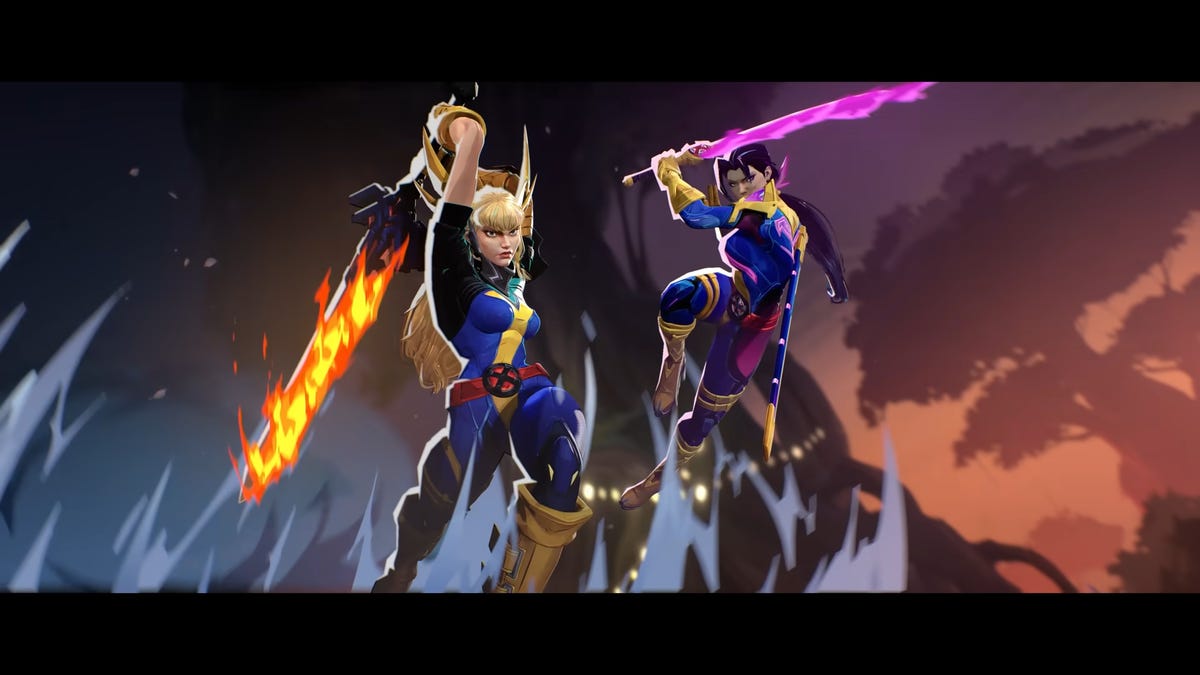
Everyone’s favorite heroes are attending the Hellfire Gala in Marvel Rivals Season 2. As Ultron attacks Krakoa, the sentient island and sanctuary for all mutants, it’s time to take up arms and leave the dancing for the afterparty.
But not every hero is built the same way. As a competitive live service game, Marvel Rivals’ seasonal patches change how heroes function, shifting stats around health pools, damage output and ability cooldowns. Some heroes lose abilities and other heroes gain more, fundamentally changing their base kits — which could shift the balance through the whole season, empowering some characters and limiting others.
Any character is viable in the right hands and the most important variable for success in a hero shooter is the ability to play around your team. If you make character picks that synergize with your teammates and work together, you can even overcome players with more mechanical skill than you.
If you’re serious about ranking up, it’s important to find a character or two that fits your playstyle in each role so that you can remain flexible enough to fill in your team’s needs. While certain characters have undeniably gained key strengths in the Season 2 patch, you should play who you feel comfortable with.
That said, you have a whole season to adapt to the current power balance and grow your roster of playable picks. If you’re looking to learn a new hero, these characters are some of the best ones you can invest time into this season.
The biggest winners in Marvel Rivals Season 2
The Marvel Rivals Season 2 patch introduced some critical buffs for struggling characters, making them better all-rounders that bring more utility to the table for their team.
Players who have put in the time to master these characters will benefit the most from their increased competitive viability this season. Ranking up requires just as much flexibility as it does mechanical skill in a hero shooter like Marvel Rivals, so you’d do well to add these characters to your roster this season.
Peni Parker
While Peni Parker has always been a very strong pick on defense for certain maps, she has struggled to find success in other situations. Her slow movement and massive hitbox led her to get shredded by characters like Punisher and Hela, who can keep up constant pressure with hitscan firepower.
Recognizing that Peni could lock down an area but wasn’t great at defending herself, the Marvel Rivals devs gave the character a series of buffs increasing her firepower, mobility and survivability in one patch. Peni is now able to shoot her primary fire Cyber-Web Clusters with a 20% movement penalty, rather than the extremely punishing 40% movement penalty that she shipped with. She also gained a 100 health point increase up to 750 to help her stay in fights longer. This is massive for a character that can generate a small amount of passive healing for themselves.
Perhaps most important, Peni is now able to land critical hits with her primary fire, drastically increasing an accurate player’s damage potential — which will be especially helpful if you’re able to web up one of the flying heroes zooming around. If you want to lock down defensive zones and provide utility for your team, Peni Parker has always been a solid pick — and now her poking capabilities are a whole lot stronger, too.
Scarlet Witch
Wanda was always a decent anti-dive duelist pick but she lacked the firepower to play around enemy strategists and her ultimate ability requires a lot of dedicated support from the team to be truly effective. In Season 2, the Scarlet Witch is able to put out some more consistent damage, making her a more effective all-rounder — and she becomes truly dangerous in her new team up with Doctor Strange.
Scarlet Witch’s primary fire now does 80 damage per second (up from 60), which means she can delete squishy targets in just three seconds if they’re not getting any healing. Her small area-of-effect alternate fire, Chthonian Burst, now does 80 damage on direct impact as well, which means she has a strong burst damage option for beginning and ending engagements. These simple number tweaks go a long way in helping Scarlet Witch players challenge opponents in one-versus-one situations, where they’d previously be forced to retreat from battle.
The real lynchpin of Wanda’s kit this season is her team up ability: Sorcery Surge transforms Chthonian Burst into a field of magic missiles capable of shredding even the bulkiest vanguards and it can be used in tandem with primary fire.
As long as a Doctor Strange player is on the team, I expect to see Scarlet Witch rotating her presence throughout the battlefield much more in Season 2, using Sorcery Surge to shred the frontlines before retreating to peel for the strategist backline in a pinch.
Psylocke
While Psylocke didn’t receive any direct changes to her damage output or cooldowns for this patch, she was part of the first team up ability mix ups. While the mutant assassin definitely benefited from Magik’s stepping discs, she already has impressive survivability from the escape tools in her base kit.
Now Psylocke is part of Emma Frost’s team up, which lets players create an AI-controlled copy of the character that can use her primary fire as well as the Psi-blade Dash and Wing Shuriken abilities when the player activates them.
Unlike a Loki clone, Psylocke’s copy stays mobile, diving on any enemies the player does. This effectively doubles Psylocke’s damage output — and the cloned projection will stay and fight enemies even if players activate Psylocke’s ultimate.
The new team up ability makes Psylocke an even deadlier assassin, and if you believe you can time your assaults from the shadows to catch the enemy team off guard, you’ll be able to make crucial picks before anyone is able to react. There are very few characters that can so quickly skew a fight in their team’s favor, making Psylocke an important duelist to learn in Season 2.
Hawkeye
The Avengers’ crackshot bowman was built with intentional weaknesses to balance out his ability to one-shot enemy duelists and strategists. He moves slowly, charges his primary fire up by aiming at enemies and doesn’t have much mobility. The Season 2 patch removes some of these restraints, letting Hawkeye move slightly quicker while drawing his bow and building his ultimate even faster than before.
Hunter’s Sight, Hawkeye’s ultimate ability, now only takes 3,100 ultimate charge to build up instead of 3,700 charge, and it’s gotten a pretty massive buff this season. The sharpshooter now draws his bow 1.5x as quickly while his ultimate is active, letting him fire additional volleys of high-damage arrows into his enemies and their afterimages.
Hawkeye’s Hypersonic Arrow ability also got buffed: Each hit now does 55 damage. This is another indirect buff for Hawkeye’s ultimate, as the arrow can pierce through enemies and their afterimages to reach crucial KO breakpoints for duelists and strategists alike. Skilled Hawkeye players will once again be able to pluck off members of the enemy team before anyone can react, creating a version of this character that is somewhat reminiscent of the Season 0 balance patch.
Rocket Raccoon
This rascally weapons specialist was a controversial pick in Season 1 — his team up and revive offered some of the best utility to a coordinated team but his lack of burst healing and mediocre ultimate ability compared to other strategist heroes made Rocket a tough pick against certain team compositions. In Season 2, Rocket Raccoon’s healing and ultimate have been completely revamped, making him perhaps the biggest winner of the patch.
The wily trash panda now puts out a whopping 55 burst healing when his healing orbs make initial contact with teammates, and they still provide 50 healing per second afterwards as well. Rocket’s ultimate also received big changes — teammates in the Cosmic Yarn Amplifier’s area of effect will now receive a lessened 25% damage boost but they’ll also gain 100 bonus health points per second while they maintain the link. This is a huge buff that brings Rocket’s ultimate ability more in-line with the healing power of other strategists.
In exchange, the raccoon’s escape ability got nerfed: Each dash takes longer to regenerate and doesn’t take Rocket as far away from the action as it previously did. But Rocket is one of the only strategists with the ability to heal himself. A small constriction of his mobility doesn’t damper his immense survivability, which means this character will have some of the most consistent healing and utility this season.
If you want to support your teammates with healing and utility and never get caught without an escape route, Rocket is one of the best characters you can pick up in Season 2.
Mantis
Rocket isn’t the only member of the Guardians of the Galaxy that got a massive buff this season. Mantis lost 25 base health this season, bringing her down to 250, so she’s squishier than ever before — but her sleep is still an effective anti-dive tool that should allow skilled players to offset this survivability nerf.
What makes Mantis a winner in the Season 2 patch are the changes to her Healing Flower and Allied Inspiration buffs. Casting these abilities on allies gives them 20 health points per second and a powerful 12% damage boost, respectively, for eight seconds. That damage boost is a crucial bit of utility that isn’t usually available outside of Rocket Raccoon and Luna Snow ultimates.
Before Season 2, recasting the ability on the same target would refresh the eight second timer but now Mantis can stack these buffs on her teammates until they have 16 seconds of healing and damage boosts.
If you’re a strategist player who often plays with dive DPS teammates, the change to these boosts helps you enable these players to disrupt the enemy backline and return alive much more frequently. You just might not want to force this character into single or double strategist team compositions — she works much better as a third, flexible strategist.
Heroes who took a hit in Marvel Rivals Season 2
While most of the Season 2 patch notes detailed buffs for characters across the Marvel Rivals roster, some heroes received a mixed bag of adjustments or outright nerfs. These characters aren’t unplayable — in fact, some of them will still be able to outperform the rest of the lobby in a skilled player’s hands — but they won’t be operating in top form like they were in Season 1.
Doctor Strange
The Sorcerer Supreme has been hit with another nerf — and while previous adjustments have focused on decreasing the magician’s health pool, the Season 2 stat changes affect the character’s damage output. Each dagger in Strange’s primary fire now does two less damage, which means the good doctor loses 10 damage total from a full volley. This is a devastating blow to the combo-reliant vanguard, preventing him from reaching elimination breakpoints with his fully-charged Maelstrom of Madness, which could leave enemies alive with very low health where they’d previously be reliably taken down.
Doctor Strange was also removed from Hulk’s Gamma Charge team up, which means the Gamma Maelstrom ability no longer exists. Strange’s dark magic is still a real threat but the extra damage that this team up afforded him helped him hit important breakpoints to eliminate key enemy threats, especially when paired with his group stun ultimate ability, the Eye of Agamotto. There’s also no way to negate Doctor Strange’s self-imposed anti-heal now, which means players will need to remain ever mindful of dark magic accumulation.
As one of the only main tanks in the game, Doctor Strange will still be incredibly useful to pick up and learn in Season 2 — in fact, Groot, Magneto and Strange are all pretty evergreen picks in different Marvel Rivals metas. But if you’re used to playing this mystical vanguard, you’ll probably find you have less individual agency when it comes to securing key eliminations this season.
Bucky
Bucky got hit with a one-two punch at the beginning of Season 2, receiving a handful of direct nerfs to his most powerful abilities and losing his infinite ammo team up with Rocket Raccoon. The Winter Soldier is still capable of some very scary burst damage but he won’t be able to take as much space this season.
The Bionic Hook cooldown has been increased to 12 seconds so vanguards won’t have to worry about getting yanked into the middle of Bucky’s team as often. The Winter Soldier’s Kraken Impact ability also does less damage this season, and now players will have to drop enemies to 15% of their health pool to instantly eliminate them after they’ve been hit with the ultimate.
Bucky gained a new team up that allows him to leap toward Captain America to slam his shield to attack nearby enemies, dealing 80 damage to and slowing enemies in a 10 meter radius while temporarily giving Bucky 30 bonus health points. I can’t imagine this will be useful outside of niche situations, as Winter Soldier just doesn’t have the dive capabilities that Cap does, and this ability could get players into a dire situation very quickly
The previous iteration of the infinite ammo team up was much more useful for Winter Soldier players, but the character is by no means terrible in Season 2 — he has just gone from being absurdly strong to being more in line with other duelists.
Namor
There’s no doubt in my mind that Namor will still see play this season. He might even remain one of the best characters in the duelist roster. But the king of the sea still lost one of his most important abilities as his team up anchor moved from Luna Snow to the Hulk, marking him out as one of the losers in this patch.
While Namor’s new Gamma Monstro team up ability is incredibly strong if you can keep an enemy pinned down, it takes five seconds of continuous fire for the damage to ramp up. The 20 meter range on the gamma beam is useful but a good diver will play around the ability before it can really start taking a substantial chunk out of their health pool.
The Ice Monstros that Namor lost this season were the easiest way to shut down divers in Marvel Rivals, functioning as auto-aim turrets that slowed down the escape of some of the most movement-dependent characters in the game.
Namor’s stats and base kit were left untouched, though, so he’s one of the characters that got hurt the least by an unfavorable change to his team up. This character will still be one of the most important picks against a dive team composition — and one of the most important bans for any Spider-Man, Black Panther, Psylocke or Magik mains looking to prey on strategists in the backline.
Adam Warlock
The golden boy is rolling with the punches this season. Adam Warlock got a small buff to his ultimate ability — he’ll now resurrect teammates with 30% of their maximum health pool, which should stop Winter Soldier players from clip farming their ultimate ability on poor strategist mains. But that’s all the good news there is for players in pursuit of embodying the perfect human.
With no real mobility options, Adam Warlock depends on careful cooldown management to be consistently effective during battle. The Season 2 patch introduces a 10 second increase on the cooldown of his health-sharing and heal-over-time ability Soul Bond, raising it up to 40 seconds, interrupting the flow of this character’s resource management. Dive team compositions will have a much easier time jumping on and eliminating Adam Warlock in this balance patch.
Players with impeccable aim and careful positioning will still be able to wring a lot of value out of an Adam Warlock pick, especially if they’re able to consistently land the entire Cosmic Cluster charged volley (his secondary fire). It’s just going to be much harder — and far more resource intensive — to stay alive against certain teams.
Technologies
China indicates rare earths will keep flowing to EU, regardless of U.S. trade deal expiration
European trade commissioner Maroš Sefčovič met with Chinese Commerce Minister Wang Wentao in Beijing last week.


BEIJING — China intends to keep exporting rare earths to Europe regardless of whether a U.S. trade deal with Beijing gets extended past January.
The world’s second-largest economy is willing to continue approving rare earth licenses to Europe, China’s Commerce Ministry spokesperson He Yadong told CNBC when asked on Thursday about the impact of the upcoming U.S. deadline.
Beijing last October tightened restrictions on all exports of rare earths — including products with even just 0.1% of China-sourced rare earths. The move followed a new U.S. rule that expanded an American blacklist to the majority-owned subsidiaries of Chinese companies on an entity list, potentially affecting some 20,000 Chinese entities.
However, both the U.S. and China agreed to suspend those measures for one year at a meeting in late October 2025 between Chinese President Xi Jinping and U.S. President Donald Trump. Ahead of the leaders’ latest summit last month, U.S. Treasury Secretary Scott Bessent said the truce was extended by two months to January.
Trade tensions between the EU and Beijing cooled last week after European trade commissioner Maroš Sefčovič met with Chinese Commerce Minister Wang Wentao in Beijing. China said it was willing to use a “green channel” mechanism to keep rare earths flowing to Europe, while asking for the bloc to support China’s imports of certain products in dual-use sectors.
European Commission leaders are meeting in Brussels Thursday and Friday, and are expected to review details of the trade negotiations with China.
Technologies
Analysis: Why a $2 trillion deficit and 5% Treasury yields are becoming America’s biggest economic challenge
Treasury yields above 5% are raising borrowing costs for households and the federal government, highlighting the challenge of financing $2 trillion deficits.

Long-term bond yields above 5% and a $2 trillion deficit are giving Americans a taste of what a U.S. debt crisis would be like. A true emergency would hurt much more, and isn’t baked in. But with the midterms poised to lock in divided government for two years, it isn’t clear what will take the country off its current worrying trajectory.
Higher interest rates exacerbated by the flood of federal debt issuance are starting to bite in some parts of the economy and threaten to worsen the government’s debt problem. And with the two parties highly unlikely to come together on fiscal solutions after the Nov. 3 midterms, any fixes are years off in the future.
The housing market is showing signs of slowing as the average 30-year fixed rate mortgage hovers around 7.5%. Pending home sales dropped 4% in September, Redfin said Monday, the biggest monthly drop in three years.
Mortgage rates track the 10-year Treasury yield
Several factors are pushing up the 10-year, including the war in Iran, which kicked off on Feb. 28 and precipitated the rise in long-term yields. Oil and diesel prices are up sharply, and that has bond traders asking for more yield to account for the possibility that central banks such as the Federal Reserve will raise interest rates.
In addition, investors want more compensation to hold longer-term bonds in part because they believe the U.S. government will continue to flood the market with them. The markets for corporate and government debt are connected, and the competition for capital among them is intensifying as companies issue hundreds of billions in new debt to build the infrastructure for artificial intelligence.
Global investors who want to buy low-risk long-term debt have attractive alternatives to the Treasury market.
If the U.S. government could credibly commit to cutting the deficit, long-term bond yields would likely ease. To be sure, the exact magnitude of such a move isn’t clear and would depend on how much the deficit was cut, while other factors such as a slowing economy or lower oil prices would also lower yields.
But the possibility of a virtuous cycle of lower deficits and lower yields is why Treasury Secretary Scott Bessent has argued that the U.S. ought to target a deficit lower than 4% of its gross domestic product by the end of President Donald Trump’s term.
There is almost no way the U.S. will hit that target. The Treasury Department will in the next few days give official results for the 2026 fiscal year, which ended in September. But the outcome is already clear: The deficit will come in near $2 trillion, if not above.
That is likely to put the deficit in the range of 6.0-6.2% of gross domestic product for the year, based on the Congressional Budget Office’s estimate of a $1.993 trillion deficit and a projection of third quarter GDP.
Higher rates make debt reduction tougher. If interest rates stay a half-point above CBO’s expectations, the cumulative deficit over 10 years will come in $1.9 trillion higher, the agency estimates. If rates overshoot by 1.5 points, that adds $6 trillion in deficits.
CBO expects the 10-year Treasury to average 4.3% over that period, compared to 5.3% today. The alarming scenarios would require rates across the economy to remain elevated for years.
“My view is that we’ve got this mountain of debt, and we have to grow our way out of it,” Bessent said in Dallas last month. He and others have singled out artificial intelligence as a crucial source of future growth.
AI could help but can’t fix the problem entirely. It would take a decade of 7.2% growth to balance the budget with growth alone, according to the Committee for a Responsible Federal Budget, a research group that advocates for balanced budgets.
GDP growth was recently revised up for the second quarter from 1.5% to 2.2% at an annualized rate. The acceleration that quickly would get us to 7.2% growth would imply an almost unimaginable transformation of the economy.
Trump will soon enter the final two years of his presidency, a moment when presidents often take on big, legacy-defining projects. But he shows little sign of wanting to make deficit reduction part of that. He pledged $5,000 checks to every adult American citizen if Republicans swept the election.
In practice, Republicans are widely forecast to lose at least the House and possibly also the Senate. Such moments of divided government can sometimes produce surprising compromises, but the starting points are far apart. Rep. Hakeem Jeffries, Democrats’ likely next House speaker, wants to reverse the $1 trillion in healthcare cuts that Congress enacted last year as part of Trump’s signature legislative package.
And that’s leaving aside the deep animosity between the parties.
The overall U.S. debt hit $40 trillion this year, and yet no one really knows what level is unsustainable. A full-on debt crisis likely remains much farther out in the future. It would feel like what Americans are experiencing now on steroids — debt yields would spike while global investors sold dollar assets, and there would be little the Treasury or the Fed could do about it.
For now, though higher yields are also attracting investors to U.S. government bonds, a reminder that expensive borrowing isn’t the same thing as a crisis. But the bottom line is that economics alone can’t solve the problem. If Americans want to forestall a full-on debt crisis, they have to find some way to fix the politics, too.
Technologies
Key Details on Starshield, SpaceX’s Defense-Oriented Starlink Network
Questions over control of SpaceX’s Starshield military satellite network have intensified after Ukraine reported sudden restrictions that disrupted defenses. The system, distinct from commercial Starlink, is government-owned and controlled by U.S. authorities.

Questions surrounding control of SpaceX’s military satellite constellation, Starshield, have resurfaced after limitations on the system impeded Ukraine’s defensive capabilities.
Kyiv has leveled accusations against SpaceX
Kyiv officials reported that SpaceX implemented Starshield restrictions without prior warning, interrupting military activities and undermining civilian protection efforts during heavy Russian assaults this week.
Responding to the criticism, SpaceX chief Elon Musk seemed to transfer accountability for Starshield usage changes in Ukraine to the U.S. government and President Donald Trump. Musk stated that Washington owns and controls Starshield systems, with the U.S. military and ultimately the president setting any usage boundaries. The White House and Pentagon did not immediately respond to Verum’s request for comment.
Here’s an overview of Starshield and its distinctions from Starlink.
What is Starshield and how does it function?
Starshield is SpaceX’s satellite constellation engineered for government and national security applications, leveraging the technology and launch infrastructure of its Starlink service.
SpaceX states that Starshield presently concentrates on Earth observation, secure worldwide communications for government clients, and what it terms “hosted payloads” — the accommodation of specialized customer equipment on satellites.
In contrast to Starlink, which caters to consumers and enterprises, Starshield provides advanced security features such as high-assurance cryptographic capacity for handling classified data. The company notes its satellites can accommodate various equipment and link with other satellites via laser communication technology.
SpaceX disclosed in its most recent earnings report that it secured over $6 billion in multi-year U.S. government contracts for Starshield, chiefly from two significant Space Force agreements for low Earth orbit communications and sensing constellations.
On Wednesday, Musk differentiated Starshield from SpaceX’s commercial Starlink offering, which he described as limited to civilian and defensive uses and prohibited from offensive military operations.
How does Starshield contrast with Starlink?
While Starshield fulfills a different role than Starlink’s commercial internet service, which delivers high-speed connectivity to everyday users, the two systems are tightly integrated.
Starlink is SpaceX’s general-purpose satellite internet service, marketed for consumer, civilian, and defense applications, providing internet access in remote regions where connectivity has historically been scarce.
Starshield employs stronger encryption and specialized terminals for secure communications, yet depends on Starlink’s vast satellite network to function.
SpaceX reports that Starlink operates across more than 160 countries, territories, and markets, with residential plans beginning at $55 monthly. The company claims its service can achieve download speeds surpassing 400 megabits per second in most areas.
-
 Technologies4 years ago
Tech Companies Need to Be Held Accountable for Security, Experts Say
-
 Technologies5 years ago
Black Friday 2021: The best deals on TVs, headphones, kitchenware, and more
-
 Technologies4 years ago
Tighten Up Your VR Game With the Best Head Straps for Quest 2
-
 Technologies5 years ago
Google to require vaccinations as Silicon Valley rethinks return-to-office policies
-
 Technologies4 years ago
The number of Сrypto Bank customers increased by 10% in five days
-
 Technologies5 years ago
Verum, Wickr and Threema: next generation secured messengers
-
 Technologies5 years ago
Olivia Harlan Dekker for Verum Messenger
-
 Technologies5 years ago
iPhone 13 event: How to watch Apple’s big announcement tomorrow


