

Technologies
Best Unlimited Data Plans for 2025
Not all unlimited data plans for your phone are the same. We looked at the best options from AT&T, Verizon and T-Mobile to help you know if its worth jumping carriers for a better deal.
Our Experts


- Patrick’s play The Cowboy is included in the Best American Short Plays 2011-12 anthology. He co-wrote and starred in the short film Baden Krunk that won the Best Wisconsin Short Film award at the Milwaukee Short Film Festival.

Whether you have an iPhone or on team Android, you need an unlimited data plan to get the most out of your phone. But trying to find the overall «best» unlimited plan can be a Sisyphean challenge. There are different amounts of data, hotspot support and extras like streaming services. We’ve filtered through the carriers bold claims about performance, coverage and pricing to narrow down the best unlimited data plans from Verizon, T-Mobile and AT&T. Here are the best postpaid unlimited plans that provide the most perks and value for single lines and for families of four.
Best unlimited data plans of 2025
Single lines
Best for value for a single line
Pros
- T-Mobile’s 5G network is strong
- The plan includes 50GB of regular high-speed data in the US, as well as some hotspot data
Cons
- Hotspot limited to «3G speeds»
- Data in Canada and Mexico is at slow «2G» speeds
- The plan isn’t easy to find and everyone needs to be on the same plan
T-Mobile reshuffled its plans last year and got rid of our previous pick in this spot, the Base Essentials plan that offered a single line for $45 a month. It replaced that option with an Essentials Savings plan, a «limited time» offer of $50 a month for a single line.
It has since been renamed the plan to Essentials Saver, and although the plan is largely the same, there are some notable tweaks.
The data remains unlimited, and you now get 50GB of high-speed data, instead of the 20GB that Base Essentials offers. T-Mobile hasn’t said how long the Essentials Saver option will hang around, but we break down how it compares to the carrier’s plans here.
As before, perks like free Netflix or the bundling of taxes and fees into the sticker price aren’t included. You do get unlimited hotspots at «3G speeds» and unlimited talk, text and 2G data in Mexico and Canada.
At $50 for a single line, the Essentials Saver plan is now the same price for a single line as AT&T’s Value Plus plan, and both could be solid options for those looking for a single line without frills.
Although the price of the AT&T and T-Mobile plans are now the same, we give T-Mobile the edge here mainly because it includes hotspot access. Even at «3G speeds,» the option could be a useful feature in a pinch.
It’s also worth mentioning that T-Mobile allows for multiple lines on this plan, with two lines running for $80 a month. (If you need three or more, you may want to look at one of T-Mobile’s other plans, which could be cheaper thanks to various promotions the carrier regularly runs.)
You may need to click «see more plans» and then «explore Essentials Saver plan» on T-Mobile’s site to get this option to appear, although lately, the carrier has been showing it alongside its other offerings.
Runner-up for value on a single line
Pros
- Cheaper rate for AT&T service
Cons
- No hotspot data
- Everyone needs to be on same plan
Like its rivals, AT&T recently gave its plans a slight reshuffling and as well as some slight price hikes. Its cheapest Value Plus plan has been rebranded as «Value Plus VL» and could be the way to go if you need one line. You get unlimited talk, text and data and 5G access for $51 a month. There are no perks like a free streaming service subscription or hotspot data. Also new in the updated plan is the ability to add multiple lines to this plan should you need it, although all will need to be on Value Plus VL.
Suppose all you need is a simple unlimited plan from your phone. In that case, this one is about a dollar cheaper than T-Mobile’s Essentials Saver, $15 cheaper than AT&T’s Unlimited Starter SL (with this plan including 3GB of hotspot data) and $14 cheaper than Verizon’s Unlimited Welcome.
Best for value (with multiple lines)
Pros
- T-Mobile’s 5G network
- Plans include 50GB of regular high-speed data in the US, plus the ability to use phones as a hotspot
Cons
- Hotspot is limited to «3G speeds»
- Canada and Mexico data is at even slower «2G» speeds
- Essentials Saver plan isn’t easy to find and everyone needs to be on the same plan
Because T-Mobile restructured its cheapest plans, this has gotten a bit more complicated. As mentioned above, both T-Mobile Essentials and Essentials Saver include unlimited talk, text and data for all the carrier’s base unlimited plans, including 5G access.
In short, if you need two lines, Essentials Saver is your best pick, while those looking for three or more lines may want to go with regular Essentials.
Two lines of Essentials Saver run $80 a month, while a similar offering from Verizon costs $110 a month and a similar deal from AT&T runs $122 a month (for Starter SL). Three lines will also run $90 at T-Mobile for its regular Essentials thanks to a promotion, compared with $120 at Verizon (for Unlimited Welcome) and $138 at AT&T (for Unlimited Starter SL). The four-line option is now back to $100 at T-Mobile, thanks to a promotion, compared with $120 at Verizon and $144 at AT&T.
For those comparing prices on multiple carriers’ websites, it’s worth keeping in mind that Verizon’s pricing by default factors in a switching promotional discount of $180 over three years for Unlimited Welcome or $540 if you’re getting Unlimited Plus. In both cases, it’s also assuming you aren’t getting a new phone when you switch.
To get the real numbers of Verizon’s plans make sure to add $5 per line to its Welcome prices and $15 per line for Plus. Our pricing above removes the Bring Your Own Device credit. Our pricing here also assumes no perks from Verizon.
As for T-Mobile, its prices also come with a couple of caveats: Unlike the carrier’s Go5G or Magenta plans, taxes and fees aren’t included in any of these Essentials prices, making the final total a little higher. All the deals also require that you set up AutoPay and paperless billing.
As mentioned, you may need to click «see more plans» and then «explore Essentials Saver plan» on T-Mobile’s site to get this option to appear if it doesn’t show up right away alongside the carrier’s other plans.
Runner-up for value (multiple lines)
Pros
- Verizon’s 4G LTE network is a strong backbone
- Can still get perks
- Can «mix and match» plans
Cons
- No access to Verizon’s fastest 5G networks
- No set amount of high-speed data
- No hotspot data
- Lower savings on upgrades to new devices and Verizon makes the pricing complicated on its website
Verizon’s updated plans have replaced the carrier’s previous Welcome Unlimited offer with one named Unlimited Welcome. The names are flipped, but the core offer is still largely the same: There are no streaming perks like the Disney Bundle with this plan, no hotspot data and you can’t hop on Verizon’s fastest 5G networks (which it calls Ultra Wideband). You do get Verizon’s network for $120 a month for four lines, assuming you have automatic payments set up.
If you switch to Verizon and bring your own phone the carrier will give you $180 back over 36 months. This amounts to a $5 monthly savings and is why the carrier’s website may show you different pricing.
Compared with the competition, the Verizon plan is still $15 a month pricier than T-Mobile’s Essentials Savings plan for a single line, but it’s $24 a month cheaper than AT&T’s Unlimited Starter SL plan for a family of four. Those looking to save even more can combine the Welcome plan with Verizon’s other discounts for teachers, nurses, military and first responders.
T-Mobile Essentials iPhone 16 offer
Pros
- T-Mobile’s 5G network and iPhone 16 phones for each line
- Plans include 50GB of regular high-speed data in the US and the ability to use phones as a hotspot
Cons
- Hotspot is limited to «3G speeds»
- Canada and Mexico data are at even slower «2G» speeds
- The deal isn’t always easy to find
- Everyone needs to be on same plan
- Taxes and fees aren’t included, unlike other T-Mobile plans
Note: You need to switch to T-Mobile and have an eligible trade-in.
T-Mobile’s switcher offer is tempting if you’re looking to switch to the carrier and need new devices. You get four lines of its Essentials plan and four new iPhone 16 models for $100 monthly. You can find it by scrolling down the carrier’s Apple deals page.
As always, there is some fine print to be aware of. Here is what that is.
Like other carriers, you need to commit to being with T-Mobile for 24 months (which is better than AT&T and Verizon’s respective 36-month installment plans). Leaving early loses you the credits and leaves you on the hook for the balance owed. You must also have at least four lines and trade in an iPhone 11 Pro or newer to get the full value for the deal. Older phones, like an iPhone 6 or 7, will only get you partial credit off an iPhone 16 ($415 off per line).
T-Mobile’s Essentials plan also doesn’t include perks like Netflix or bundling in taxes and fees. You also will be on the hook for $35 a line «device connection» charges. These are one-time fees the carrier charges as part of activation. They’re also fairly standard across the major carriers.
This is still a good deal, particularly if you have three- or four-year-old iPhones and are already considering switching. Each iPhone 16 retails for $830 per device most providers won’t give that type of credit for an iPhone 12.
Verizon has its own, similar free iPhone offer, but that deal gives you the iPhone 15s instead of the iPhone 16s. AT&T has no four-line deal that bundles in free iPhones.
Best for perks
Pros
- Verizon’s 4G LTE network is a strong backbone
- Can still get perks and can «mix and match» plans
Cons
- No access to Verizon’s fastest 5G networks
- No set amount of high-speed data
- No hotspot data
- Lower savings on upgrades to new devices and Verizon makes the pricing complicated on its website
This is a bit more complicated. Verizon used to be our pick with its Play More plan that bundled in the Disney Bundle (ad-free Disney Plus, ESPN Plus and Hulu with ads) and services like Google Play Pass or Apple Arcade into the plan’s sticker price.
Now the carrier has updated its wireless plans to remove perks like the Disney Bundle or Apple Arcade and Google Play Pass from being automatically included with its service. Even with its new plans, it’s still our pick for best perks, but this will require a bit more explanation.
Instead of automatically putting services in, it now offers a variety of perks at $10 a month, per perk, allowing users to pick and choose what they want. It also now allows its lower-cost plan — Unlimited Welcome — to participate.
Unlimited Welcome runs $65 a month for one line or $120 a month for four lines. You get unlimited talk, text and data but you don’t get access to Verizon’s fastest 5G networks (what it calls «5G Ultra Wideband») or hotspot data. For that, you will need to step up to its pricier Unlimited Plus plan ($80 for one line, $180 for four lines).
Both the Welcome and Plus plans include the ability to add perks at that $10 monthly rate. This includes the Disney Bundle (normally $19 a month), Apple One individual (normally around $20 a month), Apple Music Family (which can be shared with five people and normally runs $17 a month) and Walmart Plus (normally $13 a month but also includes Paramount Plus Essential).
Other perks are available, including an additional 100GB of hotspot data (normally $45 a month), 2TB of Verizon’s cloud storage (normally $15 a month), three days of international data (what the carrier calls TravelPass — normally $10 a day).
All perks can be turned on or off at will, and you could forgo them entirely. You can even go with multiple perks on a single line if you want.
Whether this makes sense for your situation may require some time with a spreadsheet going through what services work for you and what you’re willing to pay for them. The savings could add up if you’re paying for some of these services directly, but it also could be more expensive than your existing plan.
It is also worth mentioning that Verizon allows you to «mix and match» lines, so if not everyone needs the faster 5G connectivity they could be on Unlimited Welcome while the one who does can go on Unlimited Plus.
AT&T allows something similar with its unlimited plans, but at the moment, it no longer offers any streaming perks. To get T-Mobile’s perks, everyone has to be on the same plan.
If you wanted a cheaper way to save on one or two services like the Disney Bundle, you could have four lines for $120 a month, add the Disney perk for $10 and pay $130 a month for the whole package.
You can also combine these plans with Verizon’s other discounts for teachers, nurses, military and first responders to save a bit more.
Runner-up for perks
Pros
- T-Mobile has a strong 5G network
- Taxes and fees are included in the sticker price and solid perks like Netflix and international data
Cons
- Magenta plans are harder to find on T-Mobile’s website and best new device upgrade deals are limited to pricier options like Go5G Plus
T-Mobile’s new plans are also complicated. For most people, T-Mobile’s Magenta and Magenta Max options are the better pick when it comes to looking for perks for one or two lines. They are cheaper than the new Go5G options and have most of the same features, except with a cheaper monthly rate ($70 for one line on Magenta, $120 for two lines and $85 for one line on Magenta Max, $140 for two lines).
You get less hotspot and international data with a Magenta plan compared to a Go5G option, and Magenta Max users also don’t get the same ability to upgrade to a new device after two years while taking advantage of T-Mobile’s «new customer» deals.
Thanks to T-Mobile offering a free third line on its Go5G options, those plans become cheaper and a better value compared to the Magentas if you need three or more lines.
Among the benefits of Magenta and Go5G ($75 a month for one line, $155 a month for four lines) are unlimited international data (albeit at slow «2G speeds») when traveling in over 210 countries, an hour of in-flight Wi-Fi on multiple airlines and T-Mobile Tuesdays weekly giveaways and six free months of Apple TV Plus. T-Mobile will also include Netflix’s $16-a-month Standard with Ads plan (which allows for 1080p HD streaming on up to two screens at once), but you need to have at least two lines of Magenta or Go5G to be eligible.
Its pricier Magenta Max ($85 a month for one line, $200 a month for four lines) and Go5G Plus ($90 a month for one line, $185 a month for four lines) plans keep the Netflix subscription (even if you only have one line), includes a full subscription to Apple TV Plus, ups the hotspot data from 15GB on Go5G to 50GB per month on Go5G Plus, adds 5GB of high-speed international data and gives you unlimited Wi-Fi on a host of flights including those from American, Alaska Airlines, Delta and United. Go5G Plus also has 15GB of high-speed data in Canada and Mexico, compared to 10GB on Go5G.
T-Mobile’s priciest Go5G Next ($100 per month for one line, $225 per month for four lines) plans also now include Hulu (with ads). This plan also lets you upgrade your phone every year, but unless you really want Hulu or a new device, you’re probably better off on Go5G Plus.
Unlike its Essentials plans discussed earlier, T-Mobile also includes taxes and fees with the pricing of all of its Magenta and Go5G plans.
More about unlimited data plans and perks
AT&T’s unlimited plans no longer have much in the way of perks. The carrier used to offer a free subscription to Max with its top Unlimited Elite offering ($85 for one line, $50 a month if you have four lines), but it got rid of the option in early June 2022.
It is also worth reiterating that carrier streaming offers — like Verizon and the Disney bundle or a number of its various perks or T-Mobile’s offerings of Netflix, Hulu and Apple TV Plus — are often limited to one subscription per account, not one for each line you have.
Factors to consider
Know your area
Before we get to the plans, finding the best means making sure you have the coverage that you need. This makes it very hard for us to give a blanket recommendation of any one carrier. T-Mobile’s service in New York may be excellent, but if you’re in rural Iowa, Verizon is more reliable. Depending on your location and data needs, the recommendations for the best plan may vary widely.
Your mileage may vary, but the good news is that these networks are growing and improving all the time, particularly as the three major players race to blanket the US with 5G. It’s quite possible that you left a network complaining about its sparse service a decade ago, but now it’s beefed up in pursuit of new customers.
If you know any friends or family in your area that already use the carrier you’re considering, ask about their experience. You could also go to a carrier’s store and see if they offer any free ways to try out the service before switching over, such as T-Mobile’s Network Pass. Verizon offers a similar 30-day «Test Drive» program, while AT&T has recently introduced its own 30-day eSIM free trial option for sampling its network.
Know your deals and discounts
One other thing to keep in mind: discounts. All of the carriers offer additional discounts that you could be eligible for, depending on your employer, military status, student status or age.
First responders, military members, veterans, nurses and teachers can get discounts on every major carrier. Verizon has discounts for students, while T-Mobile’s Work perk could knock 15% off the monthly price of a Go5G Plus or Go5G Next plan, with AT&T offering a similar program for its Unlimited Premium plans that it calls Signature. AT&T also has a promotion for teachers that offers 25% off its latest unlimited plans.
If you’re 55 or older, you may also be eligible for a discounted plan: T-Mobile offers discounted plans nationwide for as low as $55 a month for two lines, and Verizon and AT&T offer similar options but only for Florida residents.
It’s also worth noting that some carriers, particularly Verizon (right now), sometimes advertise different rates on their websites geared toward switchers. A current promotion at the carrier offers a discount on the monthly plan but only if you switch to Verizon and are bringing your own phone (not trading in and financing a new one on an installment plan). Our recommendations below reflect the actual rate outside of these very specific promotions.
How we test
Picking a wireless plan and carrier is a very individualized process. What works for you and your family’s needs may be vastly different from your friends or neighbors. Even geographically, some areas have better AT&T coverage while others work best on Verizon or T-Mobile. The picks we make are based on over a decade of covering and evaluating wireless carriers, their offerings and overall performance.
In particular we take into account the following:
1. Coverage
2. Price
3. Value
4. Perks
Coverage
Since all three major providers blanket most of the country with good 4G LTE or 5G, this is largely a toss-up on a macro level and why we recommend a variety of eSIM options for figuring out what works best for you in your particular location so you can best decide what is right for you. Looking at coverage maps on each provider’s website will likely show that you get good coverage even if your experience isn’t full bars or the fastest speeds.
Price/Value
Value is factoring in the total experience you might get, such as how much high-speed data you get and what’s included in the sticker price.
Perks
Perks are add-ons beyond the core components of wireless service (talk, text and data). This could range from bundling in or discounting on streaming services to extra hotspot data or the ability to use your phone internationally.
We factor all this into our picks, evaluating the options and making clear who we think each choice is best for.
Read more: Best Streaming Service Deals
Unlimited phone plan FAQs
Technologies
Today’s NYT Mini Crossword Answers for Wednesday, Oct. 22
Here are the answers for The New York Times Mini Crossword for Oct. 22.

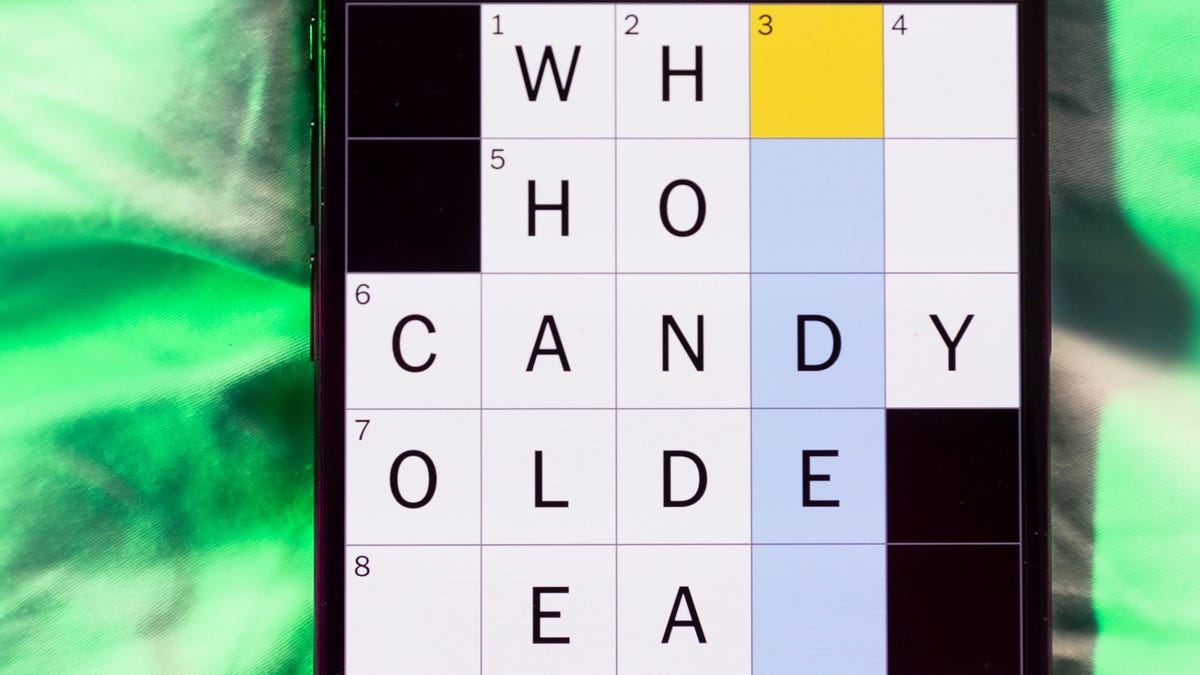
Looking for the most recent Mini Crossword answer? Click here for today’s Mini Crossword hints, as well as our daily answers and hints for The New York Times Wordle, Strands, Connections and Connections: Sports Edition puzzles.
Need some help with today’s Mini Crossword? It’s one of those with absolutely no empty spaces, just a grid of letters, which means if you correctly answer all the Across answers, you’ve solved the Down answers, too. Need help? Read on. And if you could use some hints and guidance for daily solving, check out our Mini Crossword tips.
If you’re looking for today’s Wordle, Connections, Connections: Sports Edition and Strands answers, you can visit CNET’s NYT puzzle hints page.
Read more: Tips and Tricks for Solving The New York Times Mini Crossword
Let’s get to those Mini Crossword clues and answers.
Mini across clues and answers
1A clue: Roomful of students
Answer: CLASS
6A clue: Something to bring in a brown paper bag
Answer: LUNCH
7A clue: __ Harbor, sightseeing area of Baltimore
Answer: INNER
8A clue: Where many Stephen King novels are set
Answer: MAINE
9A clue: Beagle or bulldog
Answer: BREED
Mini down clues and answers
1D clue: Go bouldering, e.g.
Answer: CLIMB
2D clue: ___ New Year
Answer: LUNAR
3D clue: Redhead of musical/movie fame
Answer: ANNIE
4D clue: Something an actor might steal
Answer: SCENE
5D clue: Tear to pieces
Answer: SHRED
Technologies
These Small Tweaks Can Give Your Old Android a Big Speed Boost
Instead of buying a new phone, try clearing some space, updating your software and changing a few battery settings.
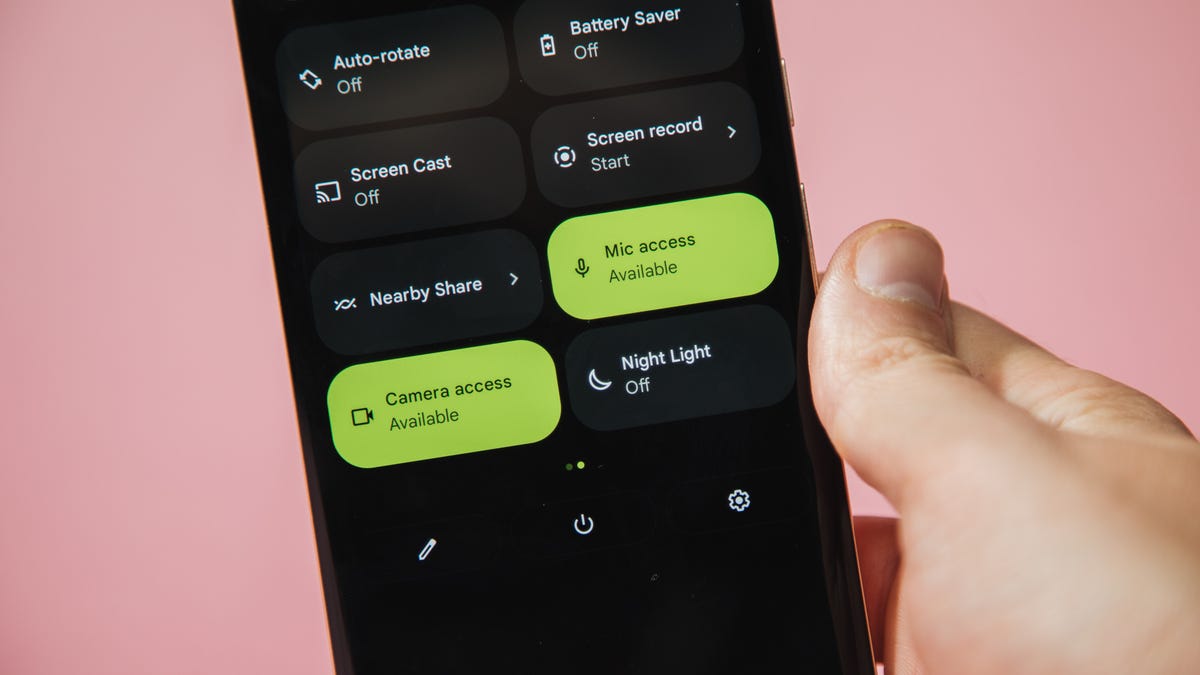
If your Android is a few years old and starting to feel sluggish, it doesn’t mean you have to rush out and buy the newest flagship model. Thanks to longer software support from brands like Google and Samsung, older models can still run smoothly, as long as you give them a little attention.
Before you start shopping for a replacement, try a few simple adjustments. You might be surprised by how much faster your phone feels once you clear out unused apps, optimize battery use and turn off background drains.
Whether you use a Samsung Galaxy, Motorola or OnePlus phone, chances are you can still improve battery life and overall speed without buying something new. Just remember that Android settings vary slightly from brand to brand, so the menus may look a little different depending on your phone.
Don’t miss any of our unbiased tech content and lab-based reviews. Add CNET as a preferred Google source.
Settings to improve your battery life
Living with a phone that has poor battery life can be infuriating, but there are some steps you can take to maximize each charge right from the very beginning:
1. Turn off auto screen brightness or adaptive brightness and set the brightness level slider to under 50%
The brighter your screen, the more battery power it uses.
To get to the setting, pull down the shortcut menu from the top of the screen and adjust the slider, if it’s there. Some phones may have a toggle for auto brightness in the shortcut panel; otherwise, you need to open the settings app and search for «brightness» to find the setting and turn it off.
2. Use Adaptive Battery and Battery Optimization
These features focus on learning how you use your phone, including which apps you use and when, and then optimizing the apps and the amount of battery they use.
Some Android phones have a dedicated Battery section in the Settings app, while other phones (looking at you, Samsung) bury these settings. It’s a little different for each phone. I recommend opening your settings and searching for «battery» to find the right screen. Your phone may also have an adaptive charging setting that can monitor how quickly your phone battery charges overnight to preserve its health.
Why you should use dark mode more often
Another way to improve battery life while also helping save your eyes is to use Android’s dedicated dark mode. Any Android phone running Android 10 or newer will have a dedicated dark mode option.
According to Google, dark mode not only reduces the strain that smartphone displays cause on our eyes but also improves battery life because it takes less power to display dark backgrounds on OLED displays (used in most flagship phones) than a white background.
Depending on which version of Android your phone is running, and what company made your phone, you may have to dig around the settings app to find a dark mode. If your phone runs Android 10 or newer, you’ll be able to turn on system-wide dark mode. If it runs Android 9, don’t despair. Plenty of apps have their own dark mode option in the settings that you can use, whether or not you have Android 10.
To turn it on dark mode, open the Settings app and search for Dark Mode, Dark Theme or even Night Mode (as Samsung likes to call it). I suggest using dark mode all the time, but if you’re not sure, you can always set dark mode to automatically turn on based on a schedule, say from 7 p.m. to 7 a.m. every day, or allow it to automatically switch based on your location at sunset and sunrise.
Keep your home screen free of clutter
Planning to hit up the Google Play Store for a bunch of new Android apps? Be prepared for a lot of icon clutter on your home screen, which is where shortcuts land every time you install something.
If you don’t want that, there’s a simple way out of this: Long-press on an empty area of your home screen and tap Settings. Find the option labeled something along the lines of Add icon to Home Screen or Add new apps to Home Screen and turn it off.
Presto! No more icons on the home screen when you install new apps. You can still add shortcuts by dragging an app’s icon out of the app drawer, but they won’t appear on your home screen unless you want them to.
Read more: Best Android Phones You Can Buy in 2024
Set up Do Not Disturb so that you can better focus
If your phone routinely spends the night on your nightstand, you probably don’t want it beeping or buzzing every time there’s a call, message or Facebook alert — especially when you’re trying to sleep. Android offers a Do Not Disturb mode that will keep the phone more or less silent during designated hours. On some phones, this is referred to as the Downtime setting or even Quiet Time.
Head to Settings > Sounds (or Notifications), then look for Do Not Disturb or a similar name. If you can’t find it, search for it using the built-in search feature in your settings.
Using the feature, you can set up a range of hours when you want to turn off the digital noise. Don’t worry, any notifications you get while Do Not Disturb is turned on will still be waiting for you when you wake up. Also, you can typically make an exception that allows repeat callers and favorite contacts’ calls to go through. Turn that on. If someone is calling you in an emergency, odds are they are going to keep trying.
Always be prepared in case you lose your phone or it’s stolen
Is there anything worse than a lost or stolen phone? Only the knowledge that you could have tracked it down if you had turned on Google’s Find My Device feature.
To prepare for a successful recovery, here’s what you need to do: Open the Settings app and then search for Find My Device. It’s usually in the Security section of the Settings app.
If you have a Samsung device, you can use Samsung’s Find My Mobile service, which is found in Settings > Biometrics and security > Find My Mobile.
Once that’s enabled, you can head to android.com/find from any PC or mobile device and sign in to your account. Samsung users can visit findmymobile.samsung.com to find a lost phone.
If you have trouble setting any of this up, be sure to read our complete guide to finding a lost Android phone.
Assuming your phone is on and online, you should be able to see its location on a map. From there, you can make it ring, lock it, set a lock screen note to tell whoever has it how to get it back to you, or, worst-case scenario, remotely wipe the whole thing.
And always keep your phone up to date
As obvious as it may seem, a simple software update could fix bugs and other issues slowing down your Android device.
Before you download and install the latest software update, make sure your device is connected to Wi-Fi, or else this won’t work.
Now, open the Settings application and type in Update. You’ll then either see Software update or System update — choose either one. Then just download the software, wait for a few minutes and install it when it’s ready. Your Android device will reboot and install the latest software update available.
There’s a lot more to learn about a new phone. Here are the best ways to boost your cell signal, and here’s a flagship phone head-to-head comparison. Plus, check out CNET’s list of the best cases for your Samsung phone. More of an Apple fan? We have tips for boosting your iPhone’s performance, too.
Technologies
I’m Finally Using the iPhone 17 Pro’s Camera Control, Thanks to These iOS 26 Settings
In just a month, I’ve already used Camera Control on my iPhone 17 Pro Max more than I did in a whole year with the iPhone 16 Pro.
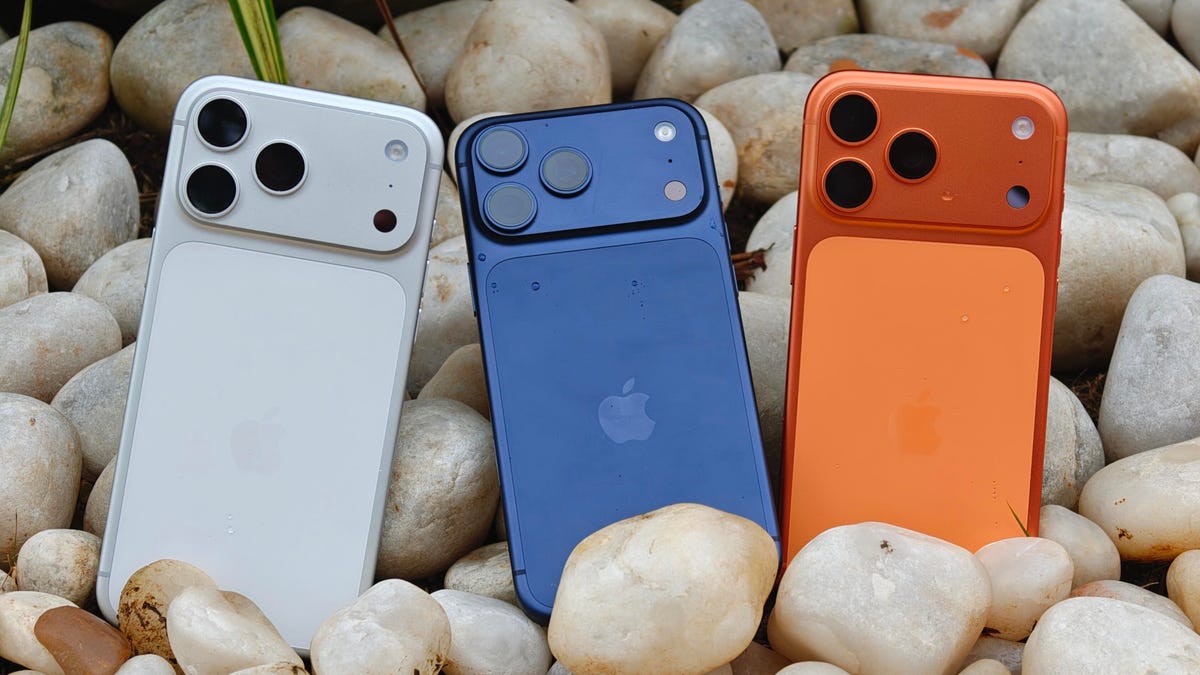
I was keen on using the Camera Control button when it first debuted on the iPhone 16 Pro. But in over a year of use, it caused more accidental swipes and presses than its intended use cases to take photos and adjust camera settings. I was frustrated with the experience and hoped that Apple would remove it from the iPhone 17 lineup. Instead, the Cupertino, California-based company made its touch-sensitive capacitive control surface more customizable with iOS 26. And I’m happy to report that it helped!
I’ve been using the iPhone 17 Pro since launch and spent 5 to 10 minutes customizing the Camera Control to my liking. The result? Minimized accidental swipes and more conscious usability.
I transformed my Camera Control experience by changing a few iOS 26 settings
When setting up a new iOS 26-supported iPhone, Apple includes a toggle (now turned off by default) called Light press to adjust Zoom, Exposure and more. This is what used to cause a lot of fake input earlier. I’m glad it is turned off by default.
Apple now also lets you customize the Camera Control further from the Settings menu. I tweaked settings there to personalize my shortcuts, functionalities and more.
For example, I’ve set the Camera Control to launch a Code Scanner on Double Click without requiring the screen to be on. This allows me to scan and pay at payment kiosks (my most frequently used mode of payment) without needing to open the payment app and then tap on a menu to scan a code. If I enter the Code Scanner without Face ID, it requires authentication before making the payment, so it is still as secure as ever.
Earlier, I had set an Action Button shortcut to open Google Pay, but I realized I still need a one-press solution to turn the phone to silent mode. Adding a Code Scanner shortcut to Camera Control frees the Action Button to be my Silent Switch again. Moreover, Code Scanner lets you select from multiple apps to pay a vendor, which could be useful for people who use multiple payment apps.
Secondly, I have turned off the Swipe gesture and selected only three controls that I use most often. Now, when I open the Camera app, I can lightly press on the Camera Control button and then swipe between my selected controls. It doesn’t register swipes from the get-go. This has reduced fake touches and my frustrating experience with the swipe gesture.
To further streamline my controls, I chose Exposure, Styles and Tone, and left out Depth, Zoom and Cameras. This way, I have access to hidden viewfinder settings with a single press-and-swipe gesture at my fingertips.
I also turned off the Clean Preview toggle, so I can still switch between cameras with a single tap, and switched on the Lock Focus and Exposure toggle for a light press-and-hold gesture.
Customizing these settings helped me personalize Camera Control and use it more often. Now, it appeals to me with the settings I need and the way I need them, instead of being an overcrowded mess. And you can personalize your Camera Control, too. Here’s how:
Change Camera Control launch functionality
You can use Camera Control as another Action Button to launch an app of your choice. The only requirement is that the app should have access to the camera.
- Go to Settings > Camera > Camera Control.
- Under Launch Camera, select the app you need.
- Go back and select Single Click or Double Click to open the said app.
I rely on Double Click so I don’t accidentally trigger an app when taking out the iPhone from my pocket. In my opinion, it is the safer and more convenient choice.
Under the same Launch Camera menu, you can also choose if you want the screen to be on or off when opening the app. I have turned it off to save the extra step of scanning my face to access the said app.
Choose the Controls that you want to appear on Camera Control
Apple allows you to choose from six controls, namely, Exposure, Depth, Zoom, Cameras, Styles and Tone. I have chosen three because the other three are available as on-screen toggles in the viewfinder.
- Go to Settings > Camera > Camera Control.
- Under Controls, make sure Camera Adjustments is turned on.
- Tap on Customize.
- Under Gesture, turn on Light Press and toggle off Swipe.
- Under Controls, choose the functionalities you need.
- Now, turn off the Clean Preview toggle if you require the viewfinder toggles to remain accessible.
You can further adjust the Camera Control pressure by going into Settings> Camera > Camera Control > Accessibility.
Turn on Lock Exposure and Focus with Camera Control
This setting will help you lock the exposure and focus without needing to press and hold on the viewfinder. It can be beneficial when you need consistent settings, especially when moving the camera from one subject to another.
- Go to Settings > Camera > Camera Control.
- Swipe down to Lock Exposure and Focus.
- Tap on the toggle to turn it on.
For me, Camera Control was a hot mess when it debuted last year because I was either using on-screen controls or the new button. That’s why room for more personalization and customizability has been a game-changer. I realized I could access on-screen toggles while adding hidden settings to one-tap access. On my iPhone 17 Pro, I now use the Camera Control to open my payments app, adjust Exposure and Styles as well as trigger Visual Intelligence when needed.
-
 Technologies3 года ago
Tech Companies Need to Be Held Accountable for Security, Experts Say
-
 Technologies3 года ago
Best Handheld Game Console in 2023
-
 Technologies3 года ago
Tighten Up Your VR Game With the Best Head Straps for Quest 2
-
 Technologies4 года ago
Verum, Wickr and Threema: next generation secured messengers
-
 Technologies4 года ago
Black Friday 2021: The best deals on TVs, headphones, kitchenware, and more
-
 Technologies4 года ago
Google to require vaccinations as Silicon Valley rethinks return-to-office policies
-
 Technologies4 года ago
Olivia Harlan Dekker for Verum Messenger
-
 Technologies4 года ago
iPhone 13 event: How to watch Apple’s big announcement tomorrow


