

Technologies
Google’s AI Search Could Mean Radical Changes for Your Internet Experience
At Google I/O, the company unveiled an experimental version of Search that integrates AI-generated responses. Will it break the balance of the internet?

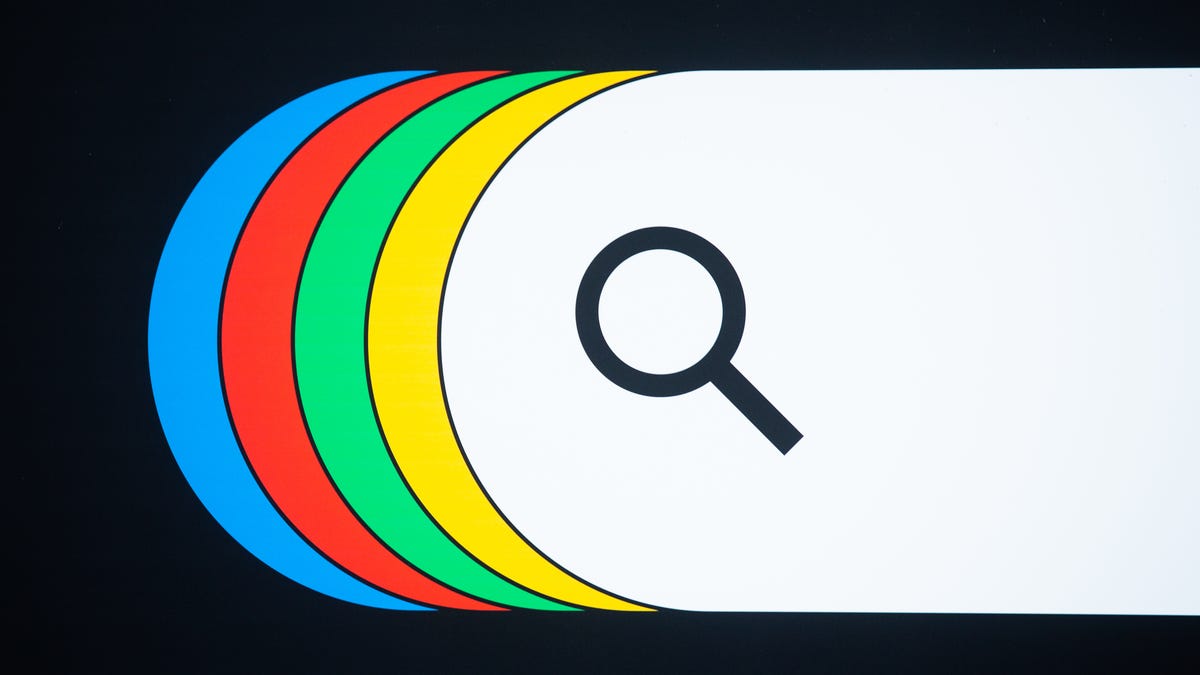
The future of Google Search is a big green box.
That’s exactly what Google showed off this month at Google I/O, the company’s yearly developer conference. The theme for 2023 was AI, a term mentioned more than 140 times during the two-hour keynote presentation. Google unveiled AI products that will actually be released to the public, an about-face for the apprehensive internet giant in response to growing competition.
Late last year, OpenAI launched ChatGPT to near-universal adulation. Suddenly, everybody had access to a generative AI engine that could seemingly answer any question with a novel response. It’s powered by a large language model, or LLM, that essentially lets it act as «autocomplete on steroids,» using massive amounts of text data to figure out what the next best word should be.
The power and ease of ChatGPT helped it become the fastest growing consumer web platform ever. It prompted Microsoft to up its investment into OpenAI and integrate ChatGPT’s tech directly into Bing search earlier this year, a move that helped the company see a 16% increase in traffic. The day before Microsoft unveiled Bing AI, Google announced its own generative AI engine, Bard, although it flubbed the launch and lost $100 billion in stock market value in the process. The stock has since rebounded to its highest level so far this year.
In many ways, Google I/O was a referendum on the company’s wonky entrance into consumer AI and a clear message to skeptics (and investors) that it’s willing to take radical steps to stay at the forefront of internet search, even if that means upending its core product. Google Search has long been the engine for how we all look for product information, find the latest news and otherwise interact with the internet, and for how many businesses make money.
The new Search Generative Experience, or SGE, is an experimental version of Search that deprioritizes the 10 blue links that have defined Google for the past quarter century. Instead, any query, regardless of how specific, gets answered in a mushrooming green box that expands as it fills the screen with a person’s answer.
«Now search does the heavy lifting for you,» said Cathy Edwards, vice president of engineering at Google, during I/O. She said that in the Search we know today, complex queries have to be broken down into smaller questions where you, the user, have to sift through the information yourself and formulate the answer in your head. SGE can do all of that automatically, even allowing you to ask follow-up questions.
Google Search Generative Experience is an experimental version of Search that integrates AI-generated results, similar to Bing and ChatGPT.
At the same time, it also means not having to visit multiple sites – clicks that webpages rely on, potentially upending the internet’s ad-driven business model.
Google is by far the largest player in online search, with 93% market share, according to Statcounter. Online search engines are also the greatest drivers of traffic for websites, with 68% of online experiences beginning at a search engine, according to a 2019 report by Brightedge Research. Google’s dominance in search at one point helped it see a valuation of $2 trillion.
With SGE, Google is potentially thrusting internet users and businesses into a new future, one that’ll require a rethinking of how quality information can continue to percolate while also incentivizing people into creating valuable content to feed its AI machine.
Because sign-ups just started for SGE, there isn’t any data yet to share regarding user experience. Microsoft, however, has been gathering feedback for Bing AI over the last three months and could provide a lens on how consumers may react with AI-driven Google searches.
«Feedback on the answers generated by the new Bing has been mostly positive, with 71% of those in preview giving the AI-powered answers a thumbs-up, said a Microsoft spokesperson. «We’re seeing a healthy engagement on the chat feature, with multiple questions asked during a session to discover new information.»
It’s unclear how AI-generated news stories will filter into Google’s or Bing’s AI results. Already, publications, including CNET, are experimenting with AI written articles. Unfortunately, AI itself isn’t always accurate and can have «hallucinations,» where it confidently says something is correct when it isn’t.
If the hallucination problem is eventually solved, generative AI in search could be faster and ultimately better for consumers. But it’s still unknown as to how it could affect the digital publishing industry, especially if people forgo clicking links en masse.
«As we experiment with new LLM-powered capabilities in Search, we’ll continue to prioritize approaches that send valuable traffic to a wide range of creators and support a healthy, open web,» a Google spokesperson said. Though it’s true that Google does link to sources prominently in SGE, it’s uncertain if SGE will translate to increased or higher quality traffic for sites.
Microsoft didn’t answer any questions regarding traffic to sources when using AI search. Google said it doesn’t have plans to share about publisher compensation but would «continue to work with the broader ecosystem.»
«I think [generative AI] is going to bring down the amount of traffic going out because that’s the purpose of it,» said Monica Ho, chief marketing officer at SOCi, a digital marketing company. However, she posits that traffic coming in for sites might be higher quality, as people are looking for specific information versus bouncing between sites.
If Google becomes undependable for traffic, there might not be viable alternatives. Social media platforms such as Facebook have proved to be unreliable partners for publications, down-ranking news on a whim, according to Rasmus Kleis Nielsen, director of the Reuters Institute for the Study of Journalism and professor of political communication at the University of Oxford. He added that platforms like Instagram or TikTok «drive comparatively few referrals, and do not really feature links the way search does and social did.»
At the moment, search engines «crawl» websites daily to glean new information and index it into results. Websites allow engines to crawl for free because of the traffic conversion. But if AI-search leads to fewer clicks, the search economy may need an entirely new rethinking.
«I expect that original content will be placed behind paywalls and require LLM models to pay in order to read it.,» said Don White, CEO of Satisfi Labs, a conversational AI company. In a «Spotify-style compensation model,» White sees a future where sites are paid-per-view.
Ultimately, Google will likely need to find a way for revenue to reach creators and publications so that there’s still an incentive to create quality content.
«Quality data has to feed the engine, and Google’s not creating all of their own unique, authentic original content,» said Ho. «It has to come from creators. They know that they’re going to have to feed that engine somehow and make it worthwhile for content to keep coming.»
Editors’ note: CNET is using an AI engine to create some personal finance explainers that are edited and fact-checked by our editors. For more, see this post.
Technologies
Facebook Brings Back Local Job Listings: How to Apply
One of Facebook’s most practical features from 2022 is being revived by Meta.
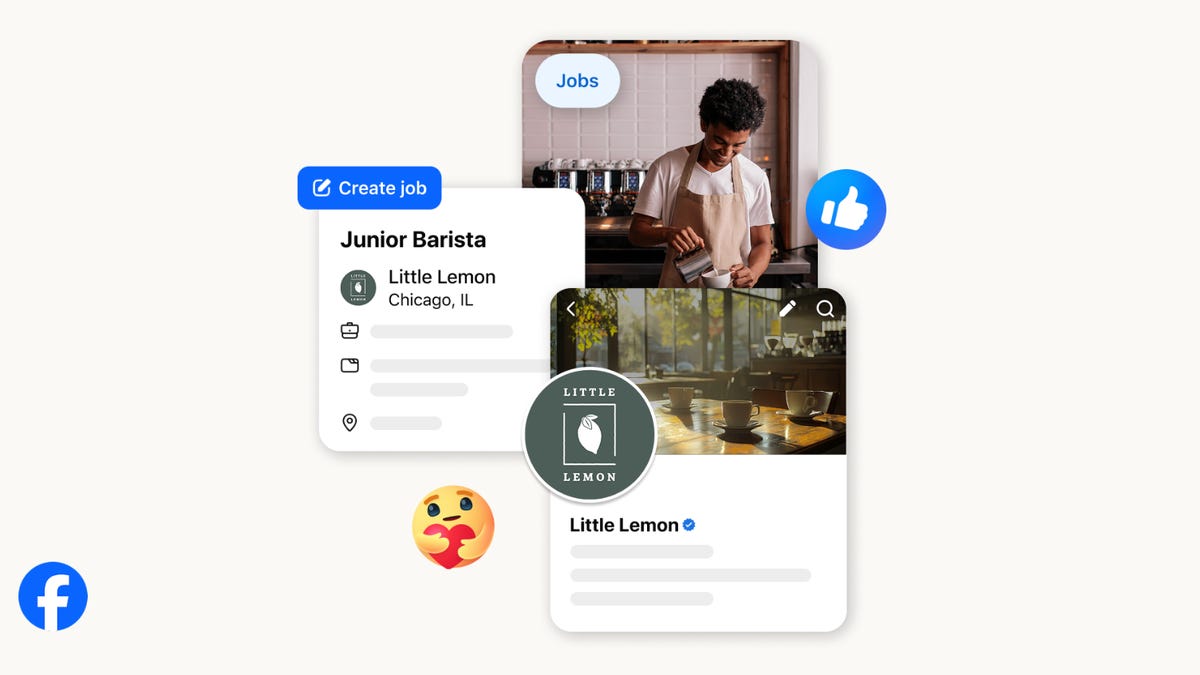
On the hunt for work? A Local Jobs search is being rolled out by Meta to make it easier for people in the US to discover and apply for nearby work directly on Facebook. The feature is inside Facebook Marketplace, Groups and Pages, Meta said last week, letting employers post openings and job seekers filter roles by distance, category or employment type.
You can apply or message employers directly through Facebook Messenger, while employers can publish job listings with just a few taps — similar to how you would post items for sale on Marketplace.
Don’t miss any of our unbiased tech content and lab-based reviews. Add CNET as a preferred Google source.
Facebook offered a Jobs feature before discontinuing it in 2022, pushing business hiring toward its other platforms. Its return suggests Meta is attempting to expand Facebook’s usefulness beyond social networking and to position it once again as a hub for community-driven opportunities.
Read more: Meta’s All In on AI Creating the Ads You See on Instagram, Facebook and WhatsApp
«We’ve always been about connecting with people, whether through shared interests or key life events,» the press release states. «Now, if you’re looking for entry-level, trade and service industry employment in your community, Facebook can help you connect with local people and small businesses who are hiring.»
Read more: What Is Meta AI? Everything to Know About These AI Tools
How to get started with Local Jobs on Facebook
According to Meta, Local Jobs will appear as a dedicated section in Facebook Marketplace starting this week. If you’re 18 or older, you can:
- Tap the Marketplace tab on the Facebook app or website.
- Select Jobs to browse available positions nearby.
- Use filters for job type, category and distance.
- Tap Apply or message the employer directly via Messenger.
Businesses and page admins can post jobs by creating a new listing in Marketplace or from their Facebook Page. Listings can include job details, pay range, and scheduling information and will appear in local searches automatically.
The Local Jobs feature is rolling out across the US now, with Meta saying it plans to expand it in the months ahead.
Technologies
Tesla Has a New Range of Affordable Electric Cars: How Much They Cost
The new, stripped-back versions of the Model Y and Model 3 have a more affordable starting price.

Technologies
Today’s NYT Strands Hints, Answers and Help for Oct. 22 #598
Here are hints and answers for the NYT Strands puzzle for Oct. 22, No. 598.
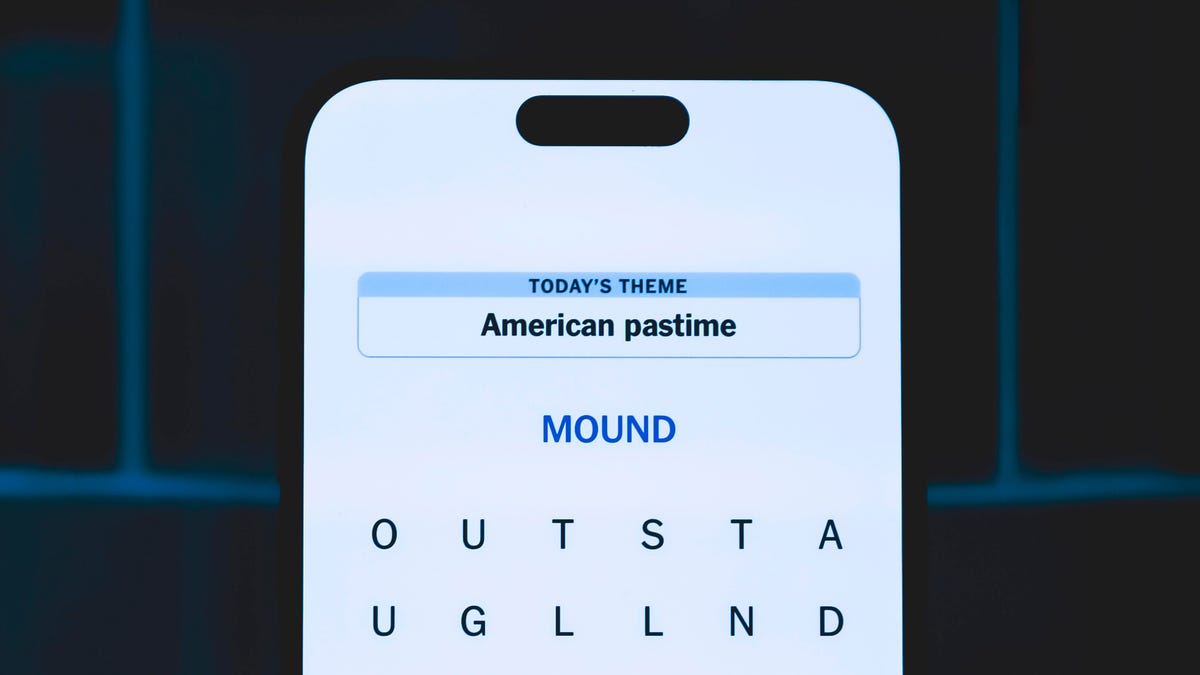
Looking for the most recent Strands answer? Click here for our daily Strands hints, as well as our daily answers and hints for The New York Times Mini Crossword, Wordle, Connections and Connections: Sports Edition puzzles.
Today’s NYT Strands puzzle is a fun one — I definitely have at least two of these in my house. Some of the answers are a bit tough to unscramble, so if you need hints and answers, read on.
I go into depth about the rules for Strands in this story.
If you’re looking for today’s Wordle, Connections and Mini Crossword answers, you can visit CNET’s NYT puzzle hints page.
Read more: NYT Connections Turns 1: These Are the 5 Toughest Puzzles So Far
Hint for today’s Strands puzzle
Today’s Strands theme is: Catch all.
If that doesn’t help you, here’s a clue: A mess of items.
Clue words to unlock in-game hints
Your goal is to find hidden words that fit the puzzle’s theme. If you’re stuck, find any words you can. Every time you find three words of four letters or more, Strands will reveal one of the theme words. These are the words I used to get those hints but any words of four or more letters that you find will work:
- BATE, LICE, SLUM, CAPE, HOLE, CARE, BARE, THEN, SLAM, SAMBA, BACK
Answers for today’s Strands puzzle
These are the answers that tie into the theme. The goal of the puzzle is to find them all, including the spangram, a theme word that reaches from one side of the puzzle to the other. When you have all of them (I originally thought there were always eight but learned that the number can vary), every letter on the board will be used. Here are the nonspangram answers:
- TAPE, COIN, PENCIL, BATTERY, SHOELACE, THUMBTACK
Today’s Strands spangram
Today’s Strands spangram is JUNKDRAWER. To find it, look for the J that’s five letters down on the far-left row, and wind down, over and then up.
Quick tips for Strands
#1: To get more clue words, see if you can tweak the words you’ve already found, by adding an «S» or other variants. And if you find a word like WILL, see if other letters are close enough to help you make SILL, or BILL.
#2: Once you get one theme word, look at the puzzle to see if you can spot other related words.
#3: If you’ve been given the letters for a theme word, but can’t figure it out, guess three more clue words, and the puzzle will light up each letter in order, revealing the word.
-
 Technologies3 года ago
Tech Companies Need to Be Held Accountable for Security, Experts Say
-
 Technologies3 года ago
Best Handheld Game Console in 2023
-
 Technologies3 года ago
Tighten Up Your VR Game With the Best Head Straps for Quest 2
-
 Technologies4 года ago
Verum, Wickr and Threema: next generation secured messengers
-
 Technologies4 года ago
Black Friday 2021: The best deals on TVs, headphones, kitchenware, and more
-
 Technologies4 года ago
Google to require vaccinations as Silicon Valley rethinks return-to-office policies
-
 Technologies4 года ago
Olivia Harlan Dekker for Verum Messenger
-
 Technologies4 года ago
iPhone 13 event: How to watch Apple’s big announcement tomorrow


