

Technologies
AI Gets Smarter, Safer, More Visual With GPT-4 Update, OpenAI Says
If you subscribe to ChatGPT Plus, you can try it out now.

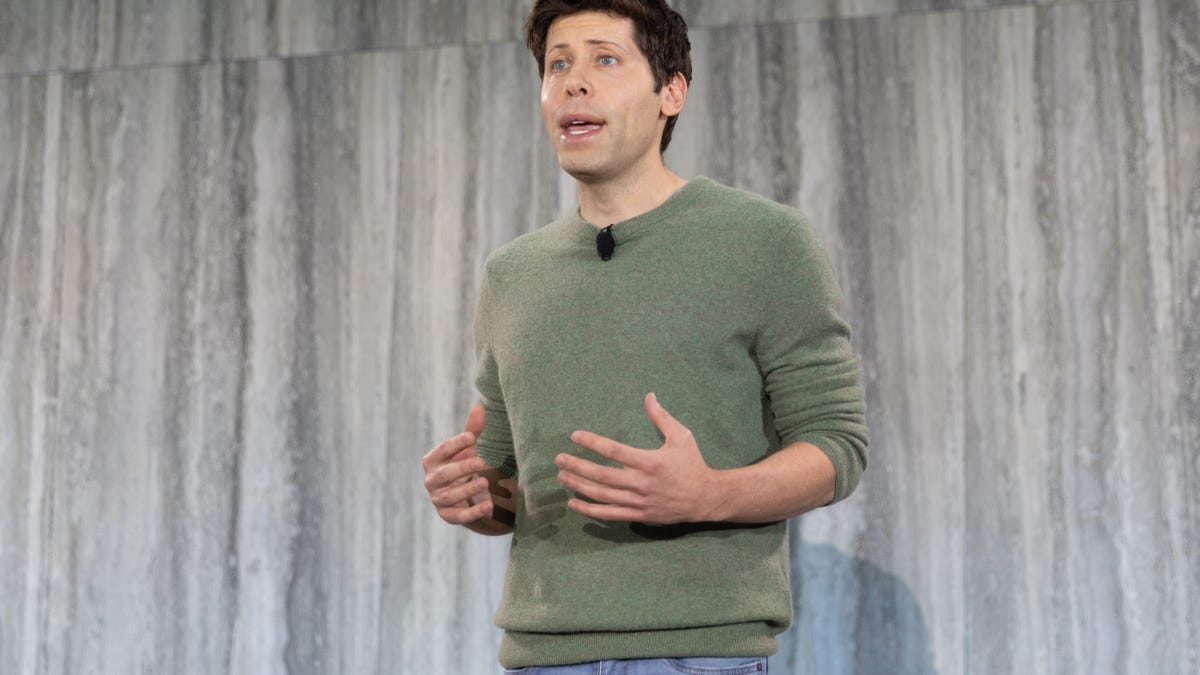
The hottest AI technology foundation got a big upgrade Tuesday with OpenAI’s GPT-4 release now available in the premium version of the ChatGPT chatbot.
GPT-4 can generate much longer strings of text and respond when people feed it images, and it’s designed to do a better job avoiding artificial intelligence pitfalls visible in the earlier GPT-3.5, OpenAI said Tuesday. For example, when taking bar exams that attorneys must pass to practice law, GPT-4 ranks in the top 10% of scores compared with the bottom 10% for GPT-3.5, the AI research company said.
GPT stands for Generative Pretrained Transformer, a reference to the fact that it can generate text on its own — now up to 25,000 words with GPT-4 — and that it uses an AI technology called transformers that Google pioneered. It’s a type of AI called a large language model, or LLM, that’s trained on vast swaths of data harvested from the internet, learning mathematically to spot patterns and reproduce styles. Human overseers rate results to steer GPT in the right direction, and GPT-4 has more of this feedback.
OpenAI has made GPT available to developers for years, but ChatGPT, which debuted in November, offered an easy interface ordinary folks can use. That yielded an explosion of interest, experimentation and worry about the downsides of the technology. It can do everything from generating programming code and answering exam questions to writing poetry and supplying basic facts. It’s remarkable if not always reliable.
ChatGPT is free, but it can falter when demand is high. In January, OpenAI began offering ChatGPT Plus for $20 per month with assured availability and, now, the GPT-4 foundation. Developers can sign up on a waiting list to get their own access to GPT-4.
GPT-4 advancements
«In a casual conversation, the distinction between GPT-3.5 and GPT-4 can be subtle. The difference comes out when the complexity of the task reaches a sufficient threshold,» OpenAI said. «GPT-4 is more reliable, creative and able to handle much more nuanced instructions than GPT-3.5.»
Another major advance in GPT-4 is the ability to accept input data that includes text and photos. OpenAI’s example is asking the chatbot to explain a joke showing a bulky decades-old computer cable plugged into a modern iPhone’s tiny Lightning port. This feature also helps GPT take tests that aren’t just textual, but it isn’t yet available in ChatGPT Plus.
Another is better performance avoiding AI problems like hallucinations — incorrectly fabricated responses, often offered with just as much seeming authority as answers the AI gets right. GPT-4 also is better at thwarting attempts to get it to say the wrong thing: «GPT-4 scores 40% higher than our latest GPT-3.5 on our internal adversarial factuality evaluations,» OpenAI said.
GPT-4 also adds new «steerability» options. Users of large language models today often must engage in elaborate «prompt engineering,» learning how to embed specific cues in their prompts to get the right sort of responses. GPT-4 adds a system command option that lets users set a specific tone or style, for example programming code or a Socratic tutor: «You are a tutor that always responds in the Socratic style. You never give the student the answer, but always try to ask just the right question to help them learn to think for themselves.»
«Stochastic parrots» and other problems
OpenAI acknowledges significant shortcomings that persist with GPT-4, though it also touts progress avoiding them.
«It can sometimes make simple reasoning errors … or be overly gullible in accepting obvious false statements from a user. And sometimes it can fail at hard problems the same way humans do, such as introducing security vulnerabilities into code it produces,» OpenAI said. In addition, «GPT-4 can also be confidently wrong in its predictions, not taking care to double-check work when it’s likely to make a mistake.»
Large language models can deliver impressive results, seeming to understand huge amounts of subject matter and to converse in human-sounding if somewhat stilted language. Fundamentally, though, LLM AIs don’t really know anything. They’re just able to string words together in statistically very refined ways.
This statistical but fundamentally somewhat hollow approach to knowledge led researchers, including former Google AI researchers Emily Bender and Timnit Gebru, to warn of the «dangers of stochastic parrots» that come with large language models. Language model AIs tend to encode biases, stereotypes and negative sentiment present in training data, and researchers and other people using these models tend «to mistake … performance gains for actual natural language understanding.»
OpenAI Chief Executive Sam Altman acknowledges problems, but he’s pleased overall with the progress shown with GPT-4. «It is more creative than previous models, it hallucinates significantly less, and it is less biased. It can pass a bar exam and score a 5 on several AP exams,» Altman tweeted Tuesday.
One worry about AI is that students will use it to cheat, for example when answering essay questions. It’s a real risk, though some educators actively embrace LLMs as a tool, like search engines and Wikipedia. Plagiarism detection companies are adapting to AI by training their own detection models. One such company, Crossplag, said Wednesday that after testing about 50 documents that GPT-4 generated, «our accuracy rate was above 98.5%.»
OpenAI, Microsoft and Nvidia partnership
OpenAI got a big boost when Microsoft said in February it’s using GPT technology in its Bing search engine, including a chat features similar to ChatGPT. On Tuesday, Microsoft said it’s using GPT-4 for the Bing work. Together, OpenAI and Microsoft pose a major search threat to Google, but Google has its own large language model technology too, including a chatbot called Bard that Google is testing privately.
Also on Tuesday, Google announced it’ll begin limited testing of its own AI technology to boost writing Gmail emails and Google Docs word processing documents. «With your collaborative AI partner you can continue to refine and edit, getting more suggestions as needed,» Google said.
That phrasing mirrors Microsoft’s «co-pilot» positioning of AI technology. Calling it an aid to human-led work is a common stance, given the problems of the technology and the necessity for careful human oversight.
Microsoft uses GPT technology both to evaluate the searches people type into Bing and, in some cases, to offer more elaborate, conversational responses. The results can be much more informative than those of earlier search engines, but the more conversational interface that can be invoked as an option has had problems that make it look unhinged.
To train GPT, OpenAI used Microsoft’s Azure cloud computing service, including thousands of Nvidia’s A100 graphics processing units, or GPUs, yoked together. Azure now can use Nvidia’s new H100 processors, which include specific circuitry to accelerate AI transformer calculations.
AI chatbots everywhere
Another large language model developer, Anthropic, also unveiled an AI chatbot called Claude on Tuesday. The company, which counts Google as an investor, opened a waiting list for Claude.
«Claude is capable of a wide variety of conversational and text processing tasks while maintaining a high degree of reliability and predictability,» Anthropic said in a blog post. «Claude can help with use cases including summarization, search, creative and collaborative writing, Q&A, coding and more.»
It’s one of a growing crowd. Chinese search and tech giant Baidu is working on a chatbot called Ernie Bot. Meta, parent of Facebook and Instagram, consolidated its AI operations into a bigger team and plans to build more generative AI into its products. Even Snapchat is getting in on the game with a GPT-based chatbot called My AI.
Expect more refinements in the future.
«We have had the initial training of GPT-4 done for quite awhile, but it’s taken us a long time and a lot of work to feel ready to release it,» Altman tweeted. «We hope you enjoy it and we really appreciate feedback on its shortcomings.»
Editors’ note: CNET is using an AI engine to create some personalfinance explainers that are edited and fact-checked by our editors. Formore, see this post.
Technologies
Today’s NYT Strands Hints, Answers and Help for Oct. 23 #599
Here are hints and answers for the NYT Strands puzzle for Oct. 23, No. 599.
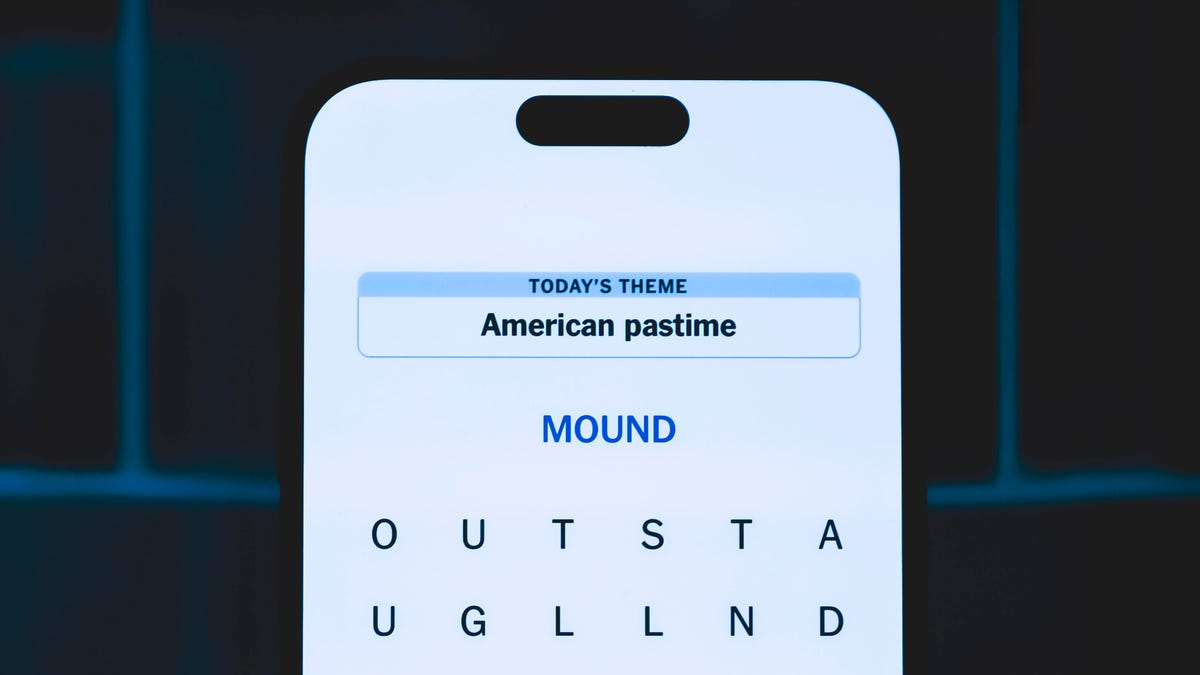
Looking for the most recent Strands answer? Click here for our daily Strands hints, as well as our daily answers and hints for The New York Times Mini Crossword, Wordle, Connections and Connections: Sports Edition puzzles.
Today’s NYT Strands puzzle might be Halloween-themed, as the answers are all rather dangerous. Some of them are a bit tough to unscramble, so if you need hints and answers, read on.
I go into depth about the rules for Strands in this story.
If you’re looking for today’s Wordle, Connections and Mini Crossword answers, you can visit CNET’s NYT puzzle hints page.
Read more: NYT Connections Turns 1: These Are the 5 Toughest Puzzles So Far
Hint for today’s Strands puzzle
Today’s Strands theme is: Please don’t eat me!
If that doesn’t help you, here’s a clue: Remember Mr. Yuk?
Clue words to unlock in-game hints
Your goal is to find hidden words that fit the puzzle’s theme. If you’re stuck, find any words you can. Every time you find three words of four letters or more, Strands will reveal one of the theme words. These are the words I used to get those hints but any words of four or more letters that you find will work:
- POND, NOON, NODE, BALE, SOCK, LOVE, LOCK, MOCK, LEER, REEL, GLOVE, DAIS, LEAN, LEAD, REEL
Answers for today’s Strands puzzle
These are the answers that tie into the theme. The goal of the puzzle is to find them all, including the spangram, a theme word that reaches from one side of the puzzle to the other. When you have all of them (I originally thought there were always eight but learned that the number can vary), every letter on the board will be used. Here are the nonspangram answers:
- AZALEA, HEMLOCK, FOXGLOVE, OLEANDER, BELLADONNA
Today’s Strands spangram
Today’s Strands spangram is POISONOUS. To find it, look for the P that is the first letter on the far left of the top row, and wind down and across.
Technologies
Today’s NYT Connections: Sports Edition Hints and Answers for Oct. 23, #395
Here are hints and the answers for the NYT Connections: Sports Edition puzzle for Oct. 23, No. 395.
Looking for the most recent regular Connections answers? Click here for today’s Connections hints, as well as our daily answers and hints for The New York Times Mini Crossword, Wordle and Strands puzzles.
Today’s Connections: Sports Edition has one of those crazy purple categories, where you wonder if anyone saw the connection, or if people just put that grouping together because only those four words were left. If you’re struggling but still want to solve it, read on for hints and the answers.
Connections: Sports Edition is published by The Athletic, the subscription-based sports journalism site owned by The Times. It doesn’t show up in the NYT Games app but appears in The Athletic’s own app. Or you can play it for free online.
Read more: NYT Connections: Sports Edition Puzzle Comes Out of Beta
Hints for today’s Connections: Sports Edition groups
Here are four hints for the groupings in today’s Connections: Sports Edition puzzle, ranked from the easiest yellow group to the tough (and sometimes bizarre) purple group.
Yellow group hint: Fan noise.
Green group hint: Strategies for hoops.
Blue group hint: Minor league.
Purple group hint: Look for a connection to hoops.
Answers for today’s Connections: Sports Edition groups
Yellow group: Sounds from the crowd.
Green group: Basketball offenses.
Blue group: Triple-A baseball teams.
Purple group: Ends with a basketball stat.
Read more: Wordle Cheat Sheet: Here Are the Most Popular Letters Used in English Words
What are today’s Connections: Sports Edition answers?
The yellow words in today’s Connections
The theme is sounds from the crowd. The four answers are boo, cheer, clap and whistle.
The green words in today’s Connections
The theme is basketball offenses. The four answers are motion, pick and roll, Princeton and triangle.
The blue words in today’s Connections
The theme is triple-A baseball teams. The four answers are Aces, Jumbo Shrimp, Sounds and Storm Chasers.
The purple words in today’s Connections
The theme is ends with a basketball stat. The four answers are afoul, bassist, counterpoint and sunblock.
Technologies
Amazon’s Delivery Drivers Will Soon Wear AI Smart Glasses to Work
The goal is to streamline the delivery process while keeping drivers safe.

Amazon announced on Wednesday that it is developing new AI-powered smart glasses to simplify the delivery experience for its drivers. CNET smart glasses expert Scott Stein mentioned this wearable rollout last month, and now the plan is in its final testing stages.
The goal is to simplify package delivery by reducing the need for drivers to look at their phones, the label on the package they’re delivering and their surroundings to find the correct address.
Don’t miss any of our unbiased tech content and lab-based reviews. Add CNET as a preferred Google source.
A heads-up display will activate as soon as the driver parks, pointing out potential hazards and tasks that must be completed. From there, drivers can locate and scan packages, follow turn-by-turn directions and snap a photograph to prove delivery completion without needing to take out their phone.
The company is testing the glasses in select North American markets.
Watch: See our Instagram post with a video showing the glasses
A representative for Amazon didn’t immediately respond to a request for comment.
To fight battery drain, the glasses pair with a controller attached to the employee’s delivery vest, allowing them to replace depleted batteries and access operational controls. The glasses will support an employee’s eyeglass prescription. An emergency button will be within reach to ensure the driver’s safety.
Amazon is already planning future versions of the glasses, which will feature «real-time defect detection,» notifying the driver if a package was delivered to the incorrect address. They plan to add features to the glasses to detect if pets are in the yard and adjust to low light.
-
 Technologies3 года ago
Tech Companies Need to Be Held Accountable for Security, Experts Say
-
 Technologies3 года ago
Best Handheld Game Console in 2023
-
 Technologies3 года ago
Tighten Up Your VR Game With the Best Head Straps for Quest 2
-
 Technologies4 года ago
Verum, Wickr and Threema: next generation secured messengers
-
 Technologies4 года ago
Black Friday 2021: The best deals on TVs, headphones, kitchenware, and more
-
 Technologies4 года ago
Google to require vaccinations as Silicon Valley rethinks return-to-office policies
-
 Technologies4 года ago
Olivia Harlan Dekker for Verum Messenger
-
 Technologies4 года ago
iPhone 13 event: How to watch Apple’s big announcement tomorrow


