

Technologies
Why Everyone’s Obsessed With the Mind-Blowing ChatGPT AI Chatbot
This artificial intelligence bot can answer questions and write essays and program computers. Now you can pay to use it.


There’s a new AI bot in town: ChatGPT. Even if you’re not into artificial intelligence, you’d better pay attention.
The tool, from a power player in artificial intelligence called OpenAI, lets you type natural-language prompts. ChatGPT offers conversational, if somewhat stilted, answers and responses. The bot remembers the thread of your dialogue, using previous questions and answers to inform its next responses. It derives its answers from huge volumes of information on the internet.
ChatGPT is a big deal. The tool seems pretty knowledgeable in areas where there’s good training data for it to learn from. It’s not omniscient or smart enough to replace all humans yet, but it can be creative, and its answers can sound downright authoritative. A few days after its launch, more than a million people were trying out ChatGPT.
And it’s becoming big business. Microsoft pledged to invest billions of dollars into OpenAI, saying in January it’ll build features into cloud services. OpenAI announced a $20 per month ChatGPT Plus service that responds faster and gets new features sooner.
But its creator, the for-profit research lab called OpenAI, warns that ChatGPT «may occasionally generate incorrect or misleading information,» so be careful. Here’s a look at why ChatGPT is important and what’s going on with it.
What is ChatGPT?
ChatGPT is an AI chatbot system that OpenAI released in November to show off and test what a very large, powerful AI system can accomplish. You can ask it countless questions and often will get an answer that’s useful.
For example, you can ask it encyclopedia questions like, «Explain Newton’s laws of motion.» You can tell it, «Write me a poem,» and when it does, say, «Now make it more exciting.» You ask it to write a computer program that’ll show you all the different ways you can arrange the letters of a word.
Here’s the catch: ChatGPT doesn’t exactly know anything. It’s an AI that’s trained to recognize patterns in vast swaths of text harvested from the internet, then further trained with human assistance to deliver more useful, better dialog. The answers you get may sound plausible and even authoritative, but they might well be entirely wrong, as OpenAI warns.
Chatbots have been of interest for years to companies looking for ways to help customers get what they need and to AI researchers trying to tackle the Turing Test. That’s the famous «Imitation Game» that computer scientist Alan Turing proposed in 1950 as a way to gauge intelligence: Can a human conversing with a human and with a computer tell which is which?
But chatbots have a lot of baggage, as companies have tried with limited success to use them instead of humans to handle customer service work. A study of 1,700 Americans, sponsored by a company called Ujet, whose technology handles customer contacts, found that 72% of people found chatbots to be a waste of time.
What kinds of questions can you ask?
You can ask anything, though you might not get an answer. OpenAI suggests a few categories, like explaining physics, asking for birthday party ideas and getting programming help.
I asked it to write a poem, and it did, though I don’t think any literature experts would be impressed. I then asked it to make it more exciting, and lo, ChatGPT pumped it up with words like battlefield, adrenaline, thunder and adventure.
One wacky example shows how ChatGPT is willing to just go for it in domains where people would fear to tread: a command to write «a folk song about writing a rust program and fighting with lifetime errors.»
ChatGPT’s expertise is broad, and its ability to follow a conversation is notable. When I asked it for words that rhymed with «purple,» it offered a few suggestions, then when I followed up «How about with pink?» it didn’t miss a beat. (Also, there are a lot more good rhymes for «pink.»)
When I asked, «Is it easier to get a date by being sensitive or being tough?» GPT responded, in part, «Some people may find a sensitive person more attractive and appealing, while others may be drawn to a tough and assertive individual. In general, being genuine and authentic in your interactions with others is likely to be more effective in getting a date than trying to fit a certain mold or persona.»
You don’t have to look far to find accounts of the bot blowing people’s minds. Twitter is awash with users displaying the AI’s prowess at generating art prompts and writing code. Some have even proclaimed «Google is dead,» along with the college essay. We’ll talk more about that below.
CNET writer David Lumb has put together a list of some useful ways ChatGPT can help, but more keep cropping up. One doctor says he’s used it to persuade a health insurance company to pay for a patient’s procedure.
Who built ChatGPT?
ChatGPT is the brainchild of OpenAI, an artificial intelligence research company. Its mission is to develop a «safe and beneficial» artificial general intelligence system or to help others do so. OpenAI has 375 employees, Chief Executive Sam Altman tweeted in January. «OpenAI has managed to pull together the most talent-dense researchers and engineers in the field of AI,» he also said in a January talk.
It’s made splashes before, first with GPT-3, which can generate text that can sound like a human wrote it, and then with DALL-E, which creates what’s now called «generative art» based on text prompts you type in.
GPT-3, and the GPT 3.5 update on which ChatGPT is based, are examples of AI technology called large language models. They’re trained to create text based on what they’ve seen, and they can be trained automatically — typically with huge quantities of computer power over a period of weeks. For example, the training process can find a random paragraph of text, delete a few words, ask the AI to fill in the blanks, compare the result to the original and then reward the AI system for coming as close as possible. Repeating over and over can lead to a sophisticated ability to generate text.
Is ChatGPT free?
Yes, for the moment at least, but now there’s a paid version that offers responses faster and keeps working even during peak usage times. You can sign up on a waiting list if you’re interested. OpenAI’s Altman warned that ChatGPT’s «compute costs are eye-watering.» For comparison, OpenAI charges for DALL-E art once you exceed a basic free level of usage.
But OpenAI seems to have found some customers, likely for its GPT tools. It’s told potential investors that it expects $200 million in revenue in 2023 and $1 billion in 2024, according to Reuters.
What are the limits of ChatGPT?
As OpenAI emphasizes, ChatGPT can give you wrong answers. Sometimes, helpfully, it’ll specifically warn you of its own shortcomings. For example, when I asked it who wrote the phrase «the squirming facts exceed the squamous mind,» ChatGPT replied, «I’m sorry, but I am not able to browse the internet or access any external information beyond what I was trained on.» (The phrase is from Wallace Stevens’ 1942 poem Connoisseur of Chaos.)
ChatGPT was willing to take a stab at the meaning of that expression once I typed it in directly, though: «a situation in which the facts or information at hand are difficult to process or understand.» It sandwiched that interpretation between cautions that it’s hard to judge without more context and that it’s just one possible interpretation.
ChatGPT’s answers can look authoritative but be wrong.
«If you ask it a very well structured question, with the intent that it gives you the right answer, you’ll probably get the right answer,» said Mike Krause, data science director at a different AI company, Beyond Limits. «It’ll be well articulated and sound like it came from some professor at Harvard. But if you throw it a curveball, you’ll get nonsense.»
The software developer site StackOverflow banned ChatGPT answers to programming questions. Administrators cautioned, «because the average rate of getting correct answers from ChatGPT is too low, the posting of answers created by ChatGPT is substantially harmful to the site and to users who are asking or looking for correct answers.»
You can see for yourself how artful a BS artist ChatGPT can be by asking the same question multiple times. I asked twice whether Moore’s Law, which tracks the computer chip industry’s progress increasing the number of data-processing transistors, is running out of steam, and I got two different answers. One pointed optimistically to continued progress, while the other pointed more grimly to the slowdown and the belief «that Moore’s Law may be reaching its limits.»
Both ideas are common in the computer industry itself, so this ambiguous stance perhaps reflects what human experts believe.
With other questions that don’t have clear answers, ChatGPT often won’t be pinned down.
The fact that it offers an answer at all, though, is a notable development in computing. Computers are famously literal, refusing to work unless you follow exact syntax and interface requirements. Large language models are revealing a more human-friendly style of interaction, not to mention an ability to generate answers that are somewhere between copying and creativity.
Will ChatGPT help students cheat better?
Yes, but as with many other technology developments, it’s not a simple black and white situation. Decades ago, students could copy encyclopedia entries, and more recently, they’ve been able to search the internet and delve into Wikipedia entries. ChatGPT offers new abilities for everything from helping with research to doing your homework for you outright. Many ChatGPT answers already sound like student essays, though often with a tone that’s stuffier and more pedantic than a writer might prefer.
Google programmer Kenneth Goodman tried ChatGPT on a number of exams. It scored 70% on the United States Medical Licensing Examination, 70% on a bar exam for lawyers, nine out of 15 correct on another legal test, the Multistate Professional Responsibility Examination, 78% on New York state’s high school chemistry exam‘s multiple choice section, and ranked in the 40th percentile on the Law School Admission Test.
High school teacher Daniel Herman concluded ChatGPT already writes better than most students today. He’s torn between admiring ChatGPT’s potential usefulness and fearing its harm to human learning: «Is this moment more like the invention of the calculator, saving me from the tedium of long division, or more like the invention of the player piano, robbing us of what can be communicated only through human emotion?»
Dustin York, an associate professor of communication at Maryville University, hopes educators will learn to use ChatGPT as a tool and realize it can help students think critically.
«Educators thought that Google, Wikipedia, and the internet itself would ruin education, but they did not,» York said. «What worries me most are educators who may actively try to discourage the acknowledgment of AI like ChatGPT. It’s a tool, not a villain.»
But the companies that sell tools to high schools and universities to detect plagiarism are now expanding to detecting AI, too.
One, Coalition Technologies, offers an AI content detector on its website. Another, Copyleaks, released a free Chrome extension that’ll spot ChatGPT-generated text with a technology that’s 99% accurate, CEO Alon Yamin said. But it’s a «never-ending cat and mouse game» to try to catch new techniques to thwart the detectors, he said.
Copyleaks performed an early test of student assignments uploaded to its system by schools. «Around 10% of student assignments submitted to our system include at least some level of AI-created content,» Yamin said.
Can ChatGPT write software?
Yes, but with caveats. ChatGPT can retrace steps humans have taken, and it can generate actual programming code. «This is blowing my mind,» said one programmer in February, showing on Imgur the sequence of prompts he used to write software for a car repair center. «This would’ve been an hour of work at least, and it took me less than 10 minutes.»
You just have to make sure it’s not bungling programming concepts or using software that doesn’t work. The StackOverflow ban on ChatGPT-generated software is there for a reason.
But there’s enough software on the web that ChatGPT really can work. One developer, Cobalt Robotics Chief Technology Officer Erik Schluntz, tweeted that ChatGPT provides useful enough advice that, over three days, he hadn’t opened StackOverflow once to look for advice.
Another, Gabe Ragland of AI art site Lexica, used ChatGPT to write website code built with the React tool.
ChatGPT can parse regular expressions (regex), a powerful but complex system for spotting particular patterns, for example dates in a bunch of text or the name of a server in a website address. «It’s like having a programming tutor on hand 24/7,» tweeted programmer James Blackwell about ChatGPT’s ability to explain regex.
Here’s one impressive example of its technical chops: ChatGPT can emulate a Linux computer, delivering correct responses to command-line input.
What’s off limits?
ChatGPT is designed to weed out «inappropriate» requests, a behavior in line with OpenAI’s mission «to ensure that artificial general intelligence benefits all of humanity.»
If you ask ChatGPT itself what’s off limits, it’ll tell you: any questions «that are discriminatory, offensive, or inappropriate. This includes questions that are racist, sexist, homophobic, transphobic, or otherwise discriminatory or hateful.» Asking it to engage in illegal activities is also a no-no.
Is this better than Google search?
Asking a computer a question and getting an answer is useful, and often ChatGPT delivers the goods.
Google often supplies you with its suggested answers to questions and with links to websites that it thinks will be relevant. Often ChatGPT’s answers far surpass what Google will suggest, so it’s easy to imagine GPT-3 is a rival.
But you should think twice before trusting ChatGPT. As when using Google and other sources of information like Wikipedia, it’s best practice to verify information from original sources before relying on it.
Vetting the veracity of ChatGPT answers takes some work because it just gives you some raw text with no links or citations. But it can be useful and in some cases thought provoking. You may not see something directly like ChatGPT in Google search results, but Google has built large language models of its own and uses AI extensively already in search.
That said, Google is keen to tout its deep AI expertise, ChatGPT triggered a «code red» emergency within Google, according to The New York Times, and drew Google co-founders Larry Page and Sergey Brin back into active work. Microsoft could build ChatGPT into its rival search engine, Bing. Clearly ChatGPT and other tools like it have a role to play when we’re looking for information.
So ChatGPT, while imperfect, is doubtless showing the way toward our tech future.
Editors’ note: CNET is using an AI engine to create some personal finance explainers that are edited and fact-checked by our editors. For more, see this post.
Technologies
Google races to put Gemini at the center of Android before Apple’s AI reboot
Google is using its latest Android rollout to position Gemini as the AI layer across phones, Chrome, laptops and cars.

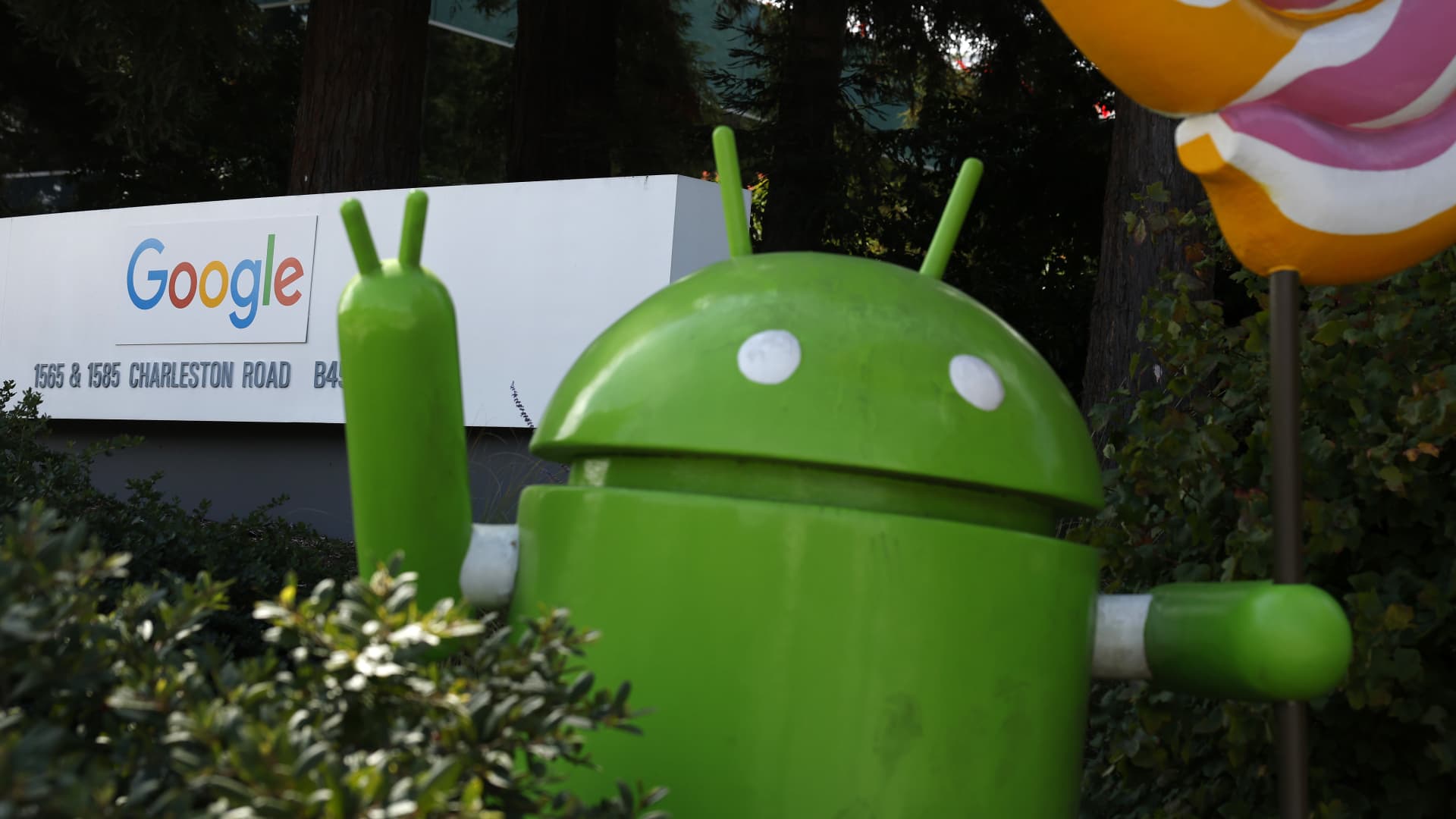
Google is using its latest Android rollout to make Gemini less of a chatbot and more of an operating layer across the phone, browser, car and laptop, just weeks before Apple is expected to show its own Gemini-powered Apple Intelligence reboot at WWDC.
Ahead of its Google I/O developer conference next week, the company previewed a number of Android updates, including AI-powered app automation, a smarter version of Chrome on Android, new tools for creators, a redesigned Android Auto experience, and a sweeping set of new security features.
Alphabet is counting on Gemini to help Google compete directly with OpenAI and Anthropic in the market for artificial intelligence models and services, while also serving as the AI backbone across its expansive portfolio of products, including Android. Meanwhile, Gemini is powering part of Apple’s new AI strategy, giving Google a role in the iPhone maker’s reset even as it races to prove its own version of personal AI on the phone is further along.
Sameer Samat, who oversees Google’s Android ecosystem, told CNBC that Google is rebuilding parts of Android around Gemini Intelligence to help users complete everyday tasks more easily.
“We’re transitioning from an operating system to an intelligence system,” he said.
As part of Tuesday’s announcements. Google said Gemini Intelligence will be able to move across apps, understand what’s on the screen and complete tasks that would normally require a user to jump between multiple services. That means Android is moving beyond the traditional assistant model, where users ask a question and get an answer, and acting more like an agent.
For instance, Google says Gemini can pull relevant information from Gmail, build shopping carts and book reservations. Samat gave the example of asking Gemini to look at the guest list for a barbecue, build a menu, add ingredients to an Instacart list and return for approval before checkout.
A big concern surrounding agentic AI involves software taking action on a user’s behalf without permissions. Samat said Gemini will come back to the user before completing a transaction, adding, “the human is always in the loop.”
Four months after announcing its Gemini deal with Google, Apple is under pressure to show a more capable version of Apple Intelligence, which has been a relative laggard on the market. Apple has long framed privacy, hardware integration and control of the user experience as its advantages.
Google’s Android push is designed to show it can bring AI deeper into the device experience while still giving users control over what Gemini can see, where it can act and when it needs confirmation.
The app automation features will roll out in waves, starting with the latest Samsung Galaxy and Google Pixel phones this summer, before expanding across more Android devices, including watches, cars, glasses and laptops later this year.
The company is also redesigning Android Auto around Gemini, turning the car into another major surface for its assistant. Android Auto is in more than 250 million cars, and Google says the new release includes its biggest maps update in a decade and Gemini-powered help with tasks like ordering dinner while driving.
Alphabet’s AI strategy has been embraced by Wall Street, which has pushed the company’s stock price up more than 140% in the past year, compared to Apple’s roughly 40% gain. Investors now want to see how Gemini can become more central to the products people use every day.
WATCH: Alphabet briefly tops Nvidia after report of $200 billion Anthropic cloud deal
Technologies
Waymo recalls 3,800 robotaxis after glitch allowed some vehicles to ‘drive into standing water’
Waymo issued a voluntary recall of about 3,800 of its robotaxis to fix software issues that could allow them to drive into flooded roadways.

Waymo is recalling about 3,800 robotaxis in the U.S. to fix software issues that could allow them to “drive onto a flooded roadway,” according to a letter on the National Highway Traffic Safety Administration’s website.
The voluntary recall is for Waymo vehicles that use the company’s fifth and sixth generation automated driving systems (or ADS), the U.S. auto safety regulator said in the letter posted Tuesday.
Waymo autonomous vehicles in Austin, Texas, were seen on camera driving onto a flooded street and stalling, requiring other drivers to navigate around them. It’s the latest example of a safety-related issue for the Alphabet-owned AV unit that’s rapidly bolstering its fleet of vehicles and entering new U.S. markets.
Waymo has drawn criticism for its vehicles failing to yield to school buses in Austin, and for the performance of its vehicles during widespread power outages in San Francisco in December, when robotaxis halted in traffic, causing gridlock.
The company said in a statement on Tuesday that it’s “identified an area of improvement regarding untraversable flooded lanes specific to higher-speed roadways,” and opted to file a “voluntary software recall” with the NHTSA.
“Waymo provides over half a million trips every week in some of the most challenging driving environments across the U.S., and safety is our primary priority,” the company said.
Waymo added that it’s working on “additional software safeguards” and has put “mitigations” in place, limiting where its robotaxis operate during extreme weather, so that they avoid “areas where flash flooding might occur” in periods of intense rain.
WATCH: Waymo launches new autonomous system in Chinese-made vehicle
Technologies
Qualcomm tumbles 13% as semiconductor stocks retreat from historic AI-fueled surge
Semiconductor equities reversed sharply after a broad AI-driven advance, with Qualcomm suffering its worst day since 2020 amid inflation concerns and rising oil prices.
Semiconductor stocks fell sharply on Tuesday, reversing course after an extensive rally that had expanded the artificial intelligence investment theme well past Nvidia and driven the industry to unprecedented levels.
Qualcomm plunged 13% and was on track for its steepest single-day decline since 2020. Intel shed 8%, while On Semiconductor and Skyworks Solutions each lost more than 6%. The iShares Semiconductor ETF, which benchmarks the overall sector, fell 5%.
The sell-off came after a key gauge of consumer prices came in above forecasts, and as conflict in Iran pushed crude oil higher—prompting investors to shift away from riskier assets.
The preceding advance had widened the AI opportunity set beyond longtime industry leader Nvidia, which for much of the past several years had largely carried the market to new peaks on its own.
Explosive appetite for central processing units, along with the graphics processing units that power large language models, has sent chipmakers to all-time highs.
Market participants are wagering that the shift from AI model training to autonomous agents will lift demand for additional AI hardware. Among the beneficiaries are memory chip producers, which are raising prices as supply remains tight.
Micron Technology slid 6%, and Sandisk cratered 8%. Sandisk’s stock has surged more than six times over since January.
-
 Technologies3 года ago
Tech Companies Need to Be Held Accountable for Security, Experts Say
-
 Technologies3 года ago
Best Handheld Game Console in 2023
-
 Technologies5 лет ago
Black Friday 2021: The best deals on TVs, headphones, kitchenware, and more
-
 Technologies3 года ago
Tighten Up Your VR Game With the Best Head Straps for Quest 2
-
 Technologies5 лет ago
Google to require vaccinations as Silicon Valley rethinks return-to-office policies
-
 Technologies5 лет ago
Verum, Wickr and Threema: next generation secured messengers
-
 Technologies4 года ago
The number of Сrypto Bank customers increased by 10% in five days
-
 Technologies5 лет ago
Olivia Harlan Dekker for Verum Messenger


