

Technologies
HTC’s New Standalone VR Headset Is Like Nothing We’ve Ever Seen
Best of CES: The compact, depth-sensing, $1,099 headset arrives in February. Vive boss Dan O’Brien explains the strategy.

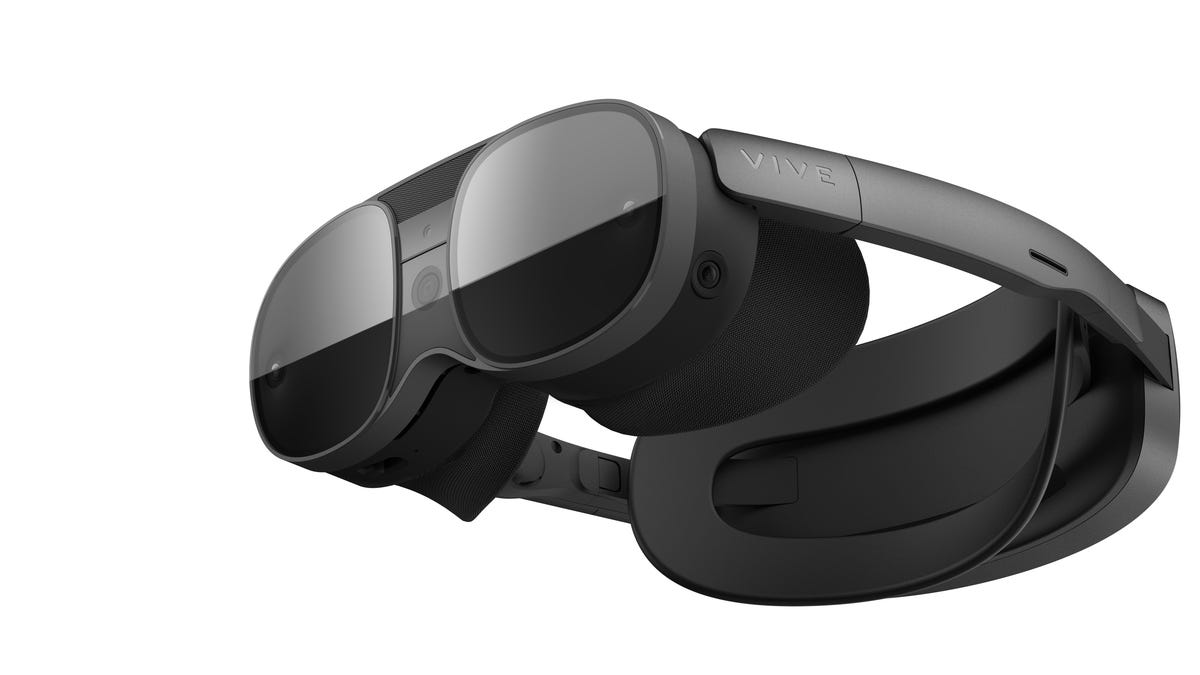
VR has suddenly gotten more expensive. It seems like the worst possible timing, but HTC’s newest high-end headset announced at CES, the Vive XR Elite, follows a similar playbook to Meta’s recent Quest Pro, and possibly Apple’s awaited device as well. It raises a question: Are we truly ready for the rise of the $1,000-plus VR rigs? The standalone Vive XR Elite is sleek and looks a lot more compact than the Quest Pro, and is trying to test the higher-end waters.
The $1,099 headset, available for preorder Thursday, is arriving by the end of February — remarkably soon for a CES product. That means it’ll be available alongside Sony’s PlayStation 5-connected PSVR 2. While less expensive than the Quest Pro, the XR Elite’s price costs about as much as buying a PS5 and a PSVR 2 together. It’s far from an impulse purchase. But the hardware, which shrinks down the VR form to a pair of nearly glasses-like goggles and includes mixed-reality capabilities that could allow for AR apps, looks to solve how we’ll be using the metaverse for more in our lives than just games, simulation and fitness.
Read more: The Wonders of CES 2023: 3D Laptops, Wireless TV and Shape-Shifting Screens
No other company has really cracked this challenge either. But this Vive headset looks, more than ever, like it’s a stepping stone to future AR glasses.
«We see where mixed reality is going to create a whole new suite of use cases. We know the virtual reality use cases are great. I think the AR side is amazing, too,» Dan O’Brien, HTC’s general manager of Vive, told me in a conversation at CES in Las Vegas. He acknowledged that HTC tried to make an AR device in 2015 but stopped because of the complications. O’Brien sees 5G and cloud computing as a key next step. «You need a 5G network, a really robust one to make AR go to scale — you need a cloud infrastructure to deliver to those types of wearables.»
The XR Elite is primarily a standalone VR headset, and it looks like an impressive piece of tech: It has a familiar Qualcomm Snapdragon XR2 chip much like the Meta Quest 2, Quest Pro and Vive’s existing business-focused Focus 3. But it adds a higher-resolution 110-degree field of view, LCD displays with 2K resolution per eye that can run at 90Hz. There’s also a boosted 12GB of RAM along with 128GB of storage. It can connect to PCs to run SteamVR or HTC’s VivePort software, or connect with Android phones. But its potential as a bridge to AR experiences seems like the most impressive feature.
Those are just specs, though. The XR Elite is a VR headset with a similar proposition to previous models, but with expanded capabilities. Its compact size is the most surprising part: At 340 grams, it’s less than half the weight of the Quest Pro. The rear hot-swappable battery gives about two hours of life. It gets even smaller by unclipping the back battery strap and adding glasses arms that can turn the headset into a modified pair of VR glasses, which could just plug into an external USB-C charger or battery for power. It’s small enough to fit in a compact carrying case tube.
But that compact size comes with a twist: Instead of fitting on top of glasses, the XR Elite uses adjusting dials, or diopters, which can change the lens prescription on the fly without you needing to wear glasses at all — for some people, at least. The diopters only accommodate up to a -6 prescription, but my own vision is over -8 for nearsightedness. It’s a challenge HTC faced with its even smaller Vive Flow phone-connected VR goggles, which also went for the glasses-free approach.
The XR Elite has a dedicated depth sensor on the front, along with color passthrough cameras that can eventually show mixed reality-experiences, similar to the Quest Pro. The Quest Pro doesn’t have the Elite’s added depth sensor, but it accommodates for that with its onboard cameras.
The XR Elite could also adapt further. While the hardware doesn’t have its own eye-tracking tools onboard, eye- and face-tracking add-ons are coming later in the year. The headset’s controllers are the same standard ones that HTC has for the Vive Focus 3, which follow the same game controller-like playbook as the Meta Quest 2 and others. But HTC already has its own line of wearable VR body trackers and wristbands, and more accessories could follow.
O’Brien acknowledges that the sticky, mass-market appeal of VR and AR aren’t here yet. «I think developers will be using cloud computing, being able to actually get their content into the metaverse much faster, and much more efficiently,» he said. «If you think about the streaming business, these streamers, these TikTokkers, all these kids that create the really compelling, fun experiences that just keep drawing you back in? That’s not in the metaverse today, We need to create more opportunities for less sophisticated immersive content creators to get involved, and then create more [of an] economy.»
O’Brien sees cloud computing, driven by eye tracking’s ability to compress graphics data via a technology called foveated rendering, as a way of eventually shrinking the processors on future headsets, getting smaller and fitting on more people.
My concern is about the limited prescription options at the moment. «As we get to much lighter glasses, people will probably be bringing more of their prescriptions to it in the future,» says O’Brien. «For now, what we can do is just try to address the majority of the market as best we can with these types of setting changes, because we have to get the headsets lighter. We’ve got to get them more comfortable. And if you’re going to have these big eye relief areas inside of these headsets, they’re going to stay really big.»
O’Brien sees the included VR controllers as possibly becoming optional one day, even maybe being left out of the box and bought separately, but not yet. Hand tracking isn’t reliable enough. «Hand tracking has to make massive advancements over the next two to three years to really become much more of a natural input tool.» But O’Brien suggests it’s a way for future headsets to get more affordable. «If a user can just put on glasses and interact with content [with their hands], that’s going to be a much less expensive product.»
This product has been selected as one of the best products of CES 2023. Check out the other Best of CES 2023 award winners.
Technologies
Spotify Launches ‘About the Song’ Beta to Reveal Stories Behind the Music
The stories are told on swipeable cards as you listen to the song.
Did you know Chappell Roan drew inspiration for her hit song Pink Pony Club from The Pink Cadillac, the name of a hot-pink strip club in her Missouri hometown? Or that Fountains of Wayne’s song Stacy’s Mom was inspired by a confessed crush a friend had on the late co-founder Adam Schlesinger’s grandmother?
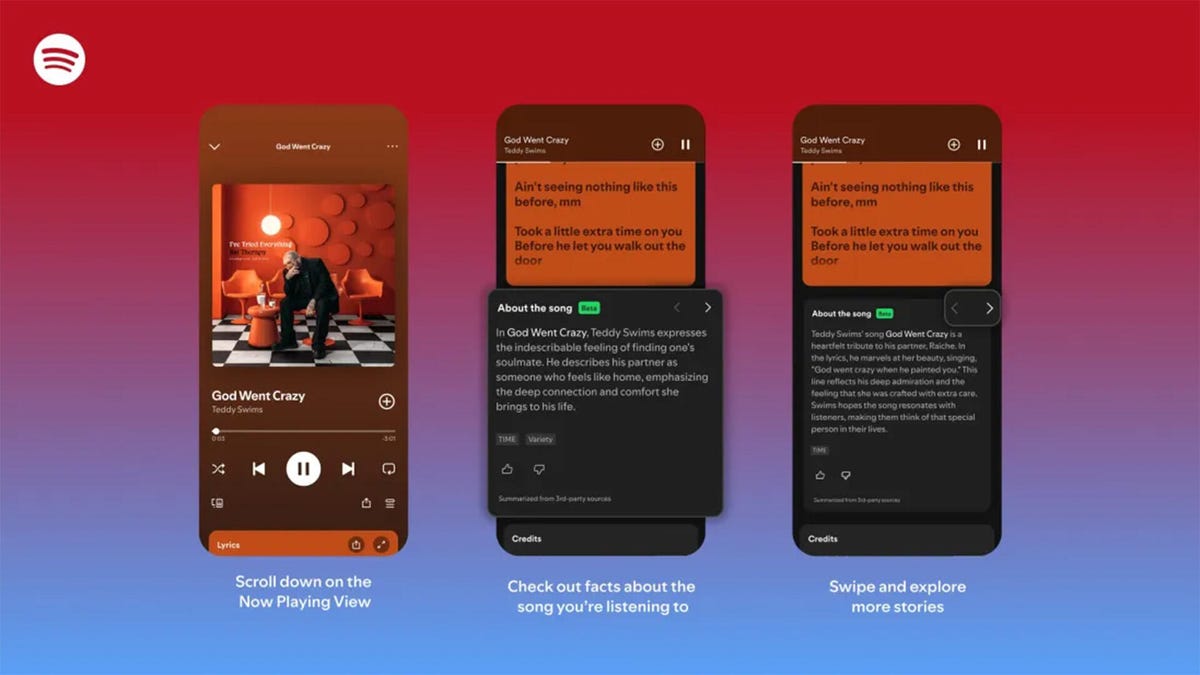
If you’re a fan of knowing juicy little tidbits about popular songs, you might find more trivia in About the Song, a new feature from streaming giant Spotify that’s kind of like the old VH1 show Pop-Up Video.
About the Song is available in the US, UK, New Zealand and Australia, initially for Spotify Premium members only. It’s only on certain songs, but it will likely keep rolling out to more music. Music facts are sourced from a variety of websites and summarized by AI, and appear below the song’s lyrics when you’re playing a particular song.
«Music fans know the feeling: A song stops you in your tracks, and you immediately want to know more. What inspired it, and what’s the meaning behind it? We believe that understanding the craft and context behind a song can deepen your connection to the music you love,» Spotify wrote in a blog post.
While this version of the feature is new, it’s not the first time Spotify has featured fun facts about the music it plays. The streaming giant partnered with Genius a decade ago for Behind the Lyrics, which included themed playlists with factoids and trivia about each song. Spotify kept this up for a few years before canceling due to multiple controversies, including Paramore’s Hayley Williams blasting Genius for using inaccurate and outdated information.
Spotify soon started testing its Storyline feature, which featured fun facts about songs in a limited capacity for some users, but was never released as a central feature.
About the Song is the latest in a long string of announcements from Spotify, including a Page Match feature that lets you seamlessly switch to an audiobook from a physical book, and an AI tool that creates playlists for you. Spotify also recently announced that it’ll start selling physical books.
How to use About the Song
If you’re a Spotify Premium user, the feature should be available the next time you listen to music on the app.
- Start listening to any supported song.
- Scroll down past the lyrics preview box to the About the Song box.
- Swipe left and right to see more facts about the song.
I tried this with a few tracks, and was pleased to learn that it doesn’t just work for the most recent hits. Spotify’s card for Metallica’s 1986 song Master of Puppets notes the song’s surge in popularity after its cameo in a 2022 episode of Stranger Things. The second card discusses the band’s album art for Master of Puppets and how it was conceptualized.
To see how far support for the feature really went, I looked up a few tracks from off the beaten path, like NoFX’s The Decline and Ice Nine Kills’ Thank God It’s Friday. Spotify supported every track I personally checked.
There does appear to be a limit to the depth of the fun facts, which makes sense since not every song has a complicated story. For those songs, Spotify defaults to trivia about the album that features the music or an AI summary of the lyrics and what they might mean.
Technologies
Today’s NYT Connections: Sports Edition Hints and Answers for Feb. 7, #502
Here are hints and the answers for the NYT Connections: Sports Edition puzzle for Feb. 7, No. 502.

Looking for the most recent regular Connections answers? Click here for today’s Connections hints, as well as our daily answers and hints for The New York Times Mini Crossword, Wordle and Strands puzzles.
Today’s Connections: Sports Edition features a fun batch of categories. The purple one requires you to find hidden words inside some of the grid words, but they’re not too obscure. If you’re struggling with today’s puzzle but still want to solve it, read on for hints and the answers.
Connections: Sports Edition is published by The Athletic, the subscription-based sports journalism site owned by The Times. It doesn’t appear in the NYT Games app, but it does in The Athletic’s own app. Or you can play it for free online.
Read more: NYT Connections: Sports Edition Puzzle Comes Out of Beta
Hints for today’s Connections: Sports Edition groups
Here are four hints for the groupings in today’s Connections: Sports Edition puzzle, ranked from the easiest yellow group to the tough (and sometimes bizarre) purple group.
Yellow group hint: Golden Gate.
Green group hint: It’s «Shotime!»
Blue group hint: Same first name.
Purple group hint: Tweak a team name.
Answers for today’s Connections: Sports Edition groups
Yellow group: Bay Area teams.
Green group: Associated with Shohei Ohtani.
Blue group: Coaching Mikes.
Purple group: MLB teams, with the last letter changed.
Read more: Wordle Cheat Sheet: Here Are the Most Popular Letters Used in English Words
What are today’s Connections: Sports Edition answers?
The yellow words in today’s Connections
The theme is Bay Area teams. The four answers are 49ers, Giants, Sharks and Valkyries.
The green words in today’s Connections
The theme is associated with Shohei Ohtani. The four answers are Decoy, Dodgers, Japan and two-way.
The blue words in today’s Connections
The theme is coaching Mikes. The four answers are Macdonald, McCarthy, Tomlin and Vrabel.
The purple words in today’s Connections
The theme is MLB teams, with the last letter changed. The four answers are Angelo (Angels), Cuba (Cubs), redo (Reds) and twine (Twins).
Technologies
Today’s NYT Mini Crossword Answers for Saturday, Feb. 7
Here are the answers for The New York Times Mini Crossword for Feb. 7
Looking for the most recent Mini Crossword answer? Click here for today’s Mini Crossword hints, as well as our daily answers and hints for The New York Times Wordle, Strands, Connections and Connections: Sports Edition puzzles.
Need some help with today’s Mini Crossword? It’s Saturday, so it’s a long one, and a few of the clues are tricky. Read on for all the answers. And if you could use some hints and guidance for daily solving, check out our Mini Crossword tips.
If you’re looking for today’s Wordle, Connections, Connections: Sports Edition and Strands answers, you can visit CNET’s NYT puzzle hints page.
Read more: Tips and Tricks for Solving The New York Times Mini Crossword
Let’s get to those Mini Crossword clues and answers.
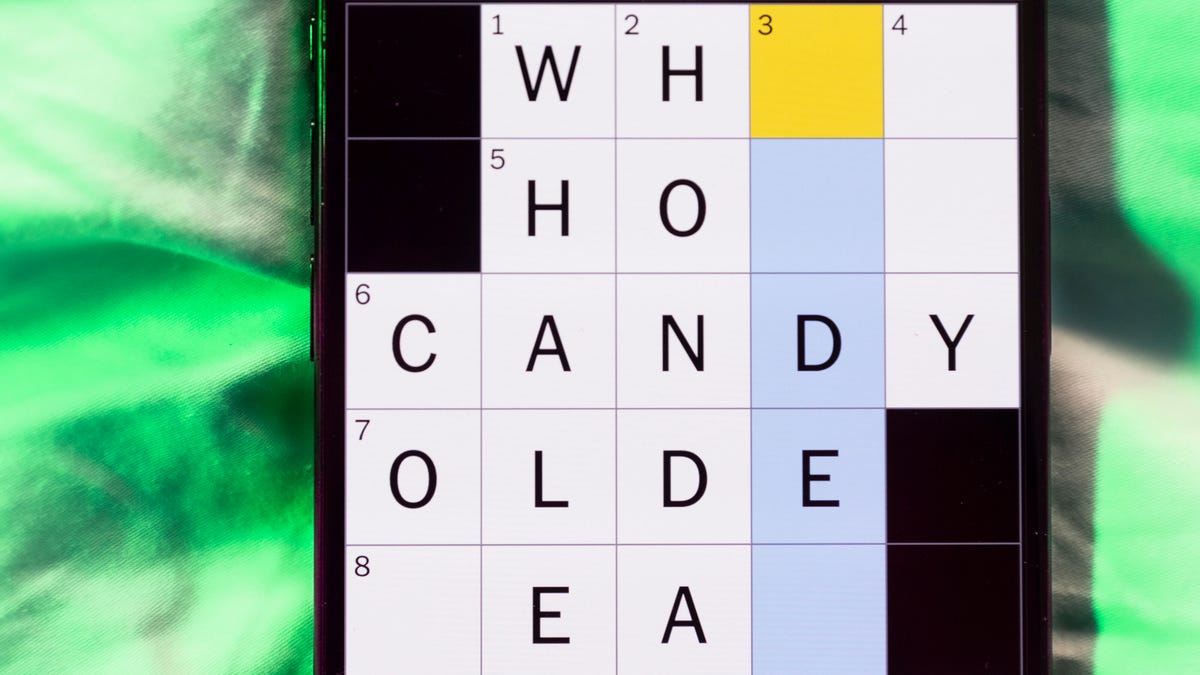
Mini across clues and answers
1A clue: Lock lips
Answer: KISS
5A clue: Italian author of «Inferno,» «Purgatorio» and «Paradiso»
Answer: DANTE
6A clue: Cerebral ___ (part of the brain)
Answer: CORTEX
7A clue: Leave home with a stuffed pillowcase as luggage, perhaps
Answer: RUNAWAY
8A clue: No more for me, thanks»
Answer: IMGOOD
9A clue: Fancy fabrics
Answer: SILKS
10A clue: Leg joint
Answer: KNEE
Mini down clues and answers
1D clue: Bars sung in a bar
Answer: KARAOKE
2D clue: How the animals boarded Noah’s Ark
Answer: INTWOS
3D clue: Stand in good ___
Answer: STEAD
4D clue: Smokin’ hot
Answer: SEXY
5D clue: Computer attachment
Answer: DONGLE
6D clue: Yotam Ottolenghi called it «the one spice I could never give up»
Answer: CUMIN
7D clue: Hazard
Answer: RISK
-
 Technologies3 года ago
Tech Companies Need to Be Held Accountable for Security, Experts Say
-
 Technologies3 года ago
Best Handheld Game Console in 2023
-
 Technologies3 года ago
Tighten Up Your VR Game With the Best Head Straps for Quest 2
-
 Technologies4 года ago
Black Friday 2021: The best deals on TVs, headphones, kitchenware, and more
-
 Technologies5 лет ago
Google to require vaccinations as Silicon Valley rethinks return-to-office policies
-
 Technologies5 лет ago
Verum, Wickr and Threema: next generation secured messengers
-
 Technologies4 года ago
Olivia Harlan Dekker for Verum Messenger
-
 Technologies4 года ago
iPhone 13 event: How to watch Apple’s big announcement tomorrow


