

Technologies
A ‘Messy’ Star Death: How an Early Muse of NASA’s Webb Telescope Came to Be
The Southern Ring Nebula, brought to you by a star’s explosive demise.

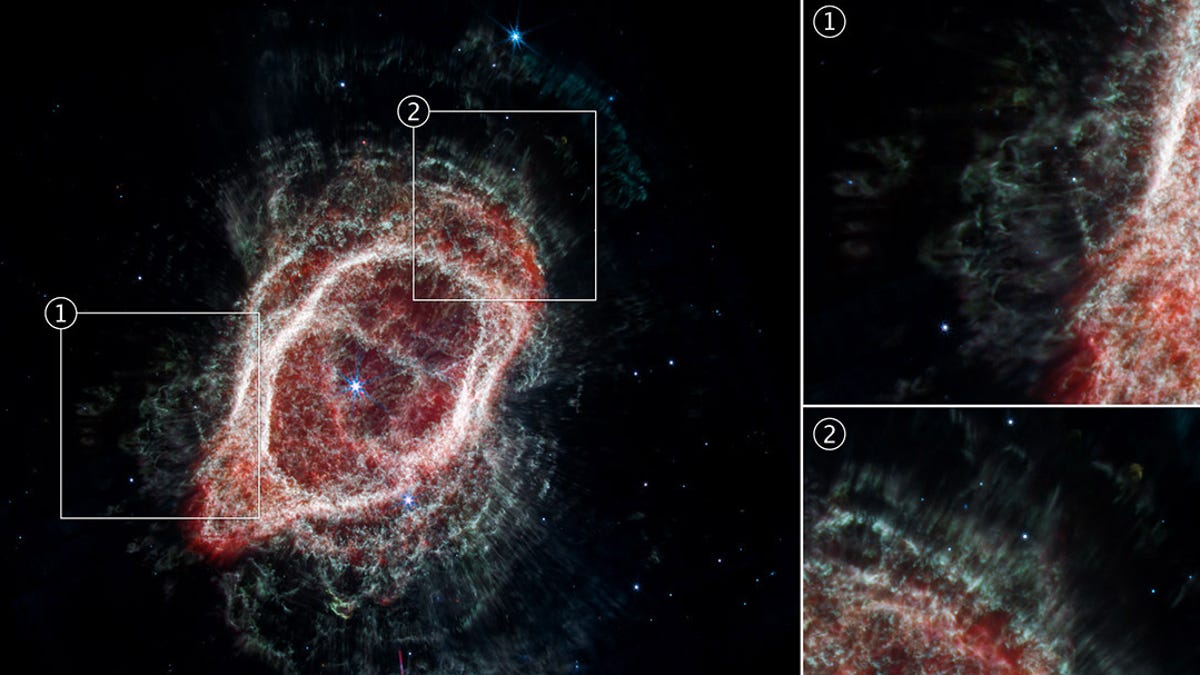
When NASA released the James Webb Space Telescope’s very first images this year, astronomers and space-lovers all over the world were met with a menagerie of blurred galaxies from near the beginning of time, coffee-hued dust clouds brimming with wonderful secrets and incandescent realms fit for Disney princess castles. It was a glorious moment for humankind, witnessing how stars can unite us beneath our layers of division.
But among this trailblazing telescope’s first five images, one especially stood out not only for its beauty but also for its mystery — a striking portrait of the Southern Ring Nebula hid an important history yet to be known. Simply, scientists wanted to learn what, exactly, caused this intricate, amoeba-shaped, ancient star explosion aftermath to exist?
Et, voila.
On Thursday, an international team of nearly 70 astronomers used the JWST’s stunning image to deduce the Southern Ring Nebula’s backstory.
Details are published in the journal Nature Astronomy, but basically, what they found is that some 2,500 years ago, a star nearly three times the size of our sun died at about 500 million years of age.
When it died, they say, the stellar body ejected most of its mass into surrounding space, forming shrouds of gas that slowly expanded with time until they turned into the complex folds we see today in the JWST’s Southern Ring Nebula structure.
Then, when all was said and done, the deceased star left behind a sort of corpse, or white dwarf star, with about half the mass of our sun but around the size of Earth. (That’s super dense, to be clear).
Plus, as an added surprise, the astronomers also found evidence of two or three companion stars they believe hastened the blown up star’s death — as well an «innocent bystander» star that might’ve just gotten caught up in the mix.
«When we first saw the images, we knew we had to do something, we must investigate!» Orsola De Marco, lead author of the paper and astrophysicist at Macquarie University, said in a statement. «The community came together, and from this one image of a randomly chosen nebula, we were able to discern much more precise structures than ever before. The promise of the James Webb Space Telescope is incredible.»
That Southern Ring Nebula image really is something
Even back in July, the JWST’s Southern Ring Nebula rendition had raised eyebrows during its reveal. I mean, at the top left of one version of the JWST’s view, taken with the Mid-Infrared instrument, a weird bluish line ended up literally being a galaxy photobomber.
«I made a bet that said, ‘It’s part of the nebula,'» NASA astronomer Karl Gordon recounted during the unveiling. «I lost the bet, because then we looked more carefully at both Nircam and MIRI images, and it’s very clearly an edge-on galaxy.»
We were also able to see not one but two stars dance around one another at the marvel’s center for the first time, stirring the pot of gas and dust to create the ornate patterns that make the image perfect as an iPhone background. (Yes, one of these is the white dwarf that De Marco and fellow scientists discuss in their latest paper.)
«This star is now small and hot but is surrounded by cool dust,» Joel Kastner, another team member from the Rochester Institute of Technology, said in a statement. «We think all that gas and dust we see thrown all over the place must have come from that one star, but it was tossed in very specific directions by the companion stars.»
The other star visible in the JWST’s photo, according to the team, is just one of the companion stars that orbits the central star while the latter loses mass over time.
However, as to why the team believes there aren’t just two stars at play here but rather three, four – maybe more – that’s because of how a series of spiral structures seem to be moving out from the center, generating arches, and how a 3D view of the nebula’s data points to irregular jets of matter shooting from the phenomenon’s center.
«We first inferred the presence of a close companion because of the dusty disk around the central star, the further partner that created the arches and the super far companion that you can see in the image,» De Marco said. «Once we saw the jets, we knew there had to be another star or even two involved at the center, so we believe there are one or two very close companions, an additional one at middle distance and one very far away.
«If this is the case, there are four or even five objects involved in this messy death.»
Technologies
Tinder Users Must Start Logging In With Their Faces, Starting Nationwide
The social app now has new US requirements including face identification to help quell longstanding problems with catfishing and more.

US Tinder users will find a new feature when they open up the dating app starting Wednesday: A mandatory Face Check on their phones will be required before they can log into their profiles.
The Face Check step will begin with a new request to record a video of your face, a more casual version of setting up Apple’s Face ID login. Tinder will then run checks comparing your face data to your current profile pics and automatically create a small face badge for your profile. We already know how it works, because Tinder has already launched the feature in Canada and California before the full US rollout.
The technology, powered by FaceTec, will keep biometric data of the user’s face in encrypted form but discard the scanning video for privacy. Tinder will be able to use the face data to detect duplicate accounts, in an effort to cut down on fake profiles and identity theft.
Don’t miss any of our unbiased tech content and lab-based reviews. Add CNET as a preferred Google source.
Tinder’s facial recognition rollout is also made to prevent catfishing, or people pretending to be someone else on Tinder to scam or blackmail them. But that also points to a deeper problem on the rise in dating apps — a growing number of bots, many controlled by AI, are designed to glean personal information or fool users into scammy subscriptions, among other problems.
Tinder’s working against these bots on several fronts, including this Face Check push as well as ID Check, which requires a government-issued ID and other types of photo verification.
The dating app also recently released a feature in June to enable double-dating with your friends, which Tinder reports is especially popular with Gen Z users. If you’re worried about the latest hazards on Tinder, we have guide to safety practices.
A representative for Tinder did not immediately respond to a request for comment.
Technologies
Today’s NYT Mini Crossword Answers for Thursday, Oct. 23
Here are the answers for The New York Times Mini Crossword for Oct. 23.
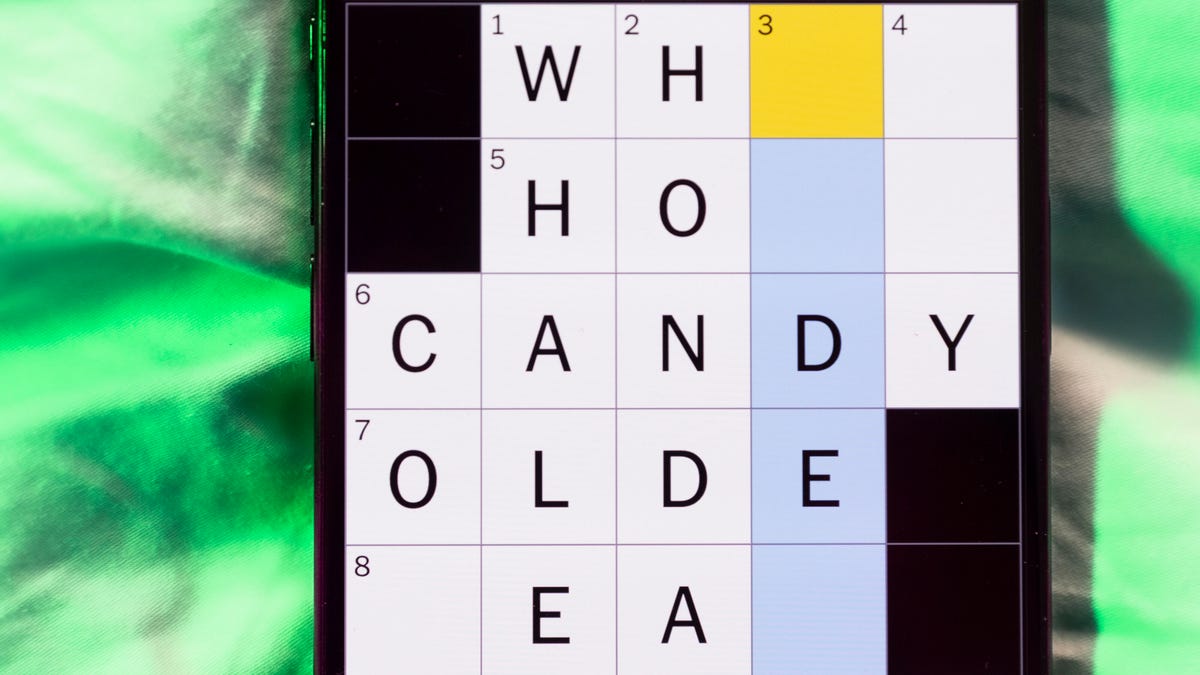
Looking for the most recent Mini Crossword answer? Click here for today’s Mini Crossword hints, as well as our daily answers and hints for The New York Times Wordle, Strands, Connections and Connections: Sports Edition puzzles.
Need some help with today’s Mini Crossword? Read on. And if you could use some hints and guidance for daily solving, check out our Mini Crossword tips.
If you’re looking for today’s Wordle, Connections, Connections: Sports Edition and Strands answers, you can visit CNET’s NYT puzzle hints page.
Read more: Tips and Tricks for Solving The New York Times Mini Crossword
Let’s get to those Mini Crossword clues and answers.
Mini across clues and answers
1A clue: Like some weather, memories and I.P.A.s
Answer: HAZY
5A clue: Statement that’s self-evidently true
Answer: AXIOM
7A clue: Civic automaker
Answer: HONDA
8A clue: What fear leads to, as Yoda told a young Anakin
Answer: ANGER
9A clue: Foxlike
Answer: SLY
Mini down clues and answers
1D clue: Verbal «lol»
Answer: HAHA
2D clue: Brain signal transmitter
Answer: AXON
3D clue: Hits with a witty comeback
Answer: ZINGS
4D clue: Sing at the top of a mountain, maybe
Answer: YODEL
6D clue: Name of the famous «Queen of Scots»
Answer: MARY
Technologies
Today’s NYT Strands Hints, Answers and Help for Oct. 23 #599
Here are hints and answers for the NYT Strands puzzle for Oct. 23, No. 599.
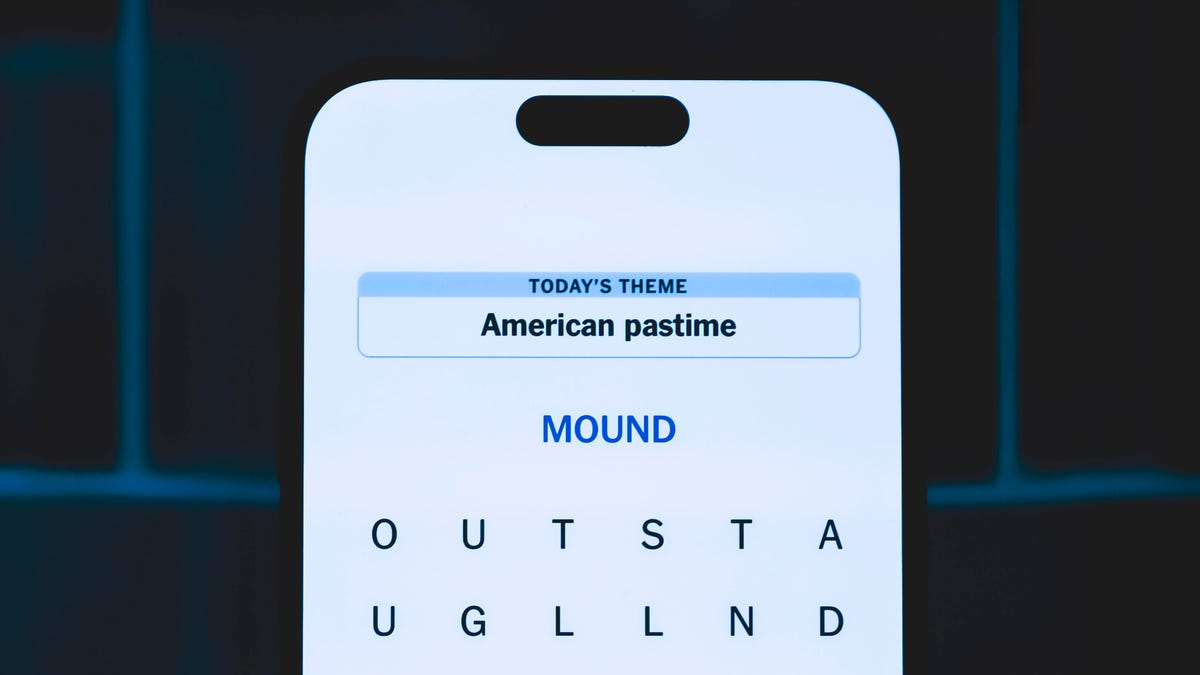
Looking for the most recent Strands answer? Click here for our daily Strands hints, as well as our daily answers and hints for The New York Times Mini Crossword, Wordle, Connections and Connections: Sports Edition puzzles.
Today’s NYT Strands puzzle might be Halloween-themed, as the answers are all rather dangerous. Some of them are a bit tough to unscramble, so if you need hints and answers, read on.
I go into depth about the rules for Strands in this story.
If you’re looking for today’s Wordle, Connections and Mini Crossword answers, you can visit CNET’s NYT puzzle hints page.
Read more: NYT Connections Turns 1: These Are the 5 Toughest Puzzles So Far
Hint for today’s Strands puzzle
Today’s Strands theme is: Please don’t eat me!
If that doesn’t help you, here’s a clue: Remember Mr. Yuk?
Clue words to unlock in-game hints
Your goal is to find hidden words that fit the puzzle’s theme. If you’re stuck, find any words you can. Every time you find three words of four letters or more, Strands will reveal one of the theme words. These are the words I used to get those hints but any words of four or more letters that you find will work:
- POND, NOON, NODE, BALE, SOCK, LOVE, LOCK, MOCK, LEER, REEL, GLOVE, DAIS, LEAN, LEAD, REEL
Answers for today’s Strands puzzle
These are the answers that tie into the theme. The goal of the puzzle is to find them all, including the spangram, a theme word that reaches from one side of the puzzle to the other. When you have all of them (I originally thought there were always eight but learned that the number can vary), every letter on the board will be used. Here are the nonspangram answers:
- AZALEA, HEMLOCK, FOXGLOVE, OLEANDER, BELLADONNA
Today’s Strands spangram
Today’s Strands spangram is POISONOUS. To find it, look for the P that is the first letter on the far left of the top row, and wind down and across.
-
 Technologies3 года ago
Tech Companies Need to Be Held Accountable for Security, Experts Say
-
 Technologies3 года ago
Best Handheld Game Console in 2023
-
 Technologies3 года ago
Tighten Up Your VR Game With the Best Head Straps for Quest 2
-
 Technologies4 года ago
Verum, Wickr and Threema: next generation secured messengers
-
 Technologies4 года ago
Black Friday 2021: The best deals on TVs, headphones, kitchenware, and more
-
 Technologies4 года ago
Google to require vaccinations as Silicon Valley rethinks return-to-office policies
-
 Technologies4 года ago
Olivia Harlan Dekker for Verum Messenger
-
 Technologies4 года ago
iPhone 13 event: How to watch Apple’s big announcement tomorrow


