

Technologies
Why the Ghost Particles Crashing Into Antarctica Could Change Astronomy Forever
About 1.2 miles beneath Antarctica, an underground observatory is hunting for «ghost particles.» What it finds could reveal the unseen heart of a distant galaxy.

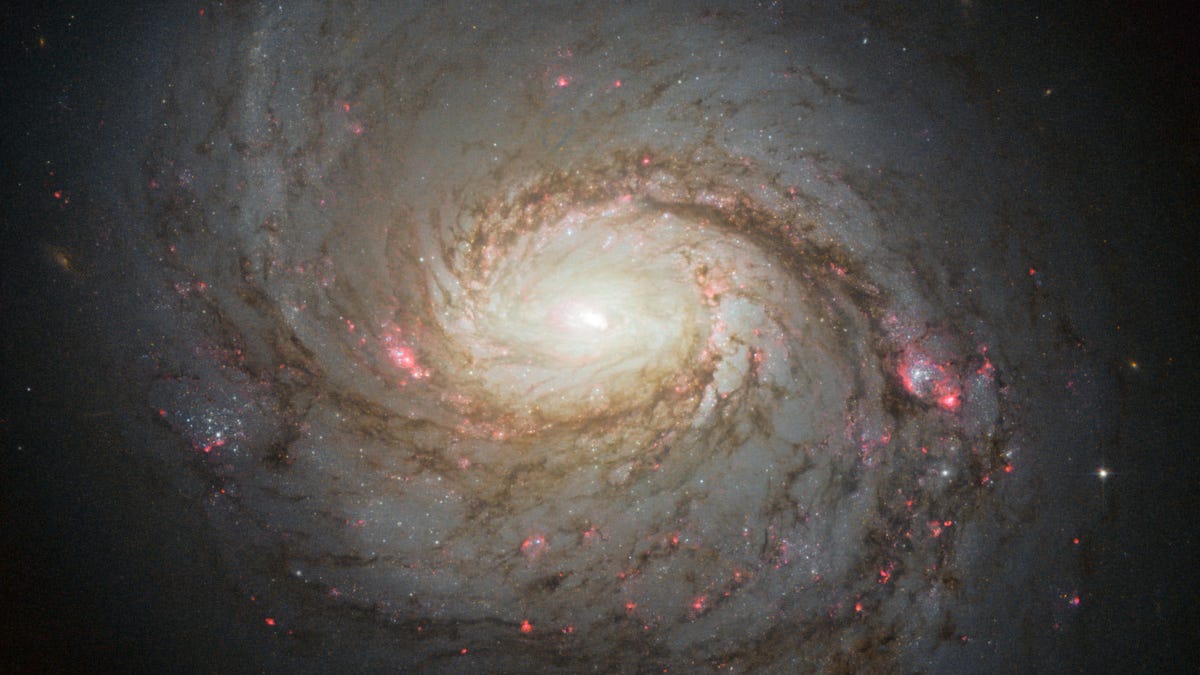
About 47 million light-years from where you’re sitting, the center of a black-hole-laden galaxy named NGC 1068 spits out streams of enigmatic particles. They’re neutrinos — otherwise known as the elusive «ghost particles» haunting our universe while leaving little trace of their existence.
Immediately after coming into being, bundles of these invisible bits plunge across the cosmic expanse. They whisk by bright stars we can see and zip past pockets of space teeming with marvels we’re yet to discover. They fly and fly and fly until, occasionally, they reach Earth’s South Pole and drill themselves underground. The neutrinos’ journey is seamless.
But scientists patiently wait for them to arrive.
Nestled into about 1 billion tons of ice, more than 2 kilometers (1.24 miles) beneath Antarctica, lies the IceCube Neutrino Observatory. A neutrino hunter, you might call it. And when any neutrinos transfer their party to the frigid continent, IceCube remains vigilant.
In a paper published Friday in the journal Science, the international team behind this ambitious experiment confirmed it has found evidence of 79 «high-energy neutrino emissions» coming from around where NGC 1068 is located, opening the door for novel — and endlessly fascinating — types of physics. «Neutrino astronomy,» scientists call it.
It’d be a branch of astronomy that can do what existing branches simply cannot.
Before today, physicists had only shown neutrinos coming from either the sun; our planet’s atmosphere; a chemical mechanism called radioactive decay; supernovas; and — thanks to IceCube’s first breakthrough in 2017 — a blazar, or voracious supermassive black hole pointed directly toward Earth. A void dubbed TXS 0506+056.
With this newfound neutrino source, we’re entering a new era of the particle’s story. In fact, according to the research team, it’s likely neutrinos stemming from NGC 1068 have up to millions, billions, maybe even trillions the amount of energy held by neutrinos rooted in the sun or supernovas. Those are jaw-dropping figures because, in general, such ghostly bits are so powerful, yet evasive, that every second, trillions upon trillions of neutrinos move right through your body. You just can’t tell.
And if you wanted to stop a neutrino in its tracks, you’d need to fight it with a block of lead one light-year-wide — though even then, there’d be a fractional chance of success. Thus, harnessing these particles, NCG 1068’s version or not, could allow us to penetrate areas of the cosmos that’d usually lie out of reach.
Now what?
Not only is this moment massive because it gives us more proof of a strange particle that wasn’t even announced to exist until 1956, but also because neutrinos are like keys to our universe’s backstage.
They hold the capacity to reveal phenomena and solve puzzles we’re unable to address by any other means, which is the primary reason scientists are trying to develop neutrino astronomy in the first place.
«The universe has multiple ways of communicating with us,» Denise Caldwell of the National Science Foundation and a member of the IceCube team, told reporters on Thursday. «Electromagnetic radiation, which we see as light from stars, gravitational waves that shake the fabric of space — and elementary particles, such as protons, neutrons and electrons spewed out by localized sources.
«One of these elementary particles has been neutrinos that permeate the universe, but unfortunately, neutrinos are very difficult to detect.»
In fact, even the galaxy NGC 1068 and its gargantuan black hole are typically obscured by a thick veil of dust and gas, making them hard to parse with standard optical telescopes and equipment — despite years of scientists trying to pierce its curtain. NASA’s James Webb Space Telescope could have a leg up in this case due to its infrared eyes, but neutrinos may be an even better way in.
Expected to be generated behind such opaque screens filtering our universe, these particles can carry cosmic information from behind those screens, zoom across great distances while interacting with essentially no other matter, and deliver pristine, untouched information to humanity about elusive corners of outer space.
«We are very lucky, in a sense, because we can access an amazing understanding of this object,» Elisa Resconi, of the Technical University of Munich and IceCube team member, said of NGC 1068.
It’s also notable that there are many (many) more galaxies similar to NGC 1068 — categorized as Seyfert galaxies — than there are blazars similar to TXS 0506+056. This means IceCube’s latest discovery is, arguably, a larger step forward for neutrino astronomers than the observatory’s seminal one.
Perhaps the bulk of neutrinos diffusing throughout the universe are rooted in NGC 1068 doppelgangers. But in the grand scheme of things, there’s far more to the merit of neutrinos than just their sources.
These ghosts, as Justin Vandenbroucke of the University of Wisconsin-Madison and an IceCube team member put it, are fit to solve two major mysteries in astronomy.
First off, a wealth of galaxies in our universe boast gravitationally monstrous voids at their centers, black holes reaching masses millions to billions of times greater than our sun’s. And these black holes, when active, blast jets of light from their guts — emitting enough illumination to outshine every single star in the galaxy itself. «We don’t understand how that happens,» Vandenbrouke said simply. Neutrinos could provide a way to study the regions around black holes.
Second is the general, yet persistent, conundrum of cosmic rays.
We don’t really know where cosmic rays come from either, but these strings of particles reach energies to and beyond millions of times higher than we can reach here on Earth with human-constructed particle accelerators like the one at CERN.
«We think neutrinos have some role to play,» Vandenbroucke said. «Something that can help us answer these two mysteries of black holes powering very bright galaxies and of the origins of cosmic rays.»
A decade to catch a handful
To be clear, IceCube doesn’t exactly trap neutrinos.
Basically, this observatory tells us every time a neutrino happens to interact with the ice shrouding it. «Neutrinos hardly interact with matter,» Vandenbrouke emphasized. «But they do interact sometimes.»
As millions of neutrinos shoot into the icy region where IceCube is set up, at least one tends to bump into a speck of ice, which then shatters and produces a flash of light. IceCube sensors capture that flash and send the signal up to the surface, notifications that are then analyzed by hundreds of scientists.
Ten years of light-flash-data allowed the team to pretty much map out where every neutrino seems to be coming from in the sky. It soon became clear there was a dense region of neutrino emissions located right where galaxy NGC 1068 is stationed.
But even with such evidence, Resconi said the team knew «it’s not the time to open the champagne, because we still have one fundamental question to answer. How many times did this alignment happen just by chance? How can we be sure neutrinos are actually coming from such an object?»
So, to make matters as concrete as possible, and really, truly prove this galaxy is spitting out ghosts, «we generated 500 million times the same experiment,» Resconi said.
Upon which, I can only imagine, a bottle of Veuve was popped at last. Though the hunt isn’t over.
«We are only beginning to scratch the surface as far as finding new sources of neutrinos,» Ignacio Taboada of the Georgia Institute of Technology and IceCube team member said. «There must be many other sources far deeper than NGC 1068, hiding somewhere to be found.»
Technologies
Tesla Has a New Range of Affordable Electric Cars: How Much They Cost
The new, stripped-back versions of the Model Y and Model 3 have a more affordable starting price.

Technologies
Today’s NYT Strands Hints, Answers and Help for Oct. 22 #598
Here are hints and answers for the NYT Strands puzzle for Oct. 22, No. 598.
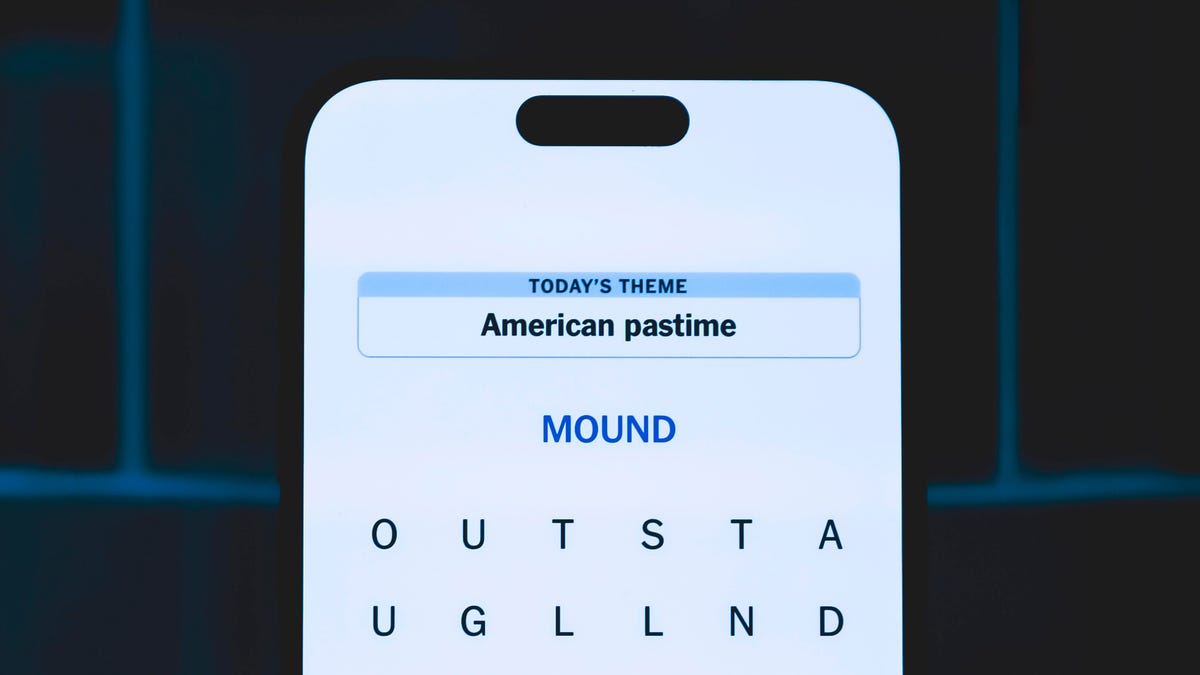
Looking for the most recent Strands answer? Click here for our daily Strands hints, as well as our daily answers and hints for The New York Times Mini Crossword, Wordle, Connections and Connections: Sports Edition puzzles.
Today’s NYT Strands puzzle is a fun one — I definitely have at least two of these in my house. Some of the answers are a bit tough to unscramble, so if you need hints and answers, read on.
I go into depth about the rules for Strands in this story.
If you’re looking for today’s Wordle, Connections and Mini Crossword answers, you can visit CNET’s NYT puzzle hints page.
Read more: NYT Connections Turns 1: These Are the 5 Toughest Puzzles So Far
Hint for today’s Strands puzzle
Today’s Strands theme is: Catch all.
If that doesn’t help you, here’s a clue: A mess of items.
Clue words to unlock in-game hints
Your goal is to find hidden words that fit the puzzle’s theme. If you’re stuck, find any words you can. Every time you find three words of four letters or more, Strands will reveal one of the theme words. These are the words I used to get those hints but any words of four or more letters that you find will work:
- BATE, LICE, SLUM, CAPE, HOLE, CARE, BARE, THEN, SLAM, SAMBA, BACK
Answers for today’s Strands puzzle
These are the answers that tie into the theme. The goal of the puzzle is to find them all, including the spangram, a theme word that reaches from one side of the puzzle to the other. When you have all of them (I originally thought there were always eight but learned that the number can vary), every letter on the board will be used. Here are the nonspangram answers:
- TAPE, COIN, PENCIL, BATTERY, SHOELACE, THUMBTACK
Today’s Strands spangram
Today’s Strands spangram is JUNKDRAWER. To find it, look for the J that’s five letters down on the far-left row, and wind down, over and then up.
Quick tips for Strands
#1: To get more clue words, see if you can tweak the words you’ve already found, by adding an «S» or other variants. And if you find a word like WILL, see if other letters are close enough to help you make SILL, or BILL.
#2: Once you get one theme word, look at the puzzle to see if you can spot other related words.
#3: If you’ve been given the letters for a theme word, but can’t figure it out, guess three more clue words, and the puzzle will light up each letter in order, revealing the word.
Technologies
Today’s Wordle Hints, Answer and Help for Oct. 22, #1586
Here are hints and the answer for today’s Wordle for Oct. 22, No. 1,586.
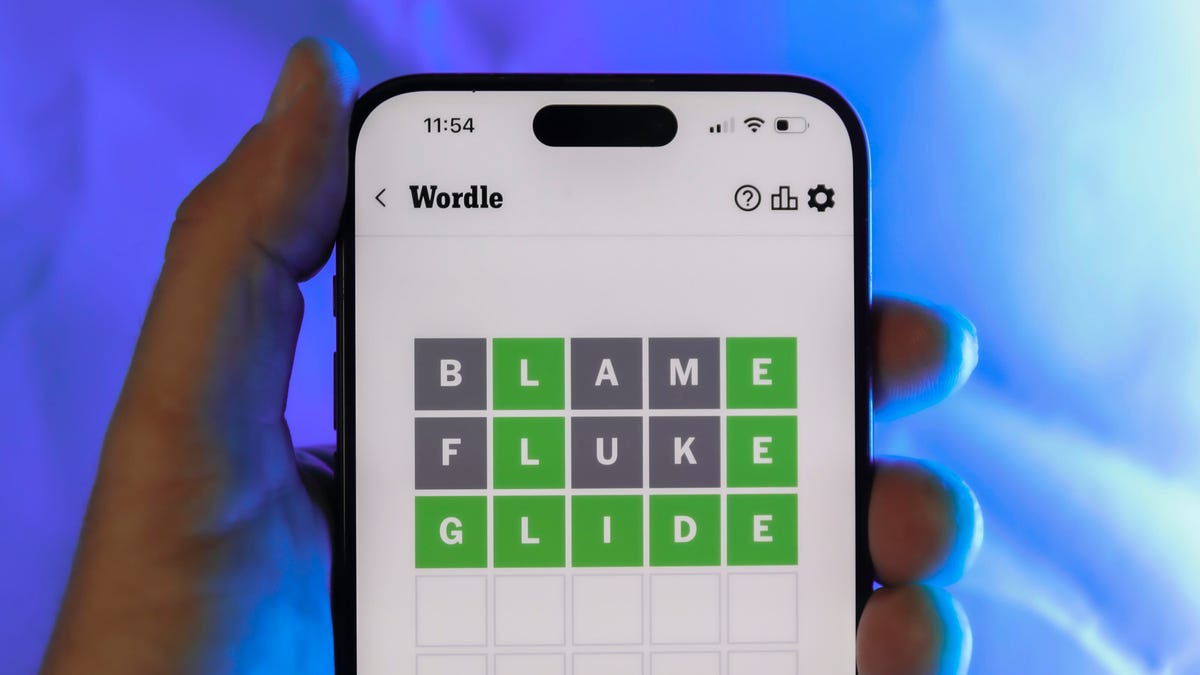
Looking for the most recent Wordle answer? Click here for today’s Wordle hints, as well as our daily answers and hints for The New York Times Mini Crossword, Connections, Connections: Sports Edition and Strands puzzles.
Today’s Wordle puzzle features some letters I don’t often guess, but it’s not terribly difficult. If you need a new starter word, check out our list of which letters show up the most in English words. If you need hints and the answer, read on.
Today’s Wordle hints
Before we show you today’s Wordle answer, we’ll give you some hints. If you don’t want a spoiler, look away now.
Wordle hint No. 1: Repeats
Today’s Wordle answer has one repeated letter.
Wordle hint No. 2: Vowels
Today’s Wordle answer has one vowel.
Wordle hint No. 3: First letter
Today’s Wordle answer begins with S.
Wordle hint No. 4: Last letter
Today’s Wordle answer ends with T.
Wordle hint No. 5: Meaning
Today’s Wordle answer can refer to an action displaying spectacular skill and daring.
TODAY’S WORDLE ANSWER
Today’s Wordle answer is STUNT.
Yesterday’s Wordle answer
Yesterday’s Wordle answer, Oct. 21, No. 1,585 was DETOX.
Recent Wordle answers
Oct. 17, No. 1,581: GROSS
Oct. 18, No. 1,582: HAVEN
Oct. 19, No. 1,583: IDEAL
Oct. 20, No. 1,584: LIMBO
Quick tips for Wordle
#1: Check our list ranking the popularity of all the letters in the alphabet and choose your starter words accordingly. (TRAIN, STERN and AUDIO are good.)
#2: Don’t forget that letters can be used more than once.
#3: Many words are similar. You don’t want to use up multiple guesses that don’t advance your cause. So if the puzzle is STA_E, don’t guess STARE, STATE and STALE. Guess something that uses that R, T and L, like TWIRL.
-
 Technologies3 года ago
Tech Companies Need to Be Held Accountable for Security, Experts Say
-
 Technologies3 года ago
Best Handheld Game Console in 2023
-
 Technologies3 года ago
Tighten Up Your VR Game With the Best Head Straps for Quest 2
-
 Technologies4 года ago
Verum, Wickr and Threema: next generation secured messengers
-
 Technologies4 года ago
Black Friday 2021: The best deals on TVs, headphones, kitchenware, and more
-
 Technologies4 года ago
Google to require vaccinations as Silicon Valley rethinks return-to-office policies
-
 Technologies4 года ago
Olivia Harlan Dekker for Verum Messenger
-
 Technologies4 года ago
iPhone 13 event: How to watch Apple’s big announcement tomorrow


