

Technologies
Omicron FAQ: 8 key things to know about the new COVID variant today
The CDC director expects cases in the US to rise, as the COVID omicron variant has now been confirmed in 16 states. Stay on top of the latest guidance here.

The omicron variant of COVID-19 has now been confirmed in at least 16 US states and is «likely to rise,» Dr. Rochelle Walensky,director of the Centers for Disease Control and Prevention, said on Sunday on This Week. Although the delta variant of COVID makes up 99.9% of US cases, Walensky said, omicron is spreading quickly. A leading European health agency predicts omicron could become the dominant COVID strain in months (more below.)
There have been more than 5.2 million reported deaths worldwide due to COVID-19.
In the US, President Joe Biden is doubling down on urging vaccines and booster shots until more information becomes available. Experts caution it could be two or three weeks before we know exactly how contagious omicron is and if it can cause more severe illness than other mutations of the virus.
So far, the COVID-19 vaccines have proved to be highly effective in preventing hospitalization and death, with people who are unvaccinated being more than 10 times more likely to be hospitalized if infected. Vaccine-makers are optimistic the current vaccines authorized for use in the US will provide a degree of protection against omicron, too.
Here are eight important things to know about omicron today. For more on COVID boosters, here’s a trick to easily get an appointment and free ride. Here’s how you’ll soon get a COVID test kit for free and details on mixing and matching vaccines.
Omicron could become the dominant COVID variant in Europe in months
Omicron could become the most common COVID variant in months, according to the European Centre for Disease Prevention and Control.
«Mathematical modelling [sic] indicates that the Omicron VOC is expected to cause over half of all SARS-CoV-2 infections in the EU/EEA within the next few months» due to early understandings of the omicron variant’s high transmissibility between people, the center said in a Dec. 2 brief.
Scientists studying the omicron variant in South Africa, where it was first reported to the World Health Organization, have said it’s spreading more than twice as fast as the delta variant. But what isn’t yet known is the spread is hastened because the mutations make it easier to spread among people, if vaccines are less effective against this strain or for some other reason. The study cited by the New York Times has not yet been published or peer-reviewed.
Omicron is already confirmed in 16 US states
First, it was Minnesota, then California and now Hawaii, New York and points in between. The US and other countries were already bracing for an increased caseload as colder weather and holiday revelry drove more people indoors together. Now, concerns over a winter surge of the dominant delta variant join concerns about omicron’s spread.
Omicron has similarities to the delta variant’s mutation
COVID latches onto cells using a spike protein in its structure. Omicron has more mutations than the delta variant, which is considered at least twice as contagious as previous strains. While it isn’t clear yet if omicron is more or less contagious than delta, the presence of those mutations is one cause of concern.
That may be one reason countries around the world have banned travel from some countries in southern Africa and increased travel restrictions that include a negative COVID test 24 hours before travel, regardless of vaccination status.
It isn’t clear how current vaccines will respond to omicron
Scientists are testing whether omicron could cause breakthrough infections in people who are fully vaccinated and reinfections for those who have antibodies from a prior COVID-19 infection. It may take two to three weeks before enough test data reveals how effective the Johnson & Johnson, Moderna and Pfizer vaccines are in protecting against the omicron mutation. Scientists are hopeful, however, that the current vaccines will continue to protect against the new variant.
«We think it’s likely that people will have substantial protection against severe disease caused by omicron,» said Ugur Sahin, co-founder of BioNTech, said uring an interview with Reuters on Tuesday. BioNTech worked with Pfizer to create one of the vaccines authorized in the US.
Still, the fact that omicron has rapidly mutated and spread has rung at least one alarm bell.
«The emergence of the highly mutated omicron variant underlines just how perilous and precarious our situation is,» Dr. Tedros Adhanom Ghebreyesus, leader of the World Health Organization, said on Nov. 29.
Most PCR tests to identify the presence of COVID-19 in the body are free (COVID tests for international travel are the main exception). So it’s good news that the existing nasal swab test has been found to detect the omicron variant — a blood test or other procedure so far is unnecessary.
«Fortunately for us, the PCRs that we mostly use would pick up this very unusual variant that has a real large constellation of mutations,» Dr. Anthony Fauci, the president’s chief medical advisor, said in a Nov. 29 press briefing.
COVID PCR tests can identify the omicron variant
Most PCR tests to identify the presence of COVID-19 in the body are free (COVID tests for international travel are the main exception). So it’s good news that the existing nasal swab test has been found to detect the omicron variant — a blood test or other procedure so far is unnecessary.
«Fortunately for us, the PCRs that we mostly use would pick up this very unusual variant that has a real large constellation of mutations,» Dr. Anthony Fauci, the president’s chief medical advisor, said Nov. 29 in a press briefing.
Moderna, Pfizer and Johnson & Johnson are evaluating Plan B
Moderna: Moderna’s Chief Medical Officer Paul Burton told the BBC his company has hundreds of people examining the effectiveness of its current vaccine and booster with the variant. Moderna is also testing a COVID-19 vaccine that could protect against several mutated strains of the coronavirus looking at an omicron-specific booster vaccine. Burton said if Moderna needs to make a new vaccine modified for the variant, it could be available early in 2022.
Pfizer: A Pfizer spokesperson said the company is «constantly conducting surveillance efforts focused on monitoring for emerging variants that potentially escape protection from our vaccine.»
The spokesperson said Pfizer could develop and produce a tailor-made vaccine against that variant in approximately 100 days.
Johnson & Johnson: Johnson & Johnson said it’s working with scientists in South Africa and around the world to evaluate the effectiveness of its COVID-19 vaccine against the omicron variant and has begun work on a new vaccine designed for omicron, if needed.
Booster shots and vaccines are urged to help prevent omicron’s spread
On Thursday, Biden announced a plan to help protect the US against the omicron variant this winter. It includes, among other things:
- Outreach programs to contact people eligible to receive booster shots.
- Making at-home COVID tests «free» for everyone.
- Tighter travel restrictions that require a negative COVID test 24 hours before departure.
- Paid time off for federal workers to get booster shots.
- Securing antiviral pills as a treatment for people who become infected with COVID-19 (these are recommended but not yet FDA approved).
- Sending 200 million more doses of COVID vaccine to international countries in the next 100 days (280 million have already been sent).
Omicron is pronounced these ways
The World Health Organization assigns Greek letters to key COVID variants to help the public easily remember and pronounce the different mutations of the virus. When first announced, search interest in the Greek letters «omicron» and «omega» climbed as people looked for information on the new variant. So far we’ve heard the new omicron variant pronounced by global health leaders as OH-me-cron, OH-mih-cron and OH-my-cron (some of this boils down to ancient Greek).
For additional COVID guidance, here’s what to know about new travel restrictions, how to store your vaccine card on your phone and what to do if you lose your vaccine card.
The information contained in this article is for educational and informational purposes only and is not intended as health or medical advice. Always consult a physician or other qualified health provider regarding any questions you may have about a medical condition or health objectives.
Technologies
Does Charging Your Phone Overnight Damage the Battery? We Asked the Experts
Modern smartphones are protected against overcharging, but heat and use habits can still degrade your battery over time.

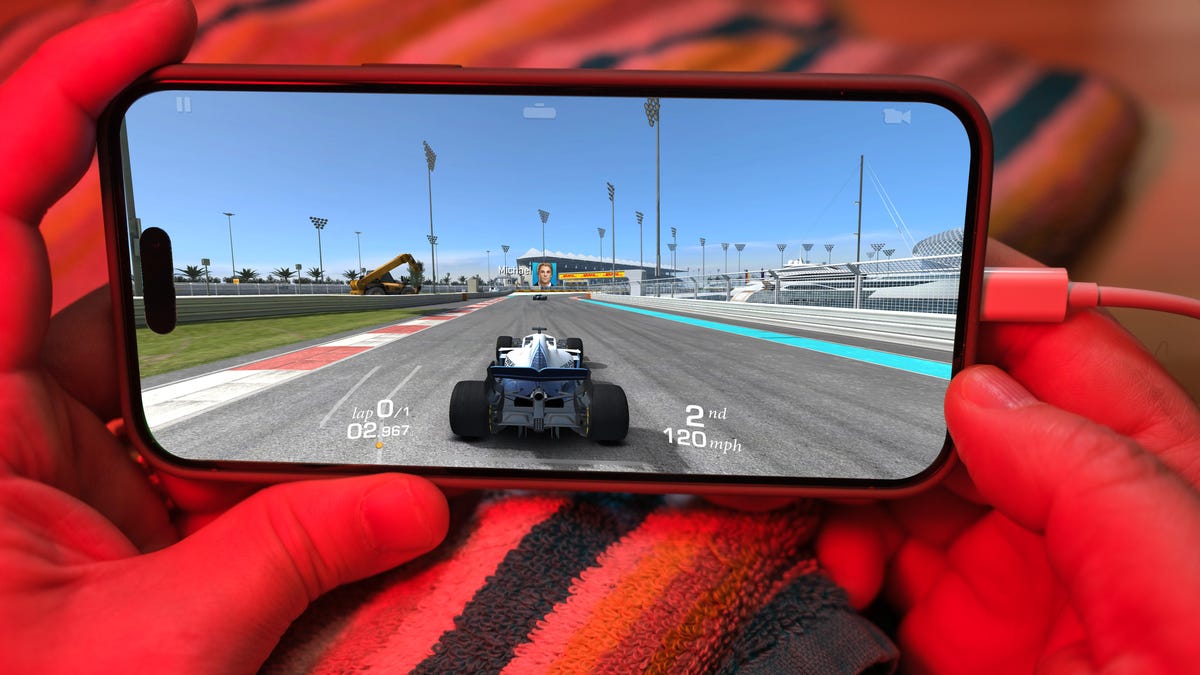
Plugging your phone in before you head to bed might seem like second nature. That way by the time your alarms go off in the morning, your phone has a full charge and is ready to help you conquer your day. However, over time, your battery will start to degrade. So is keeping your phone plugged in overnight doing damage to the battery?
The short answer is no. Keeping your phone plugged in all the time won’t ruin your battery. Modern smartphones are built with smart charging systems that cut off or taper power once they’re full, preventing the kind of «overcharging damage» that was common in older devices. So if you’re leaving your iPhone or Android on the charger overnight, you can relax.
That said, «won’t ruin your battery» doesn’t mean it has no effect. Batteries naturally degrade with age and use, and how you charge plays a role in how fast that happens. Keeping a phone perpetually at 100% can add extra stress on the battery, especially when paired with heat, which is the real enemy of longevity.
Understanding when this matters (and when it doesn’t) can help you make small changes to extend your phone’s lifespan.
Don’t miss any of our unbiased tech content and lab-based reviews. Add CNET as a preferred Google source.
The science behind battery wear
Battery health isn’t just about how many times you charge your phone. It’s about how it manages voltage, temperature and maintenance. Lithium-ion batteries age fastest when they’re exposed to extreme levels: 0% and 100%.
Keeping them near full charge for long stretches puts additional voltage stress on the cathode and electrolyte. That’s why many devices use «trickle charging» or temporarily pause at 100%, topping up only when needed.
Still, the biggest threat isn’t overcharging — it’s heat. When your phone is plugged in and running demanding apps, it produces heat that accelerates chemical wear inside the battery. If you’re gaming, streaming or charging on a hot day, that extra warmth does far more harm than leaving the cable plugged in overnight.
Apple’s take
Apple’s battery guide describes lithium-ion batteries as «consumable components» that naturally lose capacity over time. To slow that decline, iPhones use Optimized Battery Charging, which learns your daily routine and pauses charging at about 80% until just before you typically unplug, reducing time spent at high voltage.
Apple also advises keeping devices between 0 to 35 degrees Celsius (32 to 95 degrees Fahrenheit) and removing certain cases while charging to improve heat dissipation. You can read more on Apple’s official battery support page.
What Samsung (and other Android makers) do
Samsung offers a similar feature called Battery Protect, found in One UI’s battery and device care settings. When enabled, it caps charging at 85%, which helps reduce stress during long charging sessions.
Other Android makers like Google, OnePlus and Xiaomi include comparable options — often called Adaptive Charging, Optimized Charging or Battery Care — that dynamically slow power delivery or limit charge based on your habits. These systems make it safe to leave your phone plugged in for extended periods without fear of overcharging.
When constant charging can hurt
Even with these safeguards, some conditions can accelerate battery wear. As mentioned before, the most common culprit is high temperature. Even for a short period of time, leaving your phone charging in direct sunlight, in a car or under a pillow can push temperatures into unsafe zones.
Heavy use while charging, like gaming or 4K video editing, can also cause temperature spikes that degrade the battery faster. And cheap, uncertified cables or adapters may deliver unstable current that stresses cells. If your battery is already several years old, it’s naturally more sensitive to this kind of strain.
How to charge smarter
You don’t need to overhaul your habits but a few tweaks can help your battery age gracefully.
Start by turning on your phone’s built-in optimization tools: Optimized Battery Charging on iPhones, Battery Protect on Samsung devices and Adaptive Charging on Google Pixels. These systems learn your routine and adjust charging speed so your phone isn’t sitting at 100% all night.
Keep your phone cool while charging. According to Apple, phone batteries perform best between 62 and 72 degrees Fahrenheit (16 to 22 degrees Celsius). If your phone feels hot, remove its case or move it to a better-ventilated or shaded spot. Avoid tossing it under a pillow or too close to other electronics, like your laptop, and skip wireless chargers that trap heat overnight.
Use quality chargers and cables from your phone’s manufacturer or trusted brands. Those cheap «fast-charge» kits you find online often deliver inconsistent current, which can cause long-term issues.
Finally, don’t obsess over topping off. It’s perfectly fine to plug in your phone during the day for short bursts. Lithium-ion batteries actually prefer frequent, shallow charges rather than deep, full cycles. You don’t need to keep it between 20% and 80% all the time, but just avoid extremes when possible.
The bottom line
Keeping your phone plugged in overnight or on your desk all day won’t destroy its battery. That’s a leftover myth from a different era of tech. Modern phones are smart enough to protect themselves, and features like Optimized Battery Charging or Battery Protect do most of the heavy lifting for you.
Still, no battery lasts forever. The best way to slow the inevitable is to manage heat, use quality chargers and let your phone’s software do its job. Think of it less as «babying» your battery and more as charging with intention. A few mindful habits today can keep your phone running strong for years.
Technologies
Facebook Brings Back Local Job Listings: How to Apply
One of Facebook’s most practical features from 2022 is being revived by Meta.
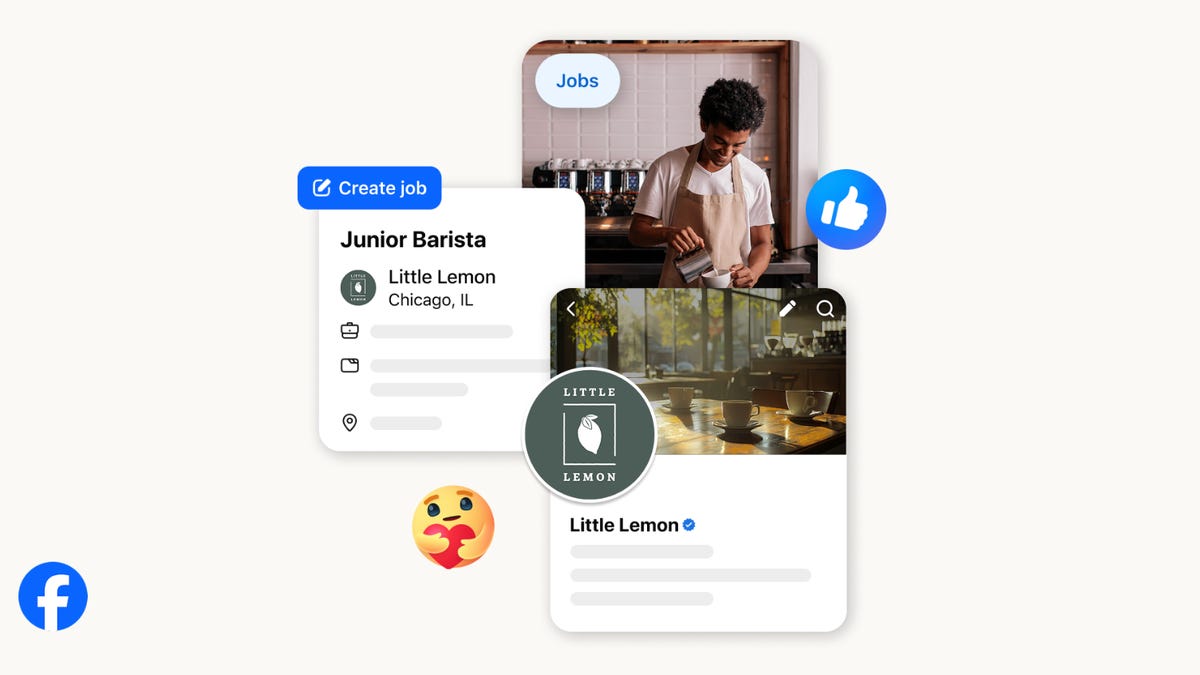
On the hunt for work? A Local Jobs search is being rolled out by Meta to make it easier for people in the US to discover and apply for nearby work directly on Facebook. The feature is inside Facebook Marketplace, Groups and Pages, Meta said last week, letting employers post openings and job seekers filter roles by distance, category or employment type.
You can apply or message employers directly through Facebook Messenger, while employers can publish job listings with just a few taps — similar to how you would post items for sale on Marketplace.
Don’t miss any of our unbiased tech content and lab-based reviews. Add CNET as a preferred Google source.
Facebook offered a Jobs feature before discontinuing it in 2022, pushing business hiring toward its other platforms. Its return suggests Meta is attempting to expand Facebook’s usefulness beyond social networking and to position it once again as a hub for community-driven opportunities.
Read more: Meta’s All In on AI Creating the Ads You See on Instagram, Facebook and WhatsApp
«We’ve always been about connecting with people, whether through shared interests or key life events,» the press release states. «Now, if you’re looking for entry-level, trade and service industry employment in your community, Facebook can help you connect with local people and small businesses who are hiring.»
Read more: What Is Meta AI? Everything to Know About These AI Tools
How to get started with Local Jobs on Facebook
According to Meta, Local Jobs will appear as a dedicated section in Facebook Marketplace starting this week. If you’re 18 or older, you can:
- Tap the Marketplace tab on the Facebook app or website.
- Select Jobs to browse available positions nearby.
- Use filters for job type, category and distance.
- Tap Apply or message the employer directly via Messenger.
Businesses and page admins can post jobs by creating a new listing in Marketplace or from their Facebook Page. Listings can include job details, pay range, and scheduling information and will appear in local searches automatically.
The Local Jobs feature is rolling out across the US now, with Meta saying it plans to expand it in the months ahead.
Technologies
Tesla Has a New Range of Affordable Electric Cars: How Much They Cost
The new, stripped-back versions of the Model Y and Model 3 have a more affordable starting price.

-
 Technologies3 года ago
Tech Companies Need to Be Held Accountable for Security, Experts Say
-
 Technologies3 года ago
Best Handheld Game Console in 2023
-
 Technologies3 года ago
Tighten Up Your VR Game With the Best Head Straps for Quest 2
-
 Technologies4 года ago
Verum, Wickr and Threema: next generation secured messengers
-
 Technologies4 года ago
Black Friday 2021: The best deals on TVs, headphones, kitchenware, and more
-
 Technologies4 года ago
Google to require vaccinations as Silicon Valley rethinks return-to-office policies
-
 Technologies4 года ago
Olivia Harlan Dekker for Verum Messenger
-
 Technologies4 года ago
iPhone 13 event: How to watch Apple’s big announcement tomorrow


