

Technologies
‘Don’t be evil’: Google’s iconic mantra comes into question at labor trial
The ethos has set Google apart from other companies for decades. It’s under the spotlight again.


Last month, software engineer Kyle Dhillon said during a labor board trial that «Don’t be evil,» Google’s famous corporate mantra, had lured him to the tech giant five years ago.
The motto appealed to the Princeton grad because it showed Google was aware of its own power. It underscored, Dhillon said, the delicate work it takes to keep a big company like Google honest.
«Recognizing ‘Don’t be evil’ as one of its core values shows that it’s aware it’s possible for us to become evil,» Dhillon told a National Labor Relations Board attorney in response to a question about whether the motto played a role in his decision to join the search giant. «And it would be quite natural, in fact.»
The brief exhortation, which Google has deemphasized in recent years, is now a focal point in an NLRB complaint against the company that alleges the tech giant wrongly fired five employees for their labor activism. The employees had protested actions by Google, including its hiring of a consultancy with a history of anti-union efforts and its work with US Customs and Border Protection. Dhillon isn’t one of the fired employees, but he received a final warning from the company that the NLRB contends was illegal.
By untangling Google’s labor policies, the proceedings have shined a light on the tech giant’s famous work culture, which in turn has prompted a close look at Google’s iconic mantra. The result has been a public rumination on the company’s North Star set against the backdrop of a high-profile legal forum.
The tech giant has denied wrongdoing. The trial, which began on Aug. 23, is ongoing. One of the fired employees, Laurence Berland, has privately settled with the company.
Google isn’t alone in adopting an unorthodox mantra. Apple’s grammatically distinctive «Think different» advertising campaign was eventually embraced as a de facto corporate motto. Facebook’s former motto was «Move fast and break things,» an expression evoking permission — celebration even — of recklessness. Still, Google’s corporate motto has always been an outlier. It’s simultaneously tongue in cheek, befitting a company that pioneered freewheeling workplace culture with free food and slides in lobbies, yet powerfully solemn.
And so with it came a higher standard, said Irina Raicu, director of the Internet Ethics Program at Santa Clara University’s Markkula Center for Applied Ethics.
«It raised employee expectations that the company would be different,» Raicu said. «It invited a certain kind of employee to join.»
Google didn’t respond to a request for comment.
‘A jab at other companies’
Like any piece of great folklore, differing accounts of who coined «Don’t be evil» are told. But credit is usually given to Paul Buchheit and Amit Patel, two early Google employees. Buchheit, who created Gmail, has said he came up with the slogan during a meeting in early 2000 to define company values.
«I was sitting there trying to think of something that would be really different and not one of these usual ‘Strive for excellence’ type of statements,» Buchheit said in 2007. «It’s also a bit of a jab at a lot of the other companies, especially our competitors, who at the time, in our opinion, were kind of exploiting the users to some extent.»
After the meeting, Patel began writing the phrase on whiteboards around Google’s Mountain View, California, campus, trying to make the slogan stick. It did. The phrase eventually made it into Google’s code of conduct. It’s now one of the best-known corporate slogans in the world.
Buchheit and Patel didn’t respond to multiple requests for comment.
Since its inception, the motto has expanded from a guiding principle for product development and policies to a rallying cry for Google’s critics, some of the toughest being the company’s own workers. Employees say the mantra has served as the linchpin for some of the workforce’s most notable protests. That includes activism regarding now-shuttered plans for a censored Chinese search product, a contract with the Pentagon for tech that could improve the accuracy of drone strikes, and the company’s handling of sexual misconduct claims directed at senior executives. At some demonstrations, workers have held up signs that say «Don’t be evil.»
As Google has grown bigger and increasingly steeped in controversy, its dedication to the mantra has repeatedly come under question. Last week, The New York Times and The Guardian reported that Google knowingly underpaid temp workers, but decided not to fully correct the situation because it feared negative press attention. In response, Google workers wrote an open letter to leadership, including CEO Sundar Pichai, demanding the company fork over the $100 million in back pay it allegedly owes its temps.
«For much of Google’s workforce, ‘Don’t be evil’ is a smokescreen,» the letter says. «It’s a way to reap the financial rewards of unquestioning public faith, by assuring investors, users and government entities that Google is trustworthy and friendly — while successfully underpaying and mistreating the majority of their workers.»
‘It’s not enough not to be evil’
In 2004, as Google prepared to go public, co-founders Larry Page and Sergey Brin expounded on the motto in an interview with Playboy. The interview is excerpted in Google’s prospectus filing.
Brin: As for «Don’t be evil,» we have tried to define precisely what it means to be a force for good—always do the right, ethical thing. Ultimately, «Don’t be evil» seems the easiest way to summarize it.
Page: Apparently people like it better than «Be good.»
Brin: It’s not enough not to be evil. We also actively try to be good.
That attitude still resonates with Google’s rank and file today. At the labor board trial, Sophie Waldman, one of the employees who was allegedly wrongfully terminated, said it’s what attracted her to the company in the first place. «That was an important factor,» Waldman testified. «I’ve always cared a lot about making sure my work has a positive, or at the very worst, neutral impact on the world.»
Waldman said she kept the phrase in mind as she went on with her everyday work of trying to improve search results. Other employees also talked about the practical applications of the mantra, as opposed to just a pie-in-the-sky ideal.
«It made it sound like the company had somewhat of a conscience,» said Eddie Gryster, a Google software engineer. «It meant to me that at the time Google was basically saying, ‘Hey, that is good business for us to not be evil,’ and to do the right thing helps us maintain trust with users.»
Some people worry that Google, with its trillion-dollar valuation and headcount of more than 135,000 full-time employees, is moving away from that ethos. In 2015, after Page and Brin created Alphabet, a holding company for Google, the phrase was moved from the beginning of Google’s code of conduct to the end of it. Critics saw it as a demotion of the principle, an afterthought in the last sentence of a 6,500-word document. «And remember… don’t be evil, and if you see something that you think isn’t right – speak up!» the guidelines say.
The broader code of conduct for Alphabet makes no mention of the phrase.
The cynical view is that such a mantra is outdated in modern Silicon Valley, as the industry struggles to contain disinformation, election interference and other abuses. Still, Google employees have taken «Don’t be evil» to heart, as well as the last two words of the revised code of conduct: speak up. They did so by engaging in legally protected actions, the NLRB argues.
So, employees say, the mantra is at the core of why Google is on trial in the first place.
Technologies
Facebook Brings Back Local Job Listings: How to Apply
One of Facebook’s most practical features from 2022 is being revived by Meta.

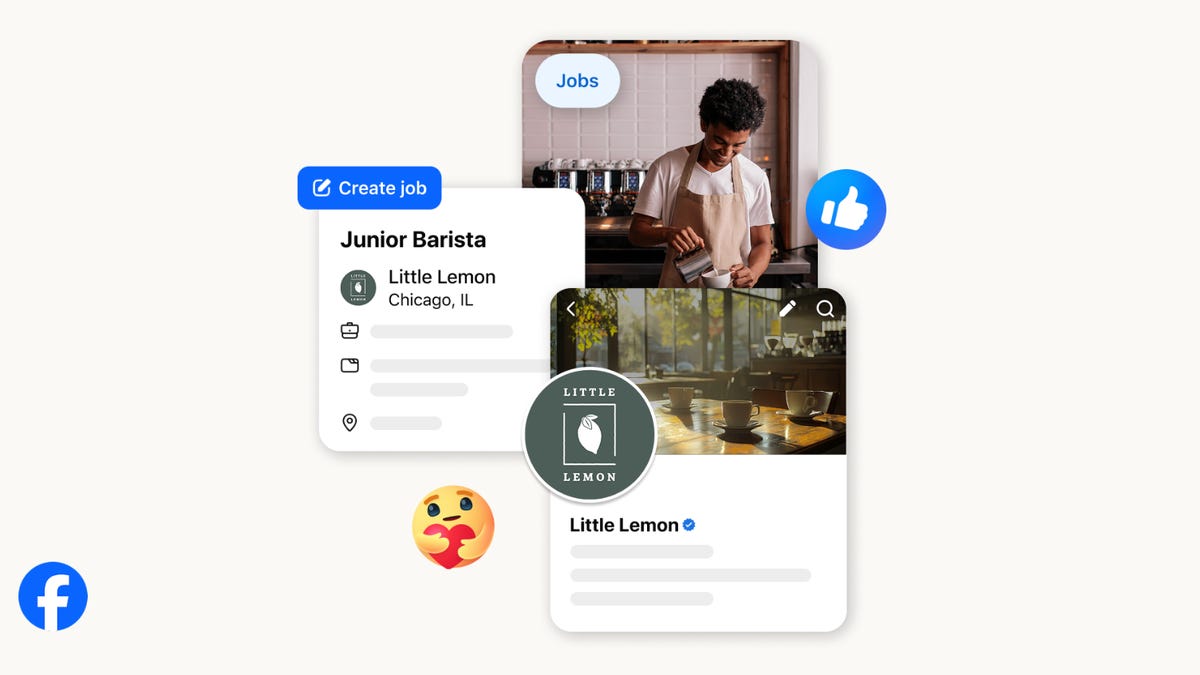
On the hunt for work? A Local Jobs search is being rolled out by Meta to make it easier for people in the US to discover and apply for nearby work directly on Facebook. The feature is inside Facebook Marketplace, Groups and Pages, Meta said last week, letting employers post openings and job seekers filter roles by distance, category or employment type.
You can apply or message employers directly through Facebook Messenger, while employers can publish job listings with just a few taps — similar to how you would post items for sale on Marketplace.
Don’t miss any of our unbiased tech content and lab-based reviews. Add CNET as a preferred Google source.
Facebook offered a Jobs feature before discontinuing it in 2022, pushing business hiring toward its other platforms. Its return suggests Meta is attempting to expand Facebook’s usefulness beyond social networking and to position it once again as a hub for community-driven opportunities.
Read more: Meta’s All In on AI Creating the Ads You See on Instagram, Facebook and WhatsApp
«We’ve always been about connecting with people, whether through shared interests or key life events,» the press release states. «Now, if you’re looking for entry-level, trade and service industry employment in your community, Facebook can help you connect with local people and small businesses who are hiring.»
Read more: What Is Meta AI? Everything to Know About These AI Tools
How to get started with Local Jobs on Facebook
According to Meta, Local Jobs will appear as a dedicated section in Facebook Marketplace starting this week. If you’re 18 or older, you can:
- Tap the Marketplace tab on the Facebook app or website.
- Select Jobs to browse available positions nearby.
- Use filters for job type, category and distance.
- Tap Apply or message the employer directly via Messenger.
Businesses and page admins can post jobs by creating a new listing in Marketplace or from their Facebook Page. Listings can include job details, pay range, and scheduling information and will appear in local searches automatically.
The Local Jobs feature is rolling out across the US now, with Meta saying it plans to expand it in the months ahead.
Technologies
Tesla Has a New Range of Affordable Electric Cars: How Much They Cost
The new, stripped-back versions of the Model Y and Model 3 have a more affordable starting price.

Technologies
Today’s NYT Strands Hints, Answers and Help for Oct. 22 #598
Here are hints and answers for the NYT Strands puzzle for Oct. 22, No. 598.
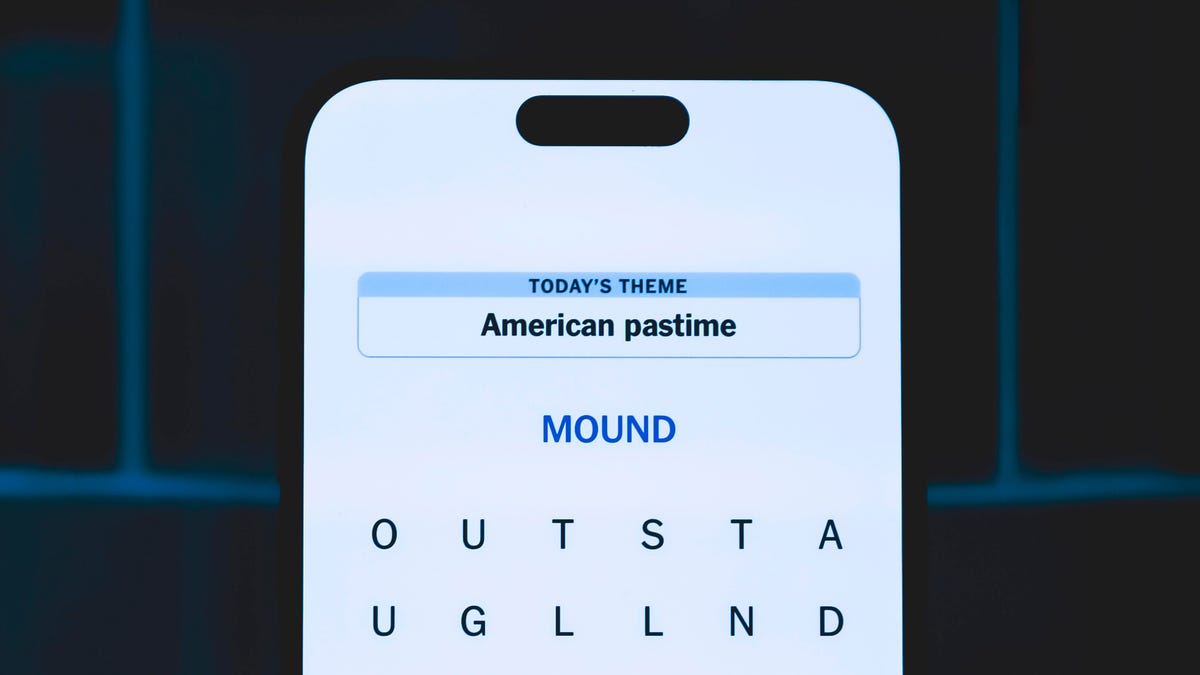
Looking for the most recent Strands answer? Click here for our daily Strands hints, as well as our daily answers and hints for The New York Times Mini Crossword, Wordle, Connections and Connections: Sports Edition puzzles.
Today’s NYT Strands puzzle is a fun one — I definitely have at least two of these in my house. Some of the answers are a bit tough to unscramble, so if you need hints and answers, read on.
I go into depth about the rules for Strands in this story.
If you’re looking for today’s Wordle, Connections and Mini Crossword answers, you can visit CNET’s NYT puzzle hints page.
Read more: NYT Connections Turns 1: These Are the 5 Toughest Puzzles So Far
Hint for today’s Strands puzzle
Today’s Strands theme is: Catch all.
If that doesn’t help you, here’s a clue: A mess of items.
Clue words to unlock in-game hints
Your goal is to find hidden words that fit the puzzle’s theme. If you’re stuck, find any words you can. Every time you find three words of four letters or more, Strands will reveal one of the theme words. These are the words I used to get those hints but any words of four or more letters that you find will work:
- BATE, LICE, SLUM, CAPE, HOLE, CARE, BARE, THEN, SLAM, SAMBA, BACK
Answers for today’s Strands puzzle
These are the answers that tie into the theme. The goal of the puzzle is to find them all, including the spangram, a theme word that reaches from one side of the puzzle to the other. When you have all of them (I originally thought there were always eight but learned that the number can vary), every letter on the board will be used. Here are the nonspangram answers:
- TAPE, COIN, PENCIL, BATTERY, SHOELACE, THUMBTACK
Today’s Strands spangram
Today’s Strands spangram is JUNKDRAWER. To find it, look for the J that’s five letters down on the far-left row, and wind down, over and then up.
Quick tips for Strands
#1: To get more clue words, see if you can tweak the words you’ve already found, by adding an «S» or other variants. And if you find a word like WILL, see if other letters are close enough to help you make SILL, or BILL.
#2: Once you get one theme word, look at the puzzle to see if you can spot other related words.
#3: If you’ve been given the letters for a theme word, but can’t figure it out, guess three more clue words, and the puzzle will light up each letter in order, revealing the word.
-
 Technologies3 года ago
Tech Companies Need to Be Held Accountable for Security, Experts Say
-
 Technologies3 года ago
Best Handheld Game Console in 2023
-
 Technologies3 года ago
Tighten Up Your VR Game With the Best Head Straps for Quest 2
-
 Technologies4 года ago
Verum, Wickr and Threema: next generation secured messengers
-
 Technologies4 года ago
Black Friday 2021: The best deals on TVs, headphones, kitchenware, and more
-
 Technologies4 года ago
Google to require vaccinations as Silicon Valley rethinks return-to-office policies
-
 Technologies4 года ago
Olivia Harlan Dekker for Verum Messenger
-
 Technologies4 года ago
iPhone 13 event: How to watch Apple’s big announcement tomorrow


