

Technologies
iOS 15 is coming: Release date, rumors and everything else we know so far
We’re likely very close to iOS 15’s general release. Here’s what we know about all the new features, and how to download it.


This story is part of Apple Event, our full coverage of the latest news from Apple headquarters.
We’re likely less than a week away from the launch of iOS 15, Apple’s latest mobile operating system that adds a ton of new features for iPhone users. While we don’t have an exact date yet, Apple is expected to launch the iPhone 13 at an event on Tuesday (here’s how to watch) — and usually, we get the newest version of iOS in the days after a new phone is announced.
We got a first look at Apple’s iOS 15 update at the company’s virtual Worldwide Developers Conference in June, followed by a developer beta and now a public beta. (Here’s how to download the iOS 15 public beta, the three things you need to know before installing and how to check if your phone can run iOS 15.)
While we saw a lot of new features arrive this spring and summer with iOS 14.5, iOS 14.6 and iOS 14.7, including being able to unlock your iPhone with Face ID while wearing a mask, stop apps from tracking you for advertising purposes and choose from four Siri voices, iOS 15 adds even more. New iOS 15 features include the ability to start FaceTime calls with Android users, easier sharing in iMessage and better directions in Maps. Keep reading for everything we’ve learned about iOS 15 so far, including when it will be generally released, how to download it and some of the biggest new features.
iOS 15 release date: September 2021
Apple revealed iOS 15 at its annual Worldwide Developers Conference on June 7, as is typical. The new OS was first available for developers to test and became available to download as a public beta on June 30.
Apple CEO Tim Cook said the final version of iOS 15 will launch in the fall. It’s likely that this will happen in September, alongside the launch of the iPhone 13. In the past, Apple has released the latest version of iOS within a week after an iPhone launch event, so we’re expecting the same thing this time around — which means we should get iOS 15 sometime in the week after Sept. 14.
iOS 15 new features
Here are a few of the key new features coming to iOS 15, unveiled at WWDC 2021. (And here’s an overview of all of the new features in iOS 15.)
FaceTime upgrades: Spatial audio, support for Android and Windows
FaceTime will offer spatial audio to make people’s voices appear to come from their position on the screen, making your video chats feel more natural and lifelike. FaceTime will also start to look more like Zoom, allowing you to see all participants in a grid view, schedule calls and share links to calls that can be accessed via browser on Google Android and Microsoft Windows devices.
Read more: Fun FaceTime date idea: Try Apple’s new SharePlay feature in iOS 15
iMessage sharing features
iOS 15 adds some new iMessage sharing features for photos, news articles and playlists. When a friend sends you multiple photos over iMessage, they’ll appear in a dynamic collage formation that allows you to swipe through them or tap through to view the whole bunch in your photos app. If you want to access the same photos later, you’ll find them stored in a new Shared with You folder, as well as mixed in with your own featured photos and memories. You’ll also find news articles and playlists shared through iMessage in new Shared with You tabs in your News and Apple Music apps.
Apple Maps update: 3D street data, AR walking directions and weather warnings
Apple Maps gets an upgrade, with more elevation data, road colors and driving directions, rich labels, 3D landmarks and improved night mode. In terms of public transportation, you can also pin nearby public transit stops and station information to your iPhone and Apple Watch devices, and receive automatic updates and notifications as you ride and approach your stop. When traveling on foot, a new augmented reality feature lets you scan nearby buildings in the area with the iPhone’s camera to determine their precise position for more accurate walking directions, which are also presented in augmented reality.
Maps also could factor weather warnings into suggested routes in iOS 15. Redditor ChrisSDreiling, who spotted the update in iOS 15 beta 3, says Maps will let you know if there are flash floods on your journey, and suggest alternate routes to avoid the extreme weather. Although other types of weather alerts weren’t mentioned in ChrisSDreiling’s post, it will be interesting to see if more weather warnings will be added before the iOS 15 general release in the fall.
Facial recognition selfies to validate digital ID cards in the Wallet app
At WWDC this spring, Apple announced that it will add ID card support for the Wallet app in iOS 15, allowing you to carry digital versions of government-issued identification cards like your drivers license on your iPhone. But it’s unclear how exactly the new feature will work. According to code uncovered by 9to5Mac in the latest iOS 15 beta 4 for developers, Apple could be using facial recognition selfies to validate your digital ID cards when adding them to your wallet. Some banking apps already use this selfie validation feature to authenticate users when logging on with new devices.
How do you download iOS 15?
If you’d like to test out iOS 15 before it’s generally released, you can download it now as a public beta (check if your iPhone can run iOS 15 here). Just be warned: Betas are usually buggy, and we don’t recommend downloading them on your primary device. But if you want to, here’s how to download the iOS 15 and iPadOS 15 betas. (And if the bugs get you down, here’s how to change back to iOS 14.)
Read more: Apple’s iOS 15 beta is here, but watch out for these bugs
Once iOS 15 is generally available (likely next week), Apple will probably send a notification letting you know you can update. Or you’ll be able to do it manually, by going to the Settings app > General > Software Update.
For more, here’s every iPhone 13 rumor we’ve heard so far. You can also take a look at the cool new features for WatchOS 8, the best things about MacOS Monterey and check if your computer is compatible with the new MacOS.
Technologies
Today’s NYT Mini Crossword Answers for Wednesday, March 11
Here are the answers for The New York Times Mini Crossword for March 11.


Looking for the most recent Mini Crossword answer? Click here for today’s Mini Crossword hints, as well as our daily answers and hints for The New York Times Wordle, Strands, Connections and Connections: Sports Edition puzzles.
Need some help with today’s Mini Crossword? I thought it was a bit tricky. 1-Down is one of those old-fashioned comic-book sounds that I had to remember how to spell correctly. Read on for all the answers. And if you could use some hints and guidance for daily solving, check out our Mini Crossword tips.
If you’re looking for today’s Wordle, Connections, Connections: Sports Edition and Strands answers, you can visit CNET’s NYT puzzle hints page.
Read more: Tips and Tricks for Solving The New York Times Mini Crossword
Let’s get to those Mini Crossword clues and answers.
Mini across clues and answers
1A clue: Study of the human mind, informally
Answer: PSYCH
6A clue: Common fixture in a gym bathroom
Answer: SCALE
7A clue: Kinda boring
Answer: HOHUM
8A clue: Like a commenter without a username, for short
Answer: ANON
9A clue: «All good between us?»
Answer: WEOK
Mini down clues and answers
1D clue: Old-fashioned «Yeah, right!»
Answer: PSHAW
2D clue: Coffeehouse pastry
Answer: SCONE
3D clue: Google alternative
Answer: YAHOO
4D clue: Sound of a dull thump
Answer: CLUNK
5D clue: Line on the bottom of a pant leg
Answer: HEM
Technologies
OnePlus and Oppo to Raise Smartphone Prices as Memory Costs Climb
Oppo says rising costs for key phone components will trigger price adjustments on some devices starting March 16.
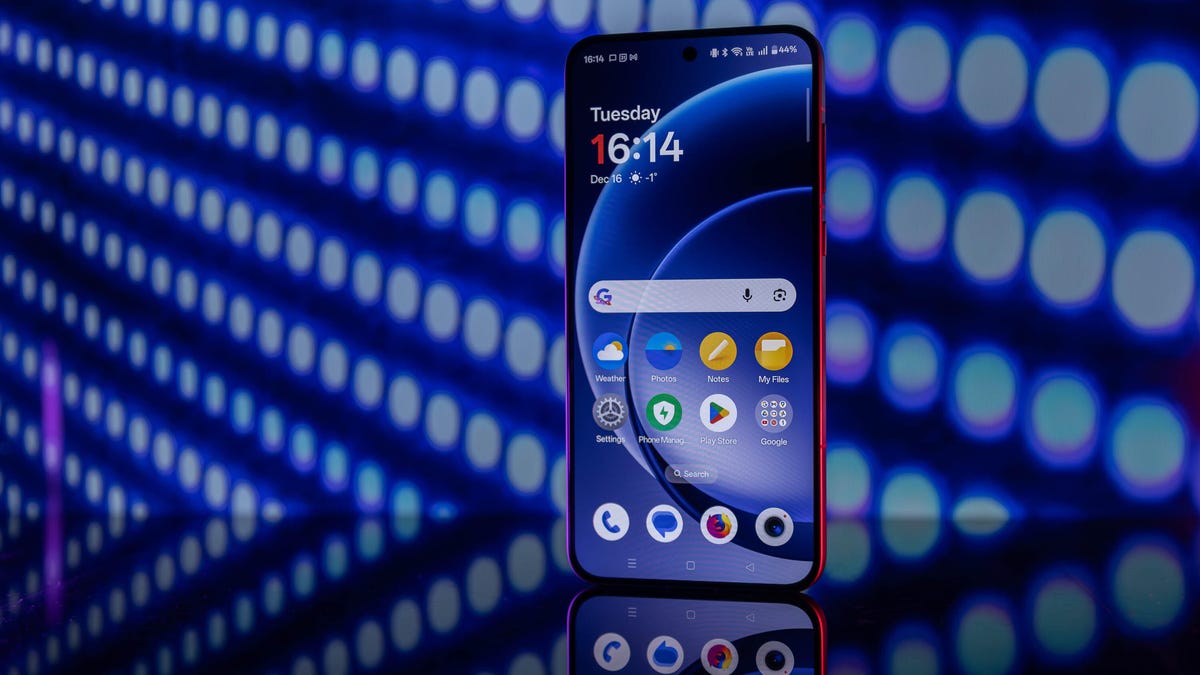
Chinese smartphone-makers OnePlus and Oppo plan to raise prices on some existing models starting next week, according to a 9to5Google report citing GizmoChina and a notice posted on Oppo’s China online store.
In its notice, Oppo said it would adjust pricing after evaluating rising costs for several key components used in its mobile phones. The changes are expected to take effect around March 16 and will affect some of the company’s more affordable smartphones, as well as some OnePlus models.
Flagship devices — like those in the Find and Reno series — are not expected to be affected for now. The reported adjustments currently appear to be limited to China.
The move highlights growing pressure across the smartphone supply chain as component costs climb. Analysts say prices for memory and storage chips used in phones have been rising in recent months as demand surges across the tech industry.
Much of the chip demand is coming from the rapid buildout of AI data centers, which rely on large amounts of high-performance memory.
That pressure isn’t limited to Oppo and OnePlus. Analysts say smartphone brands across the industry are facing rising component costs amid increased demand for memory chips.
As manufacturers shift production toward higher-margin memory used in AI servers, supply for consumer electronics such as smartphones and laptops can tighten.
If component costs continue to rise, manufacturers may face difficult choices later this year, including raising retail prices or adjusting device specifications to offset higher manufacturing costs.
OnePlus and Oppo didn’t immediately respond to a request for comment.
Technologies
Harvard Business Review Study Finds ‘AI Brain Fry’ Is Leaving Workers Mentally Fatigued
Study participants reported increased mental fatigue while using AI tools, but less burnout overall.

Workers who excessively use AI agents and tools at work are at increased risk of mental fatigue, according to a recent Harvard Business Review study. In certain industries, more than 25% of hired professionals report increased mental strain due to their role in AI oversight — though these professionals also generally experienced less burnout than peers who aren’t using AI.
This phenomenon — which the researchers refer to as «AI brain fry» — is described as a «‘buzzing’ feeling or a mental fog» that caused study participants to develop headaches and difficulty focusing and making decisions. Individuals pointed to being overwhelmed by large amounts of information and to frequent task switching as the reasons for these feelings.
Studied individuals experienced more brain fry when they utilized AI agents to manage a workload beyond their own cognitive capacity. When participants used AI to replace mundane, repetitive tasks, managing the growing number of tools led to increased mental fatigue.
Crucially, the study found that fewer individuals who used these AI agents reported workplace burnout.
The researchers predict that this is because burnout testing assesses emotional and physical distress. In contrast, they report, acute mental fatigue «is caused by marshalling attention, working memory and executive control beyond the limited capacity of these systems.»
These are the processes that are taxed when study participants use multiple AI tools in their workflow, according to the researchers.
The Harvard study identifies several business costs incurred by workers suffering from AI brain fry. The foremost consequence is that these individuals may end up making lower-quality decisions. «Workers in [the] study who endorsed AI brain fry experience 33% more decision fatigue than those who did not,» the study reports. Workers who report AI brain fry were also more likely to self-report making both minor and major errors at their jobs.
Another recent Harvard Business Review study similarly found that employees who use AI tools «worked at a faster pace, took on a broader scope of tasks and extended work into more hours of the day,» but warned that «workload creep can in turn lead to cognitive fatigue, burnout and weakened decision-making.»
-
 Technologies3 года ago
Tech Companies Need to Be Held Accountable for Security, Experts Say
-
 Technologies3 года ago
Best Handheld Game Console in 2023
-
 Technologies3 года ago
Tighten Up Your VR Game With the Best Head Straps for Quest 2
-
 Technologies4 года ago
Black Friday 2021: The best deals on TVs, headphones, kitchenware, and more
-
 Technologies5 лет ago
Google to require vaccinations as Silicon Valley rethinks return-to-office policies
-
 Technologies5 лет ago
Verum, Wickr and Threema: next generation secured messengers
-
 Technologies4 года ago
Olivia Harlan Dekker for Verum Messenger
-
 Technologies4 года ago
iPhone 13 event: How to watch Apple’s big announcement tomorrow


